
Exhaust gas recirculation sounds like just another technical term from your car manual, but it actually plays a massive role in how clean and efficient your engine runs. Most people think of emissions as just exhaust fumes leaving the tailpipe, but EGR systems have helped modern vehicles cut harmful emissions by up to 50 percent according to the EPA. What really surprises people is that this same technology can also improve fuel efficiency and extend engine life at the same time.
Table of Contents
- What Is Exhaust Gas Recirculation And Its Purpose?
- Why Exhaust Gas Recirculation Matters In Modern Engines
- How Exhaust Gas Recirculation Works To Reduce Emissions
- Key Components And Concepts Of Exhaust Gas Recirculation Systems
- Practical Implications Of Exhaust Gas Recirculation For Vehicle Performance
Quick Summary
| Takeaway | Explanation |
|---|---|
| EGR reduces nitrogen oxide emissions. | By recirculating exhaust gases, EGR lowers combustion temperatures, minimizing NOx formation significantly. |
| EGR enhances engine fuel efficiency. | Lower combustion temperatures improve fuel efficiency by reducing thermal stress and facilitating better fuel combustion. |
| Modern EGR systems integrate with ECU remapping. | Advanced tuning techniques allow for dynamic adjustments in EGR operation, optimizing performance based on real-time conditions. |
| EGR contributes to regulatory compliance. | EGR technology helps automotive manufacturers meet strict global emission standards and reduce harmful pollutants by up to 50%. |
| Understanding EGR design is crucial for performance. | Knowledge of EGR system components and mechanics is essential for optimizing vehicle performance and addressing thermal challenges. |
What is Exhaust Gas Recirculation and Its Purpose?
Exhaust gas recirculation (EGR) represents a sophisticated emission control technology designed to reduce nitrogen oxide (NOx) emissions in internal combustion engines. By strategically redirecting a portion of engine exhaust gases back into the engine’s intake system, EGR systems play a critical role in minimizing harmful pollutants and improving overall engine performance.
The Fundamental Science Behind EGR
At its core, exhaust gas recirculation works by lowering combustion temperatures within the engine cylinder. When exhaust gases are reintroduced into the intake manifold, they replace a small percentage of incoming oxygen, effectively reducing the oxygen concentration and moderating peak combustion temperatures. This temperature reduction is crucial because nitrogen oxides form most aggressively at extremely high temperatures exceeding 1600 degrees Fahrenheit.
The mechanism operates through a complex interplay between the EGR valve, intake manifold, and engine control unit. As engine load and temperature change, the EGR valve precisely modulates the volume of recirculated exhaust gases, ensuring optimal performance across different driving conditions.
Environmental and Performance Benefits
The primary advantages of exhaust gas recirculation extend beyond simple emission reduction. By mitigating nitrogen oxide formation, EGR systems contribute significantly to environmental protection and compliance with stringent automotive emission standards. Additionally, the technology offers several performance benefits:
- Reduces thermal stress on engine components
- Improves fuel efficiency by lowering combustion temperatures
- Minimizes engine knock and improves overall engine stability
According to Environmental Protection Agency, EGR technologies have been instrumental in reducing vehicular emissions by up to 50% in modern engines. This remarkable achievement underscores the critical role of exhaust gas recirculation in contemporary automotive engineering.
Modern automotive manufacturers have refined EGR systems to work seamlessly across various engine types, from compact passenger vehicles to heavy-duty industrial machinery, demonstrating the technology’s versatility and importance in sustainable transportation solutions.
Why Exhaust Gas Recirculation Matters in Modern Engines
In the rapidly evolving landscape of automotive engineering, exhaust gas recirculation (EGR) has emerged as a pivotal technology addressing complex challenges of engine performance, efficiency, and environmental sustainability. The significance of EGR extends far beyond simple emission control, representing a sophisticated approach to optimizing internal combustion engine operations.
Environmental Regulation and Emission Standards
Strict global environmental regulations have compelled automotive manufacturers to develop innovative solutions for reducing harmful emissions. EGR systems have become a critical component in meeting these stringent standards, particularly for controlling nitrogen oxide (NOx) production. Modern engines equipped with advanced EGR technologies can significantly reduce toxic emissions while maintaining high performance levels.
Research from ACS Omega demonstrates that implementing EGR at specific ratios can effectively reduce NOx and particulate emissions while preserving engine torque output. This finding underscores the technology’s potential to balance environmental responsibility with engine performance requirements.
Performance and Efficiency Implications
Contrary to traditional assumptions, EGR systems do not merely compromise engine power but actually contribute to overall engine efficiency. By moderating combustion temperatures and reducing thermal stress, these systems offer multiple performance advantages:
- Prevents premature engine component wear
- Enhances fuel combustion efficiency
- Stabilizes engine operation under varying load conditions
Additionally, modern EGR technologies have been integrated with advanced ECU remapping techniques to optimize engine performance across different operating conditions. This integration allows for more precise control of exhaust gas recirculation, enabling engines to adapt dynamically to changing environmental and operational parameters.
The continuous evolution of EGR technologies reflects the automotive industry’s commitment to developing sustainable, high-performance engineering solutions that meet both regulatory requirements and consumer expectations for efficient, environmentally responsible vehicles.
How Exhaust Gas Recirculation Works to Reduce Emissions
Exhaust gas recirculation represents a sophisticated engineering solution that directly addresses the complex challenge of nitrogen oxide (NOx) formation in internal combustion engines. By implementing a strategic mechanism for redirecting and reintroducing exhaust gases, EGR systems fundamentally alter the combustion environment to minimize harmful emissions.
Thermodynamic Principles of Emission Reduction
The core mechanism of exhaust gas recirculation relies on fundamental thermodynamic principles. When a portion of exhaust gases is reintroduced into the engine’s intake system, it effectively reduces the oxygen concentration and moderates peak combustion temperatures. Temperature reduction is critical because nitrogen oxides form most aggressively at extreme temperatures exceeding 1600 degrees Fahrenheit.
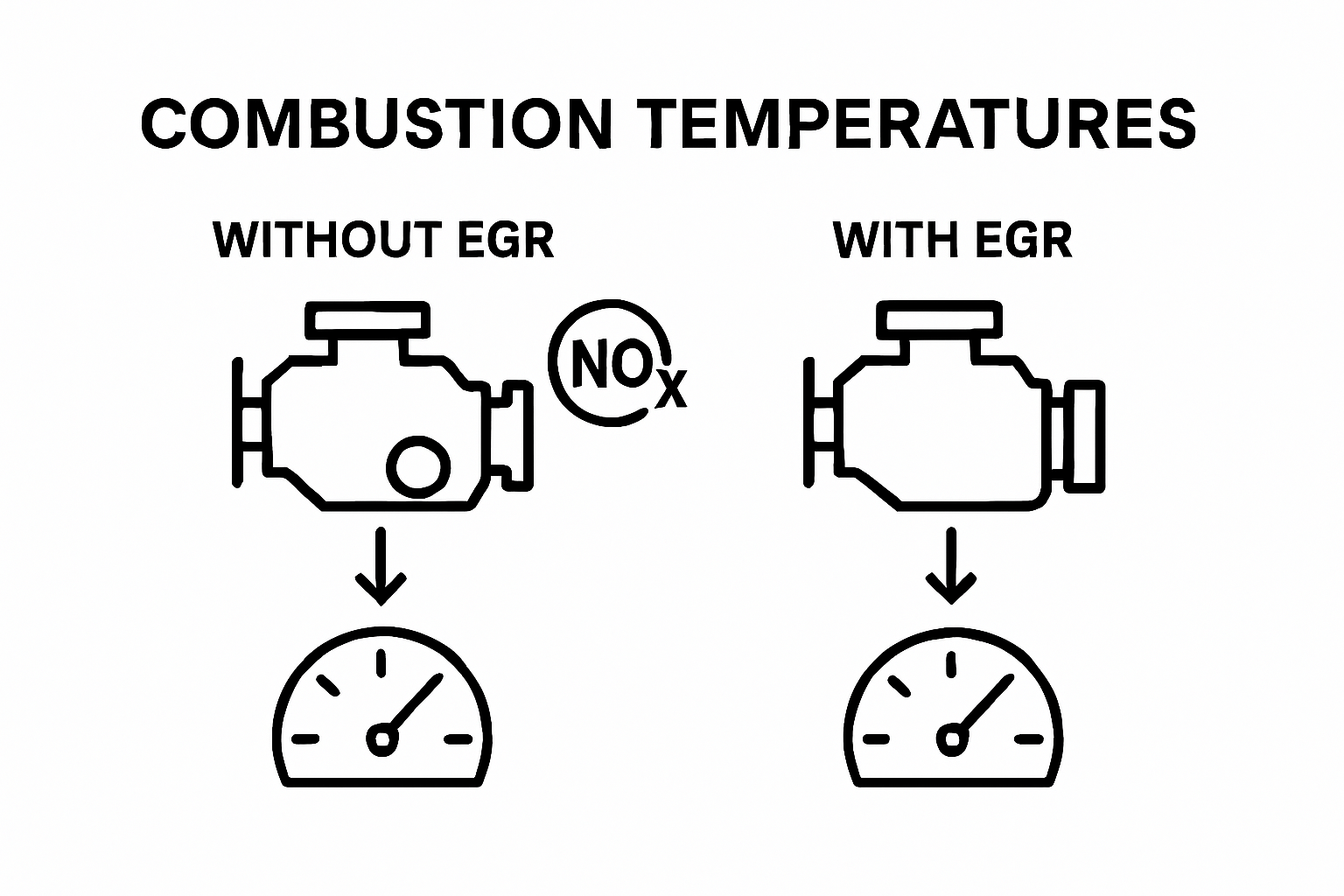
The recirculated exhaust gases act as an inert gas, absorbing heat and preventing the formation of thermal NOx. By displacing a percentage of incoming oxygen, the EGR system creates a more stable and controlled combustion environment that naturally suppresses the chemical conditions necessary for nitrogen oxide generation.
Mechanical Components and Operational Dynamics
The EGR system comprises several key mechanical components working in precise synchronization:
- EGR Valve: Precisely controls the volume of recirculated exhaust gases
- Intake Manifold: Facilitates the reintroduction of exhaust gases
- Temperature Sensors: Monitor combustion chamber conditions
- Engine Control Unit: Manages EGR valve operation based on real-time engine parameters
Research from the University of California, Irvine confirms that EGR strategies are particularly effective in spark-ignited engines, where controlling flame temperatures can significantly reduce NOx formation. The study highlights how EGR increases the specific heat capacity of the intake charge, further enhancing emission reduction capabilities.
By integrating advanced ECU tuning techniques, modern automotive engineers can optimize EGR performance across diverse driving conditions, ensuring consistent emission control without compromising engine efficiency.
The continuous refinement of EGR technologies demonstrates the automotive industry’s commitment to developing intelligent solutions that balance environmental responsibility with high-performance engineering requirements.
Key Components and Concepts of Exhaust Gas Recirculation Systems
Exhaust gas recirculation (EGR) systems represent a complex network of interconnected components designed to optimize engine performance and reduce harmful emissions. Understanding the intricate mechanisms and core principles behind these systems provides critical insights into modern automotive engineering.
Core Mechanical Architecture
The fundamental architecture of an EGR system revolves around precise control and intelligent gas management. Key mechanical elements work in synchronized harmony to redirect and moderate exhaust gases before they re-enter the combustion chamber. The primary components include the EGR valve, intake manifold, temperature sensors, and engine control unit, each playing a specialized role in managing exhaust gas recirculation.
Below is a table summarizing the major components of an EGR system with their primary functions, providing a quick reference for understanding EGR architecture and operation.
| Component | Primary Function | Additional Notes |
|---|---|---|
| EGR Valve | Regulates the volume and timing of recirculated exhaust gases | Electronically controlled in modern systems |
| Intake Manifold | Reintroduces exhaust gases into the engine intake | Works in coordination with EGR valve |
| Temperature Sensors | Monitor combustion chamber thermal conditions | Provide data to engine control unit |
| Engine Control Unit | Manages EGR valve operation and system calibration | Adjusts based on engine load and RPM |
The EGR valve serves as the critical control mechanism, regulating the volume and timing of exhaust gas reintroduction. Modern valves are electronically controlled, allowing for real-time adjustments based on complex engine operating parameters such as temperature, load, and RPM.
Advanced Design Considerations
Engineering an effective EGR system demands sophisticated design strategies that balance multiple performance objectives. Automotive engineers must consider several complex factors:
- Precise gas flow rate management
- Thermal efficiency optimization
- Minimizing potential carbon deposit formation
- Ensuring consistent valve operation under varying mechanical stress
Research from the U.S. Department of Energy highlights ongoing advancements in materials science that are revolutionizing EGR system component design. These innovations focus on developing more durable and efficient materials for critical components like EGR coolers.
For automotive professionals seeking deeper insights into engine management technologies, common rail diesel tuning techniques offer complementary strategies for optimizing overall engine performance.
The continuous evolution of EGR technologies underscores the automotive industry’s commitment to developing intelligent, environmentally responsible engineering solutions that simultaneously address performance, efficiency, and emission control challenges.
Practical Implications of Exhaust Gas Recirculation for Vehicle Performance
Exhaust gas recirculation (EGR) systems represent a nuanced engineering solution with complex implications for vehicle performance, extending beyond simple emission reduction. Understanding the practical trade-offs and operational dynamics is crucial for automotive professionals and performance enthusiasts seeking comprehensive engine optimization.
Performance and Efficiency Trade-offs
Performance optimization through EGR is not a straightforward process. While reducing nitrogen oxide emissions remains the primary goal, automotive engineers must carefully balance multiple competing factors. Increased EGR rates can potentially decrease thermal efficiency, reduce cylinder peak pressure, and marginally impact fuel consumption. These subtle performance modifications require sophisticated computational modeling and precise calibration.
The delicate balance involves managing exhaust gas recirculation to minimize emissions without significantly compromising engine power output. Modern EGR systems employ advanced electronic controls that dynamically adjust gas recirculation based on real-time engine operating conditions, mitigating potential performance degradation.
Thermal and Mechanical Considerations
The practical implementation of EGR systems introduces several critical thermal and mechanical challenges:
- Potential carbon deposit accumulation in intake systems
- Increased thermal stress on engine components
- Complex interactions between exhaust gas composition and combustion dynamics
- Requirement for high-temperature resistant materials
Research from the Society of Automotive Engineers confirms that EGR rates significantly influence engine performance characteristics, particularly under varying load conditions. These findings underscore the importance of precision engineering in EGR system design.
This table compares the key trade-offs and implications of EGR system operation, helping clarify how EGR affects both emissions and performance factors in modern engines.
| Aspect | Benefit | Potential Trade-Off |
|---|---|---|
| NOx Emission Reduction | Significant decrease in harmful NOx output | |
| Fuel Efficiency | Improved combustion efficiency | Slight increase in fuel consumption |
| Engine Component Longevity | Reduced thermal stress extends component life | Potential for carbon buildup |
| Engine Power Output | Maintained via advanced electronic controls | May decrease at higher EGR rates |
| Regulatory Compliance | Helps meet strict emissions standards |
For automotive professionals seeking to optimize vehicle performance, tuning for fuel economy offers complementary strategies that work synergistically with advanced EGR technologies.
The continuous refinement of EGR systems demonstrates the automotive industry’s commitment to developing intelligent solutions that simultaneously address environmental regulations, performance expectations, and engineering constraints.

Unlock Real Performance Gains with Expert ECU File Solutions
If managing exhaust gas recirculation feels overwhelming or if you are striving for the perfect balance of emission control and engine performance, you are not alone. Modern EGR systems introduce complex calibration needs. One mistake can mean increased emissions, loss of power, or even engine faults. The good news is you do not have to handle these challenges by yourself. At ECUFlashFiles.com, our expertise bridges the gap between advanced emission control like EGR and maximizing your car’s true potential.

Take control of your engine’s performance and reliability today. Browse our extensive library of performance tuning files and secure, tested original ECU files specifically engineered for your vehicle. Every file is carefully verified for both compliance and enhanced driveability. Do not let EGR complexity slow you down—upgrade your approach now at ECUFlashFiles.com and experience the confidence that comes from proven, professional calibration. The right ECU solution is just a click away.
Frequently Asked Questions
What is the purpose of Exhaust Gas Recirculation (EGR)?
Exhaust Gas Recirculation (EGR) aims to reduce nitrogen oxide (NOx) emissions in internal combustion engines by redirecting a portion of exhaust gases back into the intake system, which helps lower combustion temperatures and overall harmful pollutants.
How does EGR work to reduce emissions in engines?
EGR reduces emissions by moderating combustion temperatures. By reintroducing exhaust gases into the intake, the oxygen concentration decreases, preventing extreme temperatures that promote NOx formation, thus creating a more stable combustion environment.
What are the benefits of using EGR systems in modern engines?
EGR systems offer several benefits, including reduced thermal stress on engine components, improved fuel efficiency, minimized engine knock, and significant reductions in toxic emissions, helping vehicles comply with stringent environmental regulations.
Are there any performance trade-offs when using EGR?
While EGR systems effectively reduce emissions, they can introduce performance trade-offs, such as potential decreases in thermal efficiency and slight impacts on fuel consumption. However, modern EGR systems are designed to balance emissions reduction with engine performance through advanced electronic controls.