
Car enthusiasts love how tuning can take a basic ride and turn it into something special. Most people think a simple software tweak is all you need to unlock extra horsepower. Turns out, the real leap in performance happens when you combine those tweaks with serious hardware upgrades. Stage 2 tuning can deliver up to 35 percent more power—but that bigger number comes with choices, risks, and some big surprises that most drivers never see coming.
Table of Contents
- Understanding Stage 1 And Stage 2 Tuning
- Performance Gains And Hardware Requirements
- Risks, Costs, And Choosing The Right Stage
- Real-World Use Cases And Expert Insights
Quick Summary
| Takeaway | Explanation |
|---|---|
| Stage 1 tuning is software-focused | Primarily adjusts ECU settings, requiring no significant hardware changes for performance enhancement. |
| Stage 2 tuning necessitates hardware upgrades | Involves advanced ECU modifications alongside necessary upgrades like intake and exhaust systems for greater power gains. |
| Stage 1 provides cheaper entry to performance | Typically less expensive and less complex, making it ideal for casual enthusiasts or daily drivers. |
| Stage 2 yields higher performance gains | Offers substantial increases in horsepower and torque, ideal for serious automotive enthusiasts and competitive driving. |
| Consult professionals for optimal results | Professional assessment is crucial for maximizing performance while ensuring vehicle reliability and longevity. |
Understanding Stage 1 and Stage 2 Tuning
Engine control unit (ECU) tuning represents a sophisticated approach to enhancing vehicle performance through strategic software modifications. While many automotive enthusiasts understand the concept broadly, the nuanced differences between Stage 1 and Stage 2 tuning often create confusion in the performance modification landscape.
The Foundational Concepts of ECU Tuning
ECU tuning involves reprogramming a vehicle’s engine control unit to optimize its performance parameters. According to Chevy Geek, these modifications focus on adjusting critical engine management settings to unlock additional power and improve overall vehicle responsiveness. The staging system provides a structured approach to incremental performance enhancements, with each stage representing a progressively more complex level of modification.
Distinguishing Stage 1 from Stage 2 Modifications
Stage 1 tuning typically represents the most basic level of ECU modification. It primarily involves software adjustments that recalibrate fuel injection, ignition timing, and boost pressure without requiring significant hardware changes. Essentially, this stage optimizes the existing engine configuration to extract additional performance potential.
Stage 2 tuning, by contrast, introduces more comprehensive modifications. According to Monte Tuning, this stage often requires specific hardware upgrades alongside advanced ECU programming. These upgrades might include components like high-flow air intakes, upgraded intercoolers, or performance exhaust systems that complement the software modifications.
The key differentiator between Stage 1 and Stage 2 tuning lies in the depth of modification and the requirement for supporting hardware enhancements. While Stage 1 focuses purely on software optimization, Stage 2 demands a more holistic approach to performance improvement.
To help clarify the main differences between Stage 1 and Stage 2 tuning, here’s a side-by-side comparison of key features, requirements, and considerations related to each stage:
| Feature | Stage 1 Tuning | Stage 2 Tuning |
|---|---|---|
| Main Focus | Software/ECU adjustments | ECU tune + required hardware upgrades |
| Typical Power Gain | 10% – 25% | 25% – 35% (up to ~40 bhp more than Stage 1) |
| Hardware Changes | Not required | High-flow intake, exhaust, intercooler, downpipe |
| Cost | Lower (ECU remap: $300-$800; chip: $100-$500) | Higher (includes extra hardware, $250-$1,500+) |
| Complexity | Lower; easy to revert | Higher; irreversible changes possible |
| Warranty Impact | Often less risk | Higher risk; likely to void warranty |
| Recommended For | Daily drivers, casual enthusiasts | Enthusiasts, performance & motorsport applications |
Performance and Practical Considerations
Vehicle owners considering these tuning stages must carefully evaluate their specific performance goals, vehicle compatibility, and potential warranty implications. Stage 1 modifications offer a more conservative and typically less expensive entry point into performance tuning. Stage 2, while more complex, provides a more substantial performance enhancement for enthusiasts willing to invest in both software and hardware upgrades.
It is crucial to understand that each vehicle responds differently to tuning, and what works optimally for one model might not yield identical results for another. Professional consultation and precision tuning remain essential for achieving desired performance outcomes.
Learn more about our ECU tuning resources to understand how these modifications can transform your vehicle’s performance potential.
Performance Gains and Hardware Requirements
Performance tuning represents a critical aspect of automotive modification, with Stage 1 and Stage 2 approaches offering distinct pathways to enhanced vehicle capabilities. Understanding the nuanced performance gains and specific hardware requirements becomes essential for automotive enthusiasts seeking optimized engine performance.
Power Output and Performance Metrics
The performance landscape of Stage 1 and Stage 2 tuning reveals significant differences in power enhancement strategies. According to Track Line Tuning, Stage 1 tuning typically yields a 10% to 25% increase in horsepower and torque through software modifications alone. This initial stage focuses on recalibrating the engine control unit (ECU) to optimize existing engine parameters without extensive hardware interventions.
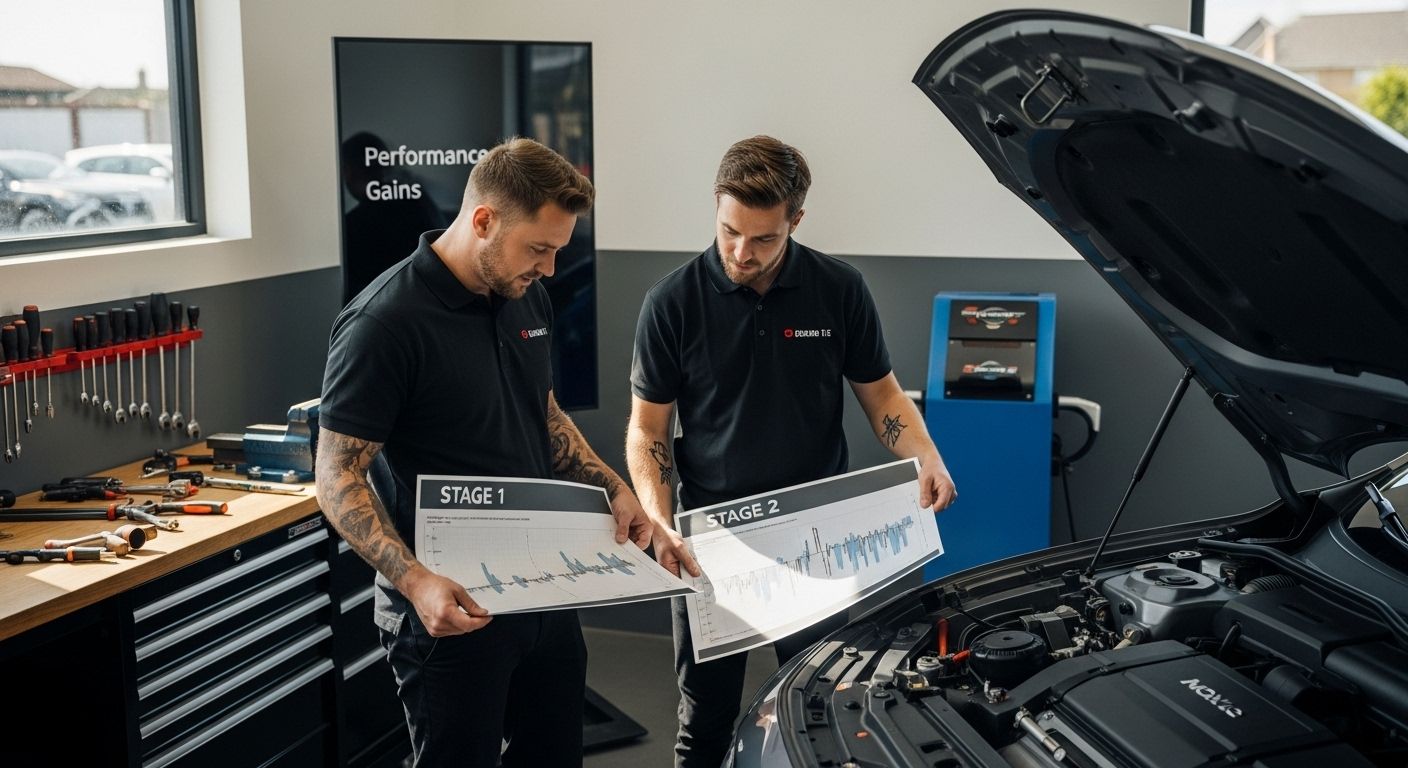
Stage 2 tuning represents a more comprehensive approach to performance enhancement. AP Tuning indicates that these modifications can achieve around 40 bhp more than Stage 1, combining advanced ECU remapping with targeted hardware upgrades. The result is a more substantial performance increase that goes beyond simple software adjustments.
Critical Hardware Modifications
The hardware requirements distinguish Stage 1 and Stage 2 tuning most dramatically. Stage 1 modifications primarily involve software recalibration, requiring minimal physical changes to the vehicle. In contrast, Stage 2 demands specific hardware upgrades that complement the ECU tuning process. According to Volm Motorsport, these upgrades typically include:
- High-flow air intake systems: Improve air volume and quality entering the engine
- Performance exhaust components: Enhance exhaust gas flow and reduce back pressure
- Upgraded intercoolers: Improve charge air cooling efficiency
- Performance downpipes: Optimize exhaust system flow
These hardware modifications work synergistically with advanced ECU tuning to unlock significant performance potential. Vehicle owners must carefully consider compatibility, potential warranty implications, and the specific performance goals of their tuning project.
Before investing in performance tuning, it’s helpful to see the common hardware modifications associated with each stage:
| Hardware Component | Required for Stage 1 | Required for Stage 2 |
|---|---|---|
| ECU Remap/Software Upgrade | ✔️ | ✔️ |
| High-Flow Air Intake | ✔️ | |
| Performance Exhaust | ✔️ | |
| Upgraded Intercooler | ✔️ | |
| Performance Downpipe | ✔️ | |
| Stock Engine Components Only | ✔️ |
Technical Considerations and Limitations
While the performance gains are attractive, automotive enthusiasts must approach Stage 1 and Stage 2 tuning with careful consideration. Not all vehicles respond identically to modifications, and the complexity of modern engine management systems requires precision tuning. Professional assessment becomes crucial to maximize performance while maintaining engine reliability.
Each modification stage presents unique challenges and opportunities. Stage 1 offers a conservative entry point for performance enhancement, while Stage 2 provides a more comprehensive approach for serious enthusiasts willing to invest in both software and hardware upgrades.
Explore our comprehensive ECU tuning resources to gain deeper insights into performance modification strategies and technical considerations.
Risks, Costs, and Choosing the Right Stage
Navigating the complex landscape of automotive performance tuning requires careful consideration of financial investment, potential risks, and long-term vehicle performance implications. Selecting between Stage 1 and Stage 2 tuning is not merely a technical decision but a strategic choice that impacts vehicle reliability, warranty status, and overall ownership experience.
Financial Considerations and Investment Analysis
The financial dimension of performance tuning represents a critical factor for automotive enthusiasts. According to Automotive Quest, the costs associated with ECU modifications vary significantly. ECU remapping typically ranges from $300 to $800, while performance chip installations can cost between $100 and $500. Stage 2 modifications introduce additional expenses through hardware upgrades like performance exhaust systems, which can range from $250 to over $1,500.
Key Cost Breakdown:
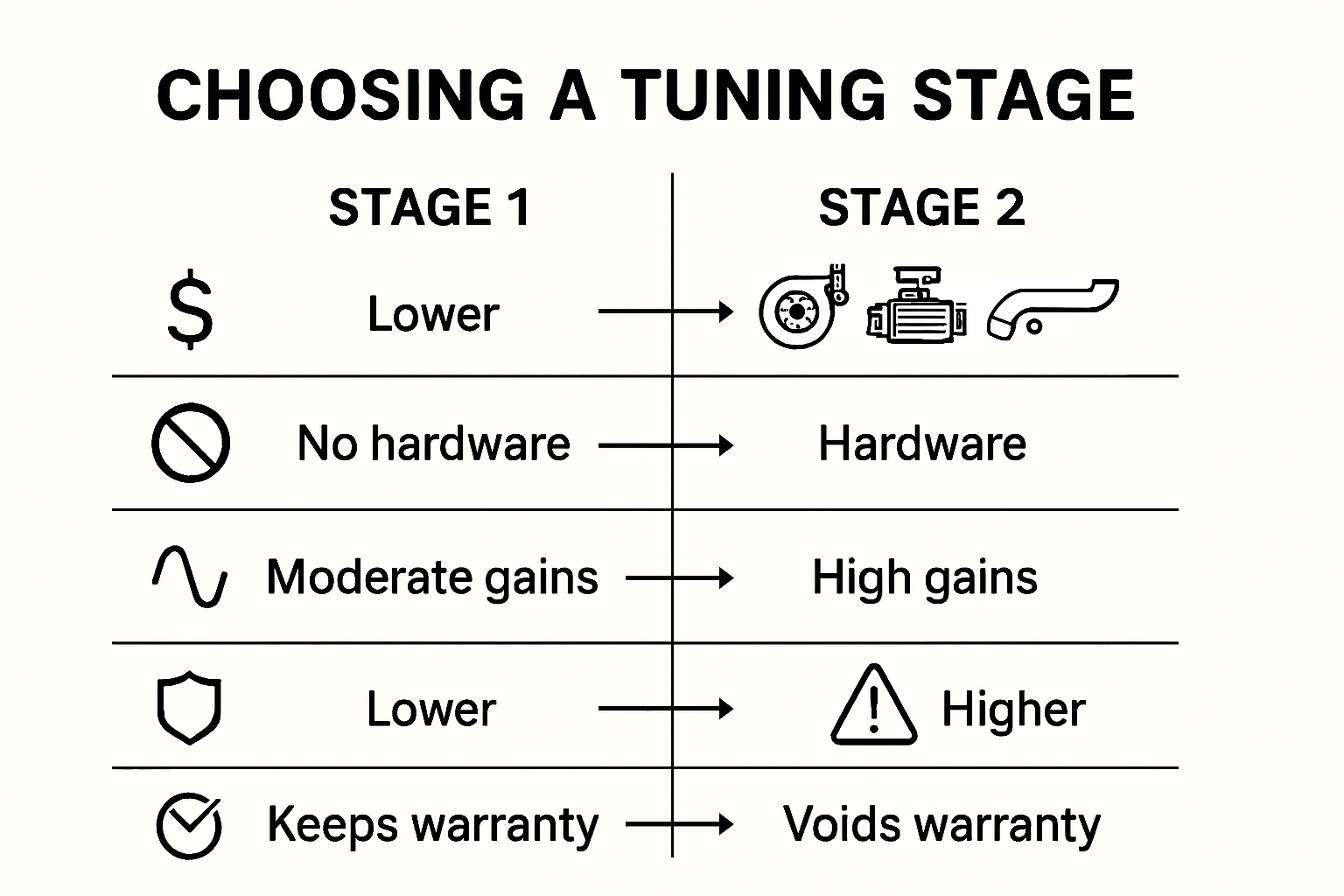
- Stage 1 Tuning: Lower initial investment
- Stage 2 Tuning: Higher upfront costs due to hardware modifications
- Long-term Considerations: Quality parts often correlate with better durability and performance sustainability
Performance Risks and Technical Limitations
Each tuning stage introduces unique technical risks that vehicle owners must carefully evaluate. Nitro Data highlights that Stage 2 modifications, which typically involve hardware enhancements like performance exhaust, upgraded intercoolers, and high-flow air filters, can increase power and torque by 25-35%. However, these modifications come with heightened risks to vehicle warranty and potential long-term mechanical stress.
The risks associated with performance tuning include:
- Potential voiding of manufacturer warranty
- Increased mechanical stress on engine components
- Potential reduction in overall vehicle reliability
- Complex insurance and legal considerations
Strategic Decision-Making Process
Choosing between Stage 1 and Stage 2 tuning requires a holistic assessment of individual performance goals, budget constraints, and vehicle-specific characteristics. Vehicle owners should consider:
- Current vehicle age and existing warranty status
- Specific performance objectives
- Budget for initial and potential future modifications
- Long-term maintenance and reliability expectations
- Professional recommendations from certified automotive performance specialists
Professional consultation becomes crucial in making an informed decision. While Stage 1 offers a conservative approach with minimal hardware intervention, Stage 2 provides more comprehensive performance enhancement for enthusiasts willing to invest in extensive modifications.
Discover our expert guidance on ECU tuning strategies to make an informed decision tailored to your specific automotive performance needs.
Real-World Use Cases and Expert Insights
The practical application of Stage 1 and Stage 2 tuning reveals a complex landscape of performance enhancement strategies across different vehicle types and driving environments. Understanding real-world scenarios helps automotive enthusiasts make informed decisions about their performance modification approaches.
Performance Applications Across Vehicle Categories
According to Unique Motorsport, vehicle tuning stages demonstrate remarkable versatility across different automotive categories. Stage 1 tuning proves particularly effective for daily drivers seeking modest performance improvements without significant hardware modifications. This approach optimizes ECU parameters like ignition timing and air/fuel ratios, delivering noticeable enhancements within stock hardware limitations.
ST Automotive highlights that Stage 2 tuning becomes increasingly relevant for performance enthusiasts and motorsport applications. These modifications support more aggressive ECU remapping through targeted hardware upgrades, including enhanced intake and exhaust systems that enable substantially higher power outputs.
Expert Perspectives on Performance Optimization
Professional tuners emphasize the importance of understanding vehicle-specific characteristics when implementing performance modifications. AP Tuning recommends a systematic approach to performance enhancement:
- Research Vehicle Compatibility: Assess the specific make and model’s tuning potential
- Understand Performance Goals: Determine whether daily driving or competitive performance is the primary objective
- Consider Long-Term Reliability: Evaluate potential mechanical stress from modifications
- Professional Consultation: Seek expert advice tailored to individual vehicle requirements
Practical Considerations and Performance Scenarios
Real-world tuning scenarios demonstrate significant variations in performance gains and implementation strategies. Performance enthusiasts might choose Stage 1 tuning for:
- Improved daily driving responsiveness
- Modest fuel efficiency enhancements
- Cost-effective performance upgrades
Stage 2 modifications become more suitable for:
- Dedicated performance vehicles
- Motorsport and competitive driving applications
- Enthusiasts seeking substantial power increases
- Vehicles with robust aftermarket support
Each tuning stage represents a nuanced approach to vehicle performance, requiring careful consideration of individual driving requirements, budget constraints, and long-term maintenance expectations.
Explore our comprehensive ECU tuning resources to gain deeper insights into advanced performance modification strategies and expert recommendations.
Frequently Asked Questions
What is the main difference between Stage 1 and Stage 2 tuning?
Stage 1 tuning primarily involves software adjustments to the ECU for performance enhancement, whereas Stage 2 tuning requires both ECU modifications and significant hardware upgrades for greater power gains.
How much power can I expect to gain from Stage 1 and Stage 2 tuning?
Stage 1 tuning typically offers a power increase of 10% to 25%, while Stage 2 tuning can yield power gains of 25% to 35%, with potential increases of up to 40 bhp compared to Stage 1.
What types of hardware upgrades are necessary for Stage 2 tuning?
Stage 2 tuning requires specific hardware modifications such as high-flow air intakes, performance exhaust systems, upgraded intercoolers, and possibly performance downpipes to complement the ECU adjustments.
Are there any risks associated with Stage 1 and Stage 2 tuning?
Yes, Stage 2 tuning presents higher risks, including potential voiding of manufacturer warranties and increased mechanical stress on engine components. Both stages require careful consideration of vehicle compatibility and professional consultation.
Unlock Precision ECU Tuning That Matches Your Ambition
Choosing between Stage 1 and Stage 2 tuning can be overwhelming. You know that getting more power from your car is not just about software tweaks but also about careful hardware upgrades and risk management. Missing the right ECU files or using uncertified data can lead to frustration, wasted money, and even engine problems.

This is where ECUFlashFiles.com delivers real peace of mind. As you seek to elevate your vehicle’s performance, our platform makes it easy to find original factory files, performance-optimized tuning files, and verified DAMOS calibration data for your specific car model and engine type. Whether you want a safe Stage 1 remap or a bold Stage 2 transformation, you get instant, secure access to tested ECU files trusted by enthusiasts and professionals worldwide. Ready to tune smarter and avoid costly mistakes? Browse our powerful ECU file solutions and get the best tuning files for your project today.
Recommended
- ECU Tuning for Beginners: Essential Guide for 2025 – Ecu flash files
- How Does ECU Work? 2025 Guide for Car Performance – Ecu flash files
- ECU Tuned File | stage 1 | Yamaha FX Mitsubishi 6EV-8591A-XX YAMAHA P892 F9432_054_ EH009-69952
- ECU Tuned File | stage 1 | Yamaha GP Mitsubishi Undefined EG815-59051F7070X19 EH009-69952