
Car owners are always looking to squeeze more miles out of every tank, and tuning for fuel economy promises just that. Most people figure tuning is only about speed or raw power, but that’s not the full story. With the right ECU adjustments, fuel efficiency increases of up to 10 percent are possible, so saving money at the pump might just come from a laptop and some smart tweaks instead of buying a whole new car.
Table of Contents
- Understanding How Tuning Affects Fuel Economy
- Key ECU Adjustments For Better MPG
- Tuning Strategies For Different Vehicle Types
- Common Mistakes And How To Avoid Them
Quick Summary
| Takeaway | Explanation |
|---|---|
| Optimize ECU settings for fuel efficiency. | Fine-tuning critical engine parameters maximizes energy conversion and minimizes fuel consumption. |
| Avoid unauthorized performance modifications. | Tampering with emission systems can lead to increased fuel consumption and potential engine damage. |
| Adjust driving behaviors for better MPG. | Smooth acceleration and maintaining consistent speeds drastically improve fuel economy. |
| Tailor tuning strategies based on vehicle type. | Different vehicles require specific tuning techniques for optimal performance and efficiency. |
| Conduct regular diagnostics and maintenance. | Continuous performance monitoring helps identify issues and ensures tuning remains effective over time. |
Understanding How Tuning Affects Fuel Economy
Engine tuning represents a sophisticated approach to optimizing vehicle performance and fuel efficiency. At its core, tuning involves precision adjustments to an engine’s electronic control unit (ECU) that can dramatically impact how fuel is consumed and converted into mechanical energy.
The Science Behind Fuel Efficiency Modifications
The fundamental principle of tuning for fuel economy revolves around fine-tuning critical engine parameters. Understand the ECU basics before diving into efficiency modifications. According to the U.S. Environmental Protection Agency, engine design and calibration significantly influence fuel consumption. Technicians can optimize several key variables to enhance efficiency:
- Compression Ratio Adjustment: Precise modifications to compression ratios can improve thermal efficiency
- Intake and Exhaust Configuration: Streamlining air flow reduces energy waste
- Ignition Timing Optimization: Strategic spark advance curve calibration minimizes fuel consumption
Professional tuners understand that fuel economy isn’t just about reducing fuel usage but maximizing energy conversion. By carefully recalibrating the air/fuel mixture and ignition timing, significant improvements become possible without compromising engine performance.
Quantifiable Performance Improvements
Research published in the Transportation Research International Documentation demonstrates the tangible benefits of strategic ECU modifications. Studies indicate that targeted electronic control unit adjustments can yield fuel efficiency improvements across various vehicle types manufactured from the 1980s onward.
The process involves sophisticated digital mapping where every millisecond of fuel injection and every degree of spark advance gets meticulously calculated. Professional tuners use advanced diagnostic tools to analyze existing engine performance and identify optimization opportunities. This data-driven approach ensures that fuel economy improvements are not just theoretical but measurable and repeatable.
While many vehicle owners perceive tuning as purely a performance enhancement technique, intelligent modifications can simultaneously improve fuel efficiency and reduce overall operational costs. The key lies in understanding the intricate relationship between engine parameters and energy conversion efficiency.
Critical factors influencing fuel economy through tuning include:
- Engine load management
- Precise fuel metering
- Optimal combustion chamber conditions
- Reduced internal mechanical friction
By addressing these elements systematically, tuning transforms an engine from a generic manufacturer configuration to a personalized, efficiency-oriented powerplant. The result is not just improved miles per gallon but a more responsive, environmentally conscious driving experience.
Key ECU Adjustments for Better MPG
Engine Control Unit (ECU) tuning represents a precision approach to enhancing fuel economy through strategic digital modifications. Professional tuners can dramatically improve vehicle efficiency by making targeted adjustments that optimize how an engine consumes and converts fuel.
To help clarify the key ECU adjustments that contribute to better fuel economy, refer to the table below. It summarizes critical parameters and their respective optimization strategies as mentioned in the article.
| ECU Parameter | Optimization Focus | Expected Benefit |
|---|---|---|
| Ignition Timing | Fine-tune spark advance for efficient combustion | Improved combustion, lower fuel consumption |
| Air-Fuel Ratio Calibration | Precise metering of fuel for optimal conversion | Maximizes energy use, reduces waste |
| Load Management | Intelligent power regulation based on driving conditions | Smoother power delivery, reduced fuel use |
| Throttle Response Mapping | Adjust throttle settings for responsiveness | Balanced performance and fuel savings |
| Combustion Chamber Control | Optimize chamber conditions for efficiency | More complete fuel burn, greater efficiency |
| Internal Mechanical Resistance | Minimize friction within engine | Less energy loss, better fuel economy |
Precision Timing and Injection Strategies
Learn advanced ECU techniques to understand the complexity of fuel efficiency modifications. According to research from the University of Queensland, dynamic ECU adjustments can potentially increase fuel efficiency by up to 10%. Key precision modifications include:
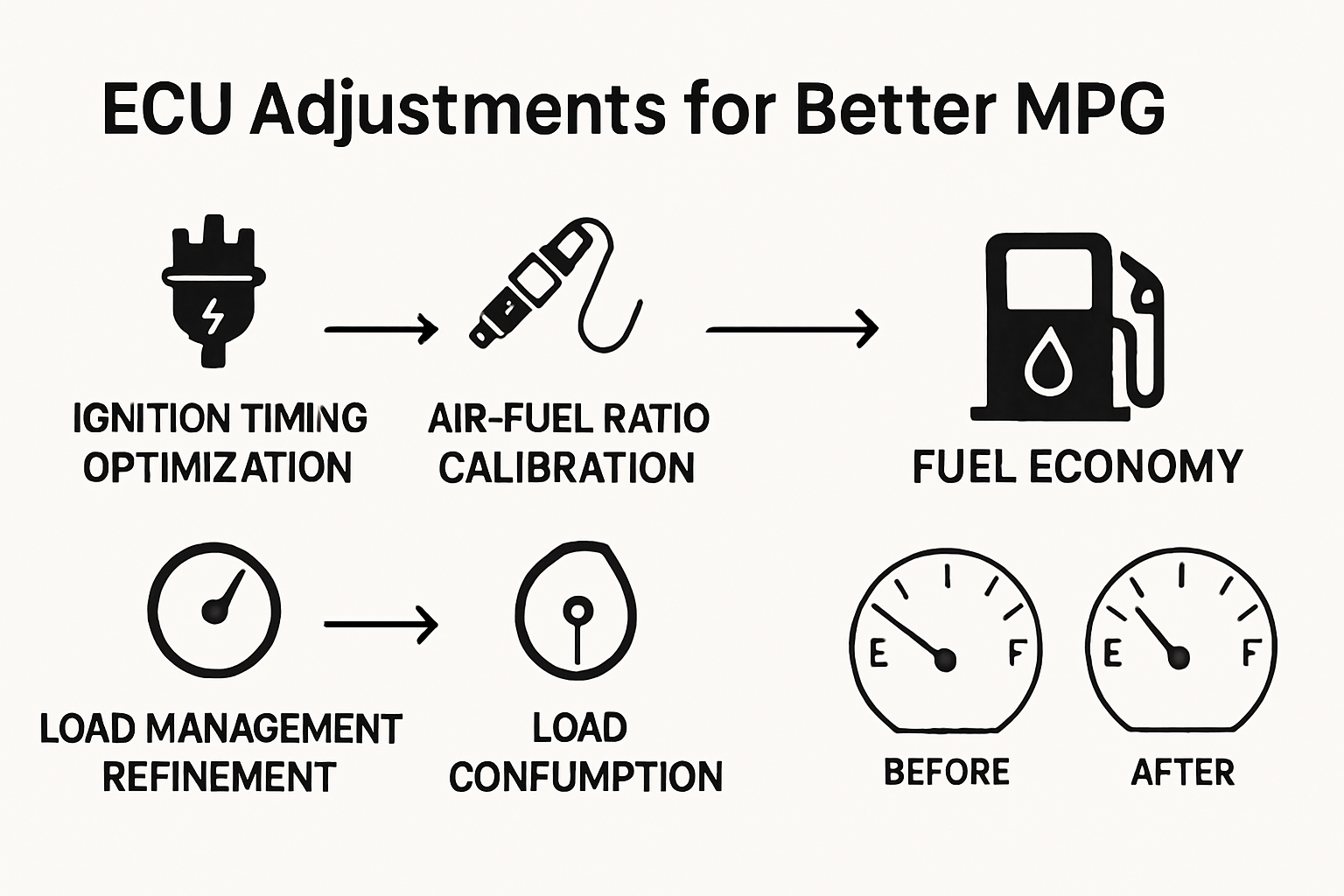
- Ignition Timing Optimization: Fine-tuning spark advance to maximize combustion efficiency
- Air-Fuel Ratio Calibration: Precise metering of fuel injection for optimal energy conversion
- Load Management Refinement: Intelligent power regulation across different driving conditions
The goal of these adjustments is not simply reducing fuel consumption but maximizing the energy conversion process. By implementing sophisticated digital mapping techniques, tuners can create a more responsive and economical engine performance profile.
Advanced Control Methodologies
Innovative research using machine learning has demonstrated remarkable potential in optimizing engine control parameters. Nonlinear model predictive control techniques allow for real-time adjustments of fuel injection and ignition timing in compression ignition engines, resulting in measurable improvements in both fuel economy and emissions reduction.
A comprehensive approach to ECU tuning involves multiple interconnected strategies. Researchers studying spark ignition engines have shown that power regulation methods can be systematically adjusted to enhance overall fuel efficiency. This involves creating complex algorithmic models that predict and adapt to various driving conditions.
The most effective ECU adjustments focus on several critical parameters:
- Precise fuel metering across different engine loads
- Intelligent throttle response mapping
- Optimized combustion chamber performance
- Reduced internal mechanical resistance
Professional tuners utilize advanced diagnostic tools to analyze existing engine performance characteristics. These tools enable them to create custom digital maps that transform generic manufacturer settings into personalized, efficiency-oriented configurations.
Understanding the intricate relationship between digital parameters and mechanical performance is crucial. Each millisecond of fuel injection and every degree of spark timing represents an opportunity for optimization. The result is not just incremental improvements but a holistic transformation of engine efficiency.
Tuning Strategies for Different Vehicle Types
Fuel economy tuning is not a one-size-fits-all approach. Different vehicle types require unique strategies that account for their specific mechanical characteristics, driving conditions, and performance requirements. Discover tuning fundamentals to understand the nuanced approach needed for various vehicle configurations.
Passenger Vehicle Optimization
Personal automobiles demand a delicate balance between efficiency and performance. According to the U.S. Environmental Protection Agency, optimizing fuel economy involves multiple strategic approaches:
- Weight Reduction: Removing unnecessary items to decrease overall vehicle mass
- Aerodynamic Improvements: Minimizing drag through strategic modifications
- Efficient Driving Techniques: Implementing smooth acceleration and consistent speed maintenance

Professional tuners focus on creating custom ECU maps that adapt to typical passenger vehicle driving patterns. This involves precise calibration of throttle response, fuel injection timing, and load management to maximize efficiency across varied driving conditions.
Commercial and Heavy-Duty Vehicle Considerations
Commercial vehicles present unique challenges in fuel economy tuning. The U.S. Department of Energy’s Alternative Fuels Data Center highlights critical strategies for improving efficiency in larger vehicles:
- Aerodynamic Equipment: Installing trailer gap reducers, side skirts, and aerodynamic devices
- Tire Technology: Utilizing low rolling resistance tires to minimize energy loss
- Powertrain Optimization: Developing specialized ECU mappings for different load conditions
Trucks and commercial vehicles benefit from more aggressive tuning strategies that prioritize fuel consumption across extended driving cycles. Unlike passenger vehicles, these platforms require more robust computational models that account for varying payload weights, frequent acceleration and deceleration, and more demanding operational environments.
Specialized Vehicle Performance Tuning
Performance vehicles and specialized equipment demand a more nuanced approach to fuel economy tuning. Professional tuners must balance efficiency with the specific performance requirements of sports cars, racing vehicles, and high-performance machinery.
Key considerations include:
- Precision fuel metering
- Advanced ignition timing strategies
- Dynamic load management
- Adaptive performance mapping
The most sophisticated tuning approaches involve real-time data analysis and machine learning algorithms that continuously optimize engine performance. This dynamic approach allows vehicles to adapt to changing driving conditions, environmental factors, and individual driver behaviors.
Understanding the unique characteristics of each vehicle type is crucial. A diesel truck requires fundamentally different tuning strategies compared to a hybrid sedan or a high-performance sports car. Professional tuners must possess deep technical knowledge and advanced diagnostic tools to create truly optimized fuel economy solutions.
Below is a comparison table outlining tuning strategies tailored for different vehicle types. This visual guide highlights the priority approaches and considerations for optimizing fuel economy across varied automotive platforms.
| Vehicle Type | Main Tuning Strategies | Special Considerations |
|---|---|---|
| Passenger Vehicles | Weight reduction, aerodynamic mods, efficient driving | Must balance comfort & performance |
| Commercial/Heavy-Duty | Aerodynamic equipment, tire technology, powertrain mapping | Account for variable loads and longer cycles |
| Specialized/Performance | Precision fuel metering, adaptive mapping, advanced timing | Maintain performance without sacrificing efficiency |
Ultimately, successful tuning is about creating a harmonious relationship between the vehicle’s mechanical systems and its digital control mechanisms. By carefully analyzing and adjusting each vehicle’s specific parameters, tuners can unlock significant improvements in fuel efficiency across diverse automotive platforms.
Common Mistakes and How to Avoid Them
Fuel economy tuning requires precision and careful approach. Professional tuners and vehicle owners frequently encounter pitfalls that can undermine their efforts to improve efficiency. Understanding these common mistakes is crucial for achieving optimal results.
Misguided Performance Modifications
Learn essential tuning principles to prevent costly errors. According to the U.S. Environmental Protection Agency, tampering with emission control systems often leads to unintended consequences. Critical mistakes to avoid include:
- Unauthorized Emission System Modifications: Risking mechanical durability and performance
- Improper ECU Calibration: Creating unintended negative impacts on fuel efficiency
- Ignoring Manufacturer Specifications: Compromising vehicle reliability
Many enthusiasts mistakenly believe aggressive modifications will automatically improve fuel economy. In reality, poorly executed tuning can result in increased fuel consumption and potential engine damage. Professional approach requires careful analysis and precise adjustments.
Driving Behavior Misconceptions
Fuel economy research reveals that driving behavior significantly impacts overall efficiency. According to the U.S. Department of Energy, driving habits can reduce fuel economy by up to 30% in highway conditions and 40% in stop-and-go traffic:
- Aggressive Acceleration: Dramatically increases fuel consumption
- Excessive Speeding: Creates aerodynamic drag and reduces efficiency
- Unnecessary Idling: Wastes fuel without providing any meaningful benefit
Effective fuel economy is not just about technical modifications but also about intelligent driving techniques. Professional tuners understand that software adjustments must be complemented by responsible driving practices.
Technical Overmodification Risks
Advanced tuning requires a nuanced understanding of vehicle systems. Common technical mistakes include:
- Attempting complex modifications without proper diagnostic equipment
- Ignoring specific vehicle manufacturer recommendations
- Applying generic tuning strategies across different vehicle types
- Overlooking the importance of regular maintenance
Successful fuel economy tuning demands a holistic approach. It combines sophisticated ECU adjustments, understanding vehicle-specific characteristics, and maintaining a comprehensive maintenance strategy. Professionals recognize that each vehicle represents a unique system requiring personalized optimization.
The most effective tuning strategies involve:
- Comprehensive vehicle diagnostics
- Precise, targeted ECU modifications
- Continuous performance monitoring
- Regular maintenance and calibration updates
Ultimately, avoiding common mistakes requires a combination of technical knowledge, patience, and a willingness to understand each vehicle’s unique characteristics. Successful tuning is an art that balances technical precision with practical understanding of automotive systems.
The following table summarizes common mistakes made during fuel economy tuning and offers corresponding ways to avoid them, as detailed in the article. Use this as a checklist to ensure best practices are followed.
| Common Mistake | What Happens | How to Avoid |
|---|---|---|
| Unauthorized emission modification | Risk mechanical damage, reduce efficiency | Follow manufacturer specs, avoid tampering |
| Improper ECU calibration | Negative fuel economy impact | Use professional diagnostics and tools |
| Aggressive/incorrect driving behavior | Wastes fuel, increases consumption | Practice smooth acceleration and speed control |
| Complex mods without right equipment | Can harm reliability and performance | Ensure proper tools and expertise before tuning |
| Ignoring regular diagnostics/maintenance | Tuning becomes ineffective over time | Schedule regular maintenance and performance checks |
Frequently Asked Questions
What is tuning for fuel economy?
Tuning for fuel economy involves adjusting an engine’s electronic control unit (ECU) settings to enhance fuel efficiency. By optimizing critical parameters like ignition timing, air-fuel ratio, and load management, car owners can improve miles per gallon and save on fuel costs.
How much can tuning improve fuel efficiency?
With proper ECU adjustments, fuel efficiency improvements of up to 10 percent are possible. This can lead to significant savings at the pump without the need for major vehicle modifications or new purchases.
What are the common ECU adjustments made for better fuel economy?
Key ECU adjustments for improving fuel economy include optimizing ignition timing, calibrating air-fuel ratios, refining load management, and enhancing throttle response. Each of these adjustments focuses on maximizing energy use and reducing waste during combustion.
Are there specific tuning strategies for different vehicle types?
Yes, tuning strategies vary by vehicle type. Passenger vehicles focus on weight reduction and aerodynamic improvements, while commercial vehicles may require more robust tuning for fuel efficiency during extended driving cycles. Specialized performance vehicles also need unique adjustments to balance efficiency with their high-performance capabilities.
Achieve Real Fuel Savings with Proven ECU Tuning Solutions
Tired of watching your fuel costs climb, even after trying so many general tips? If you are serious about gaining real improvements from fuel economy tuning, you need reliable, customized ECU files that match your car’s needs. Generic solutions can cost you efficiency, while risky file sources might even harm your engine. The article explains the power of ECU adjustments like ignition timing, air-fuel calibration, and intelligent mapping. But achieving these gains requires safe, tested, and precise file management.

Thousands of professional tuners and vehicle owners trust ECUFlashFiles.com to unlock true fuel economy. Our platform gives you instant access to factory and optimized tuning files for any project, all verified for performance and security. Whether you need a starting point for efficient ECU modification support or the perfect calibration for your vehicle, we back every download with over 20 years of expertise. Do not miss the benefits of lower fuel costs and a smoother drive. Visit ECUFlashFiles.com now to search by your exact car and get the tuning files that deliver measured results. Start your path to long-term savings and peak vehicle performance today.
Recommended
- ECU Tuning for Beginners: Essential Guide for 2025 – Ecu flash files
- How Does ECU Work? 2025 Guide for Car Performance – Ecu flash files
- ECU Tuned File | stage 1 | VW Transporter Bosch EDC17CP20 EDC17 CB.03.15.00 C34.00 1.0 03L906022JD
- ECU Tuned File | stage 1 | VW Transporter Bosch EDC17CP20 EDC17 CB.03.15.00 C34.00 1.0 03L906022CD
- Top Benefits of Fleet Tracking for Businesses in 2025 | GPS Tracking Service – Dupno Tracker | Best Vehicle Tracking in Bangladesh %