
Common rail diesel tuning promises truck owners more power with better fuel savings. The idea of squeezing out extra horsepower while cutting emissions sounds almost too good to be true. Yet the data does not lie—ECU remapping can boost diesel engine output by 20% to 40% and even improve fuel efficiency by up to 15%. But that is just the start. The real surprise is that tuning smartly can let you chase more performance without sacrificing reliability. Curious how that balance works? Let’s dig in.
Table of Contents
- Understanding Common Rail Diesel Systems
- Key Tuning Methods And Techniques
- Benefits And Risks Of Diesel Ecu Tuning
- Essential Tips For Safe Common Rail Tuning
Quick Summary
| Takeaway | Explanation |
|---|---|
| Common rail systems enhance diesel performance. | They provide precise fuel delivery and timing, leading to improved efficiency and emissions control compared to traditional methods. |
| ECU remapping significantly boosts engine power. | Adjusting fuel injection timing, pressure, and turbo boost can yield power increases of 20% to 40% when done correctly. |
| Incremental tuning mitigates risks effectively. | Gradually modifying engine parameters allows for monitoring and fine-tuning, thus reducing the chance of mechanical failure. |
| Enhanced maintenance is crucial post-tuning. | Increased performance may stress components; regular servicing helps maintain engine health and performance longevity. |
| Risks must be balanced with performance gains. | Understanding the potential mechanical stresses and emissions compliance is essential when modifying a diesel engine. |
Understanding Common Rail Diesel Systems
Common rail diesel systems represent a significant technological advancement in diesel engine design, transforming how fuel is delivered and managed within modern diesel engines. This sophisticated fuel injection technology has revolutionized diesel performance, efficiency, and overall engine capabilities.
The Core Technology of Common Rail Systems
At its fundamental level, a common rail diesel system is an advanced fuel injection technology that differs dramatically from traditional mechanical injection methods. Learn more about diesel engine technologies in our comprehensive guide. The system utilizes a high-pressure fuel rail that acts as a central reservoir, storing fuel at extremely high pressures and distributing it to individual electronically controlled injectors.
According to research from automotive engineering experts, these systems can maintain fuel pressures up to 2,000 bar (29,000 psi), which is significantly higher than conventional diesel injection systems. This high-pressure approach enables multiple precise fuel injections during a single combustion cycle, resulting in more efficient fuel atomization and combustion.
Advanced Fuel Delivery and Electronic Control
The key differentiator of common rail systems is their electronic precision. Unlike older mechanical systems, each injector is controlled by sophisticated electronic solenoid valves that can modulate fuel delivery with incredible accuracy. This electronic control allows for:
- Precise Timing: Injectors can deliver fuel at exactly the right moment in the combustion cycle
- Multiple Injections: Enabling pre-injection, main injection, and post-injection strategies
- Variable Fuel Quantity: Exact fuel volume control for optimal combustion efficiency
Modern diesel engines leverage these electronic capabilities to achieve remarkable improvements in performance and emissions control. The automotive engineering literature confirms that common rail systems can reduce particulate emissions by up to 30% compared to traditional mechanical injection systems.
The integration of electronic control units (ECUs) with common rail technology means that engine performance can be continuously optimized. Real-time adjustments to fuel delivery can compensate for varying environmental conditions, altitude, load, and driving styles, ensuring consistent performance across diverse operating conditions.
Understanding the intricacies of common rail diesel systems reveals why they have become the standard in modern diesel engine design. Their ability to provide precise, efficient fuel delivery while maintaining high performance and reduced emissions makes them a critical technology in contemporary automotive engineering.
Key Tuning Methods and Techniques
Common rail diesel tuning represents a sophisticated approach to enhancing engine performance, involving precise modifications to fuel injection systems and electronic control parameters. Professional tuners employ multiple strategic techniques to unlock the full potential of diesel engines.
Electronic Control Unit (ECU) Remapping
ECU remapping stands as the cornerstone of common rail diesel tuning. Learn more about advanced ECU optimization techniques to understand the intricate process of performance enhancement. According to research published by the Society of Automotive Engineers, strategic ECU modifications can significantly improve engine efficiency and performance.
The remapping process involves carefully rewriting the engine’s firmware to adjust critical parameters such as:
- Fuel Injection Timing: Optimizing the precise moment of fuel delivery
- Injection Pressure: Modifying fuel rail pressure for enhanced combustion
- Boost Pressure: Increasing turbocharger performance
- Fuel Quantity: Precisely controlling fuel volume for maximum efficiency
Advanced Injection Strategy Modifications
Professional tuners focus on sophisticated injection strategy modifications to extract maximum performance. Automotive engineering research demonstrates that adjusting injector tip configurations and fuel flow rates can dramatically improve engine characteristics.
Key injection strategy techniques include:
- Multiple Injection Optimization: Implementing pre-injection, main injection, and post-injection strategies
- Injection Duration Control: Fine-tuning fuel delivery duration for improved combustion
- Pressure Wave Dynamics: Managing fuel pressure waves to enhance overall system efficiency
Performance Calibration and Emissions Management
Modern common rail diesel tuning goes beyond simple power increases. Research from the University of North Texas highlights the importance of maintaining emissions compliance while improving performance.
Advanced tuning techniques now focus on:
- Precise Emissions Control: Strategically reducing NOx and particulate emissions
- Fuel Economy Optimization: Implementing efficiency-enhancing modifications
- Adaptive Performance Mapping: Creating dynamic engine performance profiles
Successful common rail diesel tuning requires a nuanced understanding of engine systems, electronic controls, and combustion dynamics. Professional tuners must balance performance gains with mechanical reliability, emissions standards, and overall engine longevity. The key lies in making precise, calculated modifications that unlock potential without compromising the engine’s fundamental integrity.
Benefits and Risks of Diesel ECU Tuning
Diesel ECU tuning represents a complex landscape of potential performance enhancements and potential mechanical challenges. Understanding the delicate balance between performance gains and potential risks is crucial for automotive enthusiasts and professional tuners alike. Explore comprehensive ECU tuning strategies to make informed decisions about your vehicle’s performance modification.
Performance and Efficiency Advantages
Common rail diesel ECU tuning offers substantial benefits for vehicle owners seeking improved performance. According to automotive performance research, professionally executed tuning can deliver significant improvements:
- Power Increase: Typical gains range from 20% to 40% in horsepower and torque
- Fuel Efficiency: Potential improvements of 5% to 15% in overall fuel consumption
- Throttle Response: Enhanced acceleration and more immediate power delivery
- Towing Capabilities: Improved low-end torque for heavy-load applications
Professional tuners can optimize engine parameters to extract maximum performance while maintaining critical system tolerances. The strategic adjustment of fuel injection timing, boost pressure, and fuel quantity enables more efficient combustion and power generation.
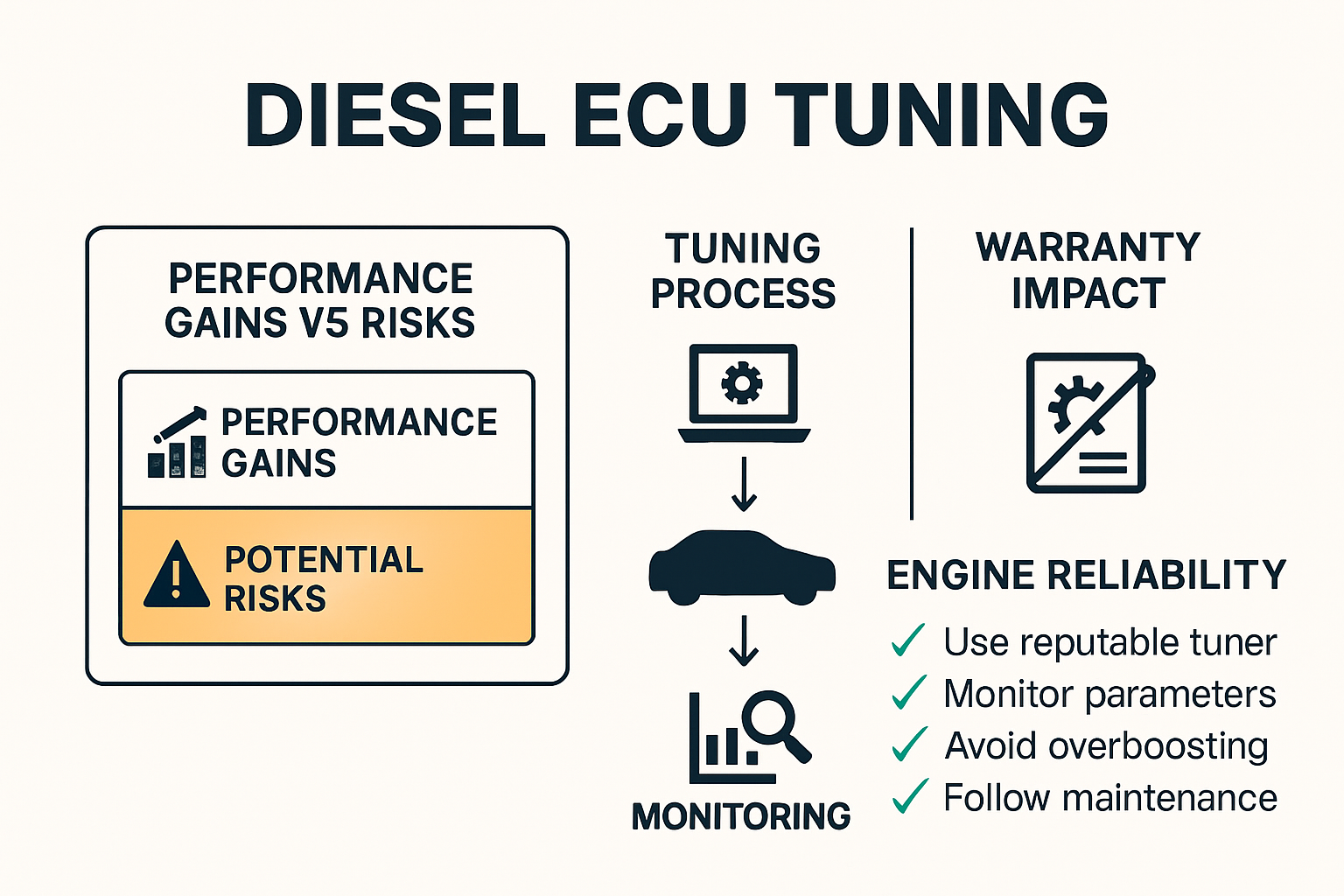
Here is a summary table outlining the major benefits and risks of diesel ECU tuning as discussed in this section, to help readers quickly weigh the advantages against the potential drawbacks.
| Category | Benefit/Risk | Details/Examples |
|---|---|---|
| Performance | Power Increase | 20% to 40% increase in horsepower and torque |
| Efficiency | Improved Fuel Economy | 5% to 15% reduction in fuel consumption |
| Usability | Enhanced Throttle Response | More immediate acceleration |
| Capability | Increased Towing Power | Improved low-end torque for heavy loads |
| Warranty | Potential Warranty Void | Modifications may void manufacturer coverage |
| Reliability | Higher Mechanical Stress | Accelerated wear, risk of premature failure |
| Compliance | Possible Emissions Non-Compliance | May challenge meeting regulatory standards |
| Maintenance | Need for Frequent Service | Increased monitoring and servicing required |
Potential Risks and Mechanical Considerations
While ECU tuning presents compelling performance advantages, it also introduces potential risks that require careful consideration. Engineering studies highlight several critical considerations:
- Warranty Implications: Modifications may void manufacturer warranties
- Increased Mechanical Stress: Elevated performance can accelerate component wear
- Emissions Compliance: Potential challenges with meeting regulatory standards
- Long-Term Reliability: Risk of premature component failure if tuning exceeds manufacturer specifications
Successful ECU tuning demands a nuanced approach that balances performance gains with mechanical preservation. Professional tuners must carefully calibrate modifications to prevent excessive stress on engine components while maintaining optimal performance characteristics.
Mitigation Strategies and Best Practices
Minimizing risks associated with diesel ECU tuning requires a strategic and informed approach. Key mitigation strategies include:
- Professional Assessment: Comprehensive vehicle diagnostics before tuning
- Quality Tuning Files: Using verified, manufacturer-specific ECU calibrations
- Gradual Performance Increases: Implementing incremental modifications
- Regular Maintenance: Enhanced monitoring and more frequent service intervals
- Quality Components: Upgrading supporting hardware to match increased performance demands
Ultimately, successful diesel ECU tuning is not about pushing limits, but about thoughtful, calculated performance enhancement. Vehicle owners must approach modifications with a comprehensive understanding of their specific engine’s capabilities and limitations. The goal is achieving a harmonious balance between increased performance and long-term mechanical reliability.
Professional tuners who understand these nuanced dynamics can transform a standard diesel vehicle into a more powerful, efficient machine without compromising its fundamental integrity.
Essential Tips for Safe Common Rail Tuning
Safe common rail diesel tuning requires a meticulous approach that balances performance enhancement with mechanical preservation. Professional tuners and vehicle owners must navigate a complex landscape of technical considerations to ensure optimal results without compromising engine integrity. Discover comprehensive tuning strategies to maximize your diesel performance safely.
Comprehensive Vehicle Assessment and Preparation
Before attempting any tuning modifications, a thorough vehicle diagnostic process is critical. According to automotive engineering research, successful tuning begins with a comprehensive system evaluation. Key preparatory steps include:

- Baseline Performance Measurement: Documenting initial engine performance metrics
- Mechanical Condition Inspection: Checking critical components for wear or damage
- Filtration System Evaluation: Research indicates that proper fuel filtration can improve system longevity by up to 20 percent
- Component Compatibility Assessment: Verifying hardware can support proposed modifications
Professional tuners must recognize that not all vehicles are equally suitable for performance enhancements. Some engines may have inherent limitations that make aggressive tuning risky or counterproductive.
To aid the tuning process, here is a checklist table summarizing essential preparatory and ongoing steps for safe common rail tuning as described in this section.
| Step/Process | Purpose | Status/Recommendation |
|---|---|---|
| Baseline Performance Measurement | Establish starting engine metrics | Mandatory prior to tuning |
| Mechanical Condition Inspection | Detect wear/damage | Highly recommended |
| Filtration System Evaluation | Ensure fuel system longevity | Recommended |
| Component Compatibility Assessment | Confirm hardware supports changes | Crucial for reliability |
| Real-Time Parameter Tracking | Monitor system health post-tuning | Ongoing requirement |
| Regular Maintenance/Servicing | Maintain engine performance | Increased frequency post-tuning |
| Quality Component Selection | Support higher performance safely | Use performance-grade parts |
Incremental Tuning and Monitoring Strategies
Successful common rail diesel tuning requires a conservative, step-by-step approach. Rather than implementing dramatic modifications, professionals recommend gradual performance increases with continuous monitoring. Emission control research demonstrates that strategic, incremental adjustments can significantly improve engine efficiency while minimizing potential risks.
Critical monitoring techniques include:
- Real-Time Parameter Tracking: Monitoring exhaust temperatures, boost pressure, and fuel rail pressures
- Periodic Performance Assessments: Conducting regular diagnostics after each modification
- Emissions Compliance Verification: Ensuring modifications do not compromise regulatory standards
- Thermal Management: Tracking engine temperature and cooling system performance
Advanced Safety Protocols and Maintenance Considerations
Beyond initial tuning, long-term reliability depends on implementing robust maintenance and monitoring protocols. Vehicle owners must adopt a proactive approach to preserve engine health and performance gains.
Key safety and maintenance recommendations include:
- Enhanced Servicing Frequency: More frequent oil changes and component inspections
- Quality Component Selection: Using high-grade replacement parts designed for enhanced performance
- Predictive Maintenance: Implementing diagnostic technologies that detect potential issues before they become critical
- Continued Education: Staying informed about emerging tuning technologies and best practices
Common rail diesel tuning is not a one-time event but an ongoing process of careful optimization. Success requires a holistic approach that balances technical expertise, sophisticated diagnostic tools, and a deep understanding of diesel engine dynamics. Professional tuners who prioritize methodical, conservative modifications can unlock significant performance potential while maintaining the long-term reliability and efficiency of modern diesel engines.
Frequently Asked Questions
What is common rail diesel tuning?
Common rail diesel tuning is a method of modifying a diesel engine’s Electronic Control Unit (ECU) to enhance performance, efficiency, and fuel delivery through advanced fuel injection technology.
How can ECU remapping improve diesel engine performance?
ECU remapping can increase engine output by 20% to 40% by optimizing fuel injection timing, pressure, and turbo boost, leading to improved horsepower and torque.
What are the benefits of common rail diesel tuning?
Benefits include significant power increases, better fuel efficiency (up to 15%), improved throttle response, and enhanced towing capabilities, making it suitable for various driving conditions.
What risks are associated with diesel ECU tuning?
Potential risks include increased mechanical stress on engine components, possible warranty voids, and challenges in meeting emissions compliance, which must be carefully managed through professional assessment and maintenance.
Upgrade Your Common Rail Diesel Tuning with Verified ECU Solutions
If you are ready to transform your vehicle’s performance but worry about the risks of unreliable ECU files or untested tuning strategies, you are not alone. The article above made it clear that chasing safer power increases and long-term reliability depends on access to precise calibration data and proven ECU files. Enthusiasts and professionals often face these pain points:
- Wasting time searching for the right files
- Concern about nullifying the factory warranty
- Difficulty finding trusted sources for original or tuned files that match your engine’s specs

Stop settling for guesswork or generic files. Let ECUFlashFiles.com connect you with a vast library of original, tuned, and DAMOS ECU files that match your specific car make, model, and engine type. Every file is tested and instantly available to help you achieve safer, more efficient tuning. Visit our homepage now to explore our tools for ECU remapping and data recovery, or get in touch for expert support and see how easy next-level performance can be.
Recommended
- ECU Tuning for Beginners: Essential Guide for 2025 – Ecu flash files
- How Does ECU Work? 2025 Guide for Car Performance – Ecu flash files
- ECU Tuned File | stage 1 | VW Transporter Bosch EDC17CP20 EDC17 CB.03.15.00 C34.00 1.0 03L906022JD
- ECU Tuned File | stage 1 | VW Transporter Bosch EDC17CP20 EDC17 CB.03.15.00 C34.00 1.0 03L906022CD