
When it comes to the way your car puts power to the pavement, most people think it all depends on whether you drive stick or let the car shift itself. Shockingly, over 95 percent of new cars sold in the United States now have automatic transmissions, leaving manuals nearly extinct on dealer lots. You might guess that automatics are just about convenience, but here is the surprising bit. New technology means automatics can now match or even beat manuals in both performance and fuel efficiency, flipping everything we thought we knew about driving.
Table of Contents
- Defining Automatic And Manual Transmission
- The Importance Of Transmission Type In Vehicle Performance
- How Automatic And Manual Transmissions Work
- Key Differences Between Automatic And Manual Transmissions
- Real-World Applications And Preferences In Transmission Choices
Quick Summary
| Takeaway | Explanation |
|---|---|
| Manual transmissions offer direct driver control | They allow drivers to shift gears manually, enhancing engagement and performance management. |
| Automatic transmissions provide convenience for urban driving | They eliminate the need for manual gear shifting, making them ideal for stop-and-go traffic. |
| Modern automatic transmissions match manual efficiency | Technological advancements have improved fuel efficiency and responsiveness in automatic systems. |
| Transmission choice reflects personal driving context | Preferences depend on driving environment, skill level, and vehicle purpose, influencing decision-making. |
| Experienced drivers often prefer manual transmissions for performance | Manual systems are favored in performance driving for their power management and engagement advantages. |
Defining Automatic and Manual Transmission
The world of automotive powertrains is fundamentally shaped by two primary transmission systems: automatic and manual. These systems represent distinct approaches to transferring engine power to a vehicle’s wheels, each with unique mechanical characteristics and driving experiences.
What Are Transmission Systems?
Transmission systems are critical components in vehicles that convert engine power into rotational motion, enabling the car to move at different speeds and under varying driving conditions. They act as intermediaries between the engine and the wheels, allowing drivers to control vehicle acceleration, speed, and overall performance.
In the automatic vs manual transmission landscape, the core difference lies in how gear shifting occurs:
- Manual Transmission: Requires direct driver intervention for gear changes
- Automatic Transmission: Handles gear shifting without explicit driver input
Mechanical Principles
At their fundamental level, both transmission types serve the same purpose: translating engine rotational energy into forward motion while allowing speed and power adjustments. Manual transmissions use a clutch and direct gear selection mechanism, where the driver physically moves a gear stick to change speeds. Automatic transmissions, conversely, utilize a complex hydraulic system with planetary gear sets and torque converters that automatically select appropriate gears based on vehicle speed and engine load.
According to Society of Automotive Engineers, transmission technology continues to evolve, with modern systems blending traditional mechanical principles with advanced electronic controls. This evolution reflects ongoing efforts to optimize vehicle performance, fuel efficiency, and driving comfort.
Performance and Efficiency Considerations
While both transmission types aim to optimize vehicle performance, they differ significantly in their approach. Manual transmissions traditionally offer more direct driver control and can provide slightly better fuel efficiency in skilled hands. Automatic transmissions have historically been associated with reduced performance but offer unparalleled convenience, especially in urban driving environments with frequent stop-and-go traffic.
Modern automotive engineering has narrowed these performance gaps, with advanced automatic transmissions now delivering comparable or even superior efficiency and responsiveness compared to their manual counterparts.
The Importance of Transmission Type in Vehicle Performance
Transmission systems play a pivotal role in determining a vehicle’s overall performance, efficiency, and driving dynamics. The choice between automatic and manual transmissions extends far beyond simple gear-shifting mechanisms, profoundly impacting vehicle characteristics and driver experience.
Performance Characteristics
Vehicle performance is fundamentally influenced by transmission design. Manual transmissions provide direct mechanical power transfer, allowing more precise driver control over engine output. This direct connection enables experienced drivers to optimize acceleration, manage engine RPM, and extract maximum performance from the powertrain.
Automatic transmissions, however, have evolved significantly. Modern iterations incorporate advanced electronic controls that can:
- Predict optimal shifting points
- Adapt to driving conditions in real time
- Minimize power loss during gear transitions
- Provide smoother acceleration profiles
Efficiency and Energy Management
Efficiency represents another critical dimension where transmission type substantially impacts vehicle performance. According to U.S. Department of Energy, recent technological advancements have narrowed the historical efficiency gap between manual and automatic transmissions.
Modern automatic transmissions now incorporate sophisticated technologies like:
- Multiple gear ratios
- Advanced torque converters
- Electronic shift management
- Integrated thermal management systems
These innovations enable automatic transmissions to deliver comparable or even superior fuel economy compared to traditional manual systems. For enthusiasts looking to optimize their vehicle’s fuel efficiency, understanding transmission characteristics becomes crucial.
Driving Experience and Technical Considerations
Beyond pure performance metrics, transmission type significantly influences driving experience. Manual transmissions offer a more engaging, tactile connection between driver and vehicle, appealing to driving enthusiasts who value direct mechanical interaction. Automatic transmissions, conversely, provide unparalleled convenience, especially in urban environments with complex traffic conditions.
Technical considerations such as vehicle weight, intended use, and driving environment further complicate transmission selection. Professional drivers and performance enthusiasts often prioritize manual transmissions for their precision, while everyday drivers typically prefer the seamless operation of modern automatic systems.
How Automatic and Manual Transmissions Work
Understanding the internal mechanics of automatic and manual transmissions reveals the sophisticated engineering that enables vehicles to translate engine power into forward motion. Each transmission system employs unique mechanical principles to achieve power transfer and speed regulation.
Manual Transmission Mechanics
Manual transmissions operate through a direct mechanical connection between the driver and vehicle’s powertrain. The system comprises several critical components working in synchronized harmony:
- Clutch: Enables smooth engagement and disengagement of engine power
- Gear Stick: Allows direct driver control over gear selection
- Synchronizer Rings: Facilitate smooth gear transitions
- Transmission Shaft: Transfers rotational energy between engine and wheels
When a driver presses the clutch pedal, it disconnects the engine from the transmission, allowing manual gear shifting. The driver then selects the appropriate gear using the gear stick, managing power delivery based on driving conditions and desired performance.
Automatic Transmission Complexity
Automatic transmissions represent a more intricate mechanical system. Instead of direct driver intervention, they utilize a complex hydraulic system with planetary gear sets and torque converters. According to SAE International, these systems employ advanced electronic controls to manage gear shifts seamlessly.
Key components in automatic transmissions include:
- Torque Converter
- Planetary Gear Sets
- Hydraulic Pressure System
- Electronic Control Unit
- Transmission Fluid
The torque converter replaces the manual clutch, using fluid dynamics to transfer rotational energy between the engine and transmission. Planetary gear sets provide multiple gear ratios without manual intervention, while the electronic control unit monitors vehicle speed, throttle position, and other parameters to determine optimal shifting points.
Performance and Precision Engineering
Both transmission types aim to optimize power transfer, but their approaches differ fundamentally. Manual transmissions offer precise driver control and potentially more direct mechanical efficiency. Automatic transmissions prioritize convenience and adaptability, using sophisticated electronic tuning solutions to enhance performance.
Modern transmission design continues to blur traditional performance distinctions. Advanced automatic transmissions now incorporate multiple clutches, sophisticated gear ratios, and predictive shifting algorithms that rival or exceed the efficiency of traditional manual systems.
Key Differences Between Automatic and Manual Transmissions
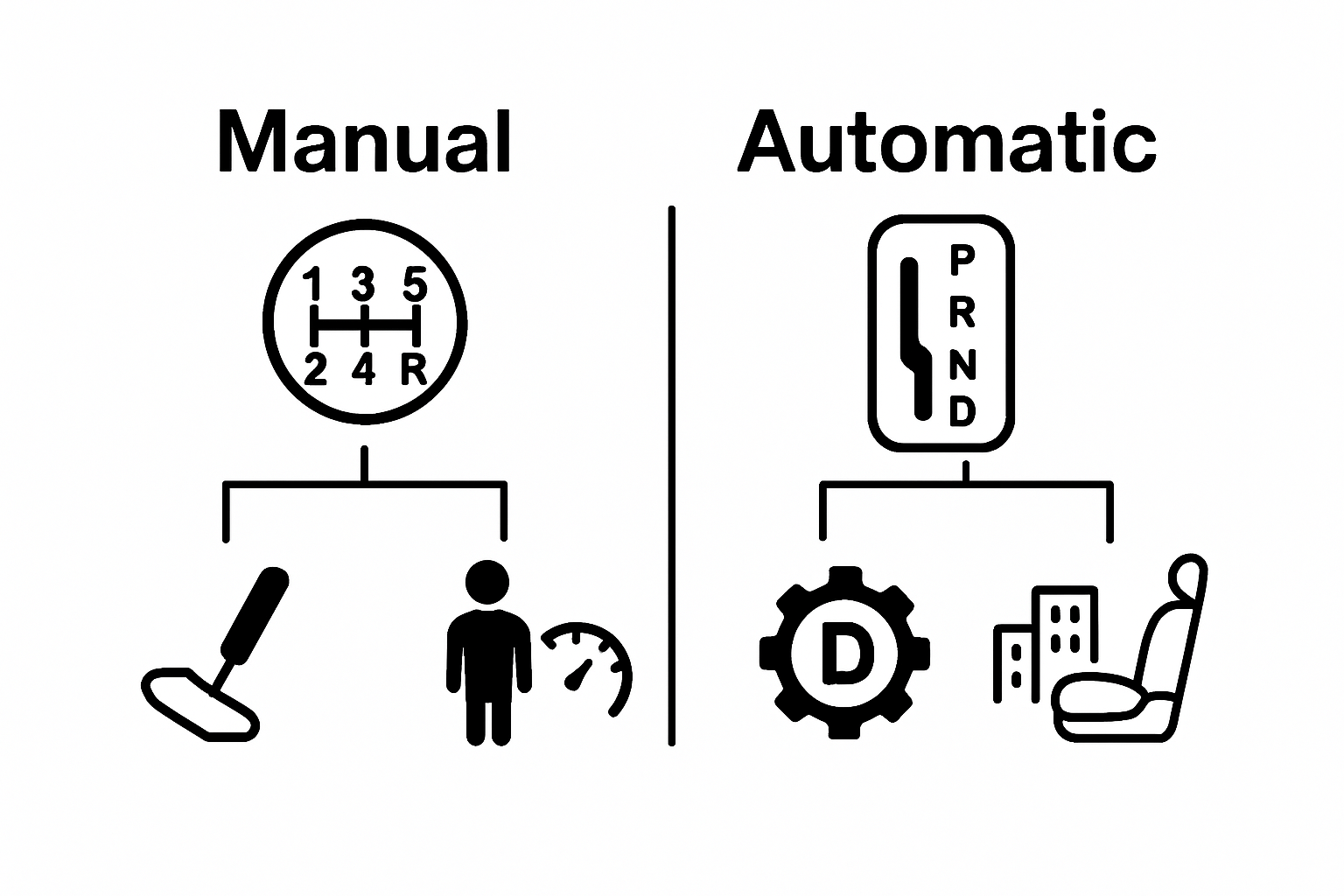
While both automatic and manual transmissions serve the fundamental purpose of transferring engine power to a vehicle’s wheels, they differ significantly in design, operation, and driver interaction. Understanding these distinctions helps drivers make informed decisions about their preferred driving experience and vehicle performance.
Mechanical and Operational Differences
The core mechanical architecture distinguishes manual and automatic transmissions. Manual transmissions require direct driver engagement through a clutch pedal and gear stick, creating a more mechanical and tactile driving experience. Drivers must actively manage gear shifts, requiring skill and consistent attention.
Automatic transmissions, by contrast, utilize a complex hydraulic system that eliminates manual gear shifting. Key operational differences include:
- Driver input requirements
- Gear shifting mechanisms
- Power transfer efficiency
- Complexity of internal components
- Maintenance and repair approaches
According to National Academies of Sciences, manual transmissions typically feature fewer components, resulting in potentially lower manufacturing and maintenance costs compared to their automatic counterparts.
Performance and Driving Experience
Performance characteristics vary significantly between transmission types. Manual transmissions offer more direct driver control, allowing experienced operators to optimize acceleration and engine performance. Enthusiasts often prefer manual transmissions for their:
- Precise power management
- Enhanced driving engagement
- Potential for higher performance tuning
- More immediate mechanical feedback
Automatic transmissions prioritize convenience and adaptability. Modern iterations incorporate advanced electronic controls that can predict and optimize performance, effectively bridging the historical performance gap between transmission types.
Economic and Practical Considerations
Beyond mechanical differences, transmission type impacts vehicle economics and practical usability. Automatic transmissions generally provide superior convenience in urban driving environments with frequent stop-and-go traffic. Manual transmissions, while potentially more challenging to operate, can offer slight improvements in fuel efficiency and lower initial vehicle costs.
Drivers must weigh factors like personal driving skill, typical driving conditions, maintenance preferences, and long-term vehicle ownership goals when selecting between manual and automatic transmission systems. The choice ultimately reflects individual priorities in driving experience, performance, and practicality.
To clarify the core differences between manual and automatic transmissions, the following table compares key characteristics, operational principles, and user experiences described in the article.
| Feature / Characteristic | Manual Transmission | Automatic Transmission |
|---|---|---|
| Gear Shifting Control | Driver shifts gears manually using clutch pedal | Vehicle shifts gears automatically without input |
| Key Components | Clutch, gear stick, synchronizer rings | Torque converter, planetary gears, ECU |
| Driver Engagement | Higher; requires more attention and skill | Lower; focus shifts to steering and acceleration |
| Performance Tuning Potential | High; enthusiast and racing preferred | Growing; advanced electronics enhance potential |
| Convenience in Urban Traffic | Lower; can cause fatigue in stop-and-go traffic | Higher; minimizes driver workload in city driving |
| Maintenance Complexity | Simpler; fewer parts, potentially lower cost | More complex; higher parts count, higher cost |
| Fuel Efficiency (Modern Vehicles) | Comparable or slightly better with skilled driver | Comparable or better with recent technologies |
Real-World Applications and Preferences in Transmission Choices
Transmission selection extends beyond technical specifications, deeply influencing driving experience, performance, and practical usability across diverse automotive contexts. Individual preferences, driving environments, and specific vehicle applications play crucial roles in determining the most suitable transmission type.
Professional and Performance Driving Contexts
Professional drivers and automotive enthusiasts often gravitate towards manual transmissions for their precise control and direct mechanical engagement. Performance driving scenarios demand:
- Immediate power management
- Quick gear transitions
- Enhanced driver-vehicle connection
- Greater control during high-speed maneuvers
Racing environments and high-performance automotive applications typically favor manual transmissions, allowing drivers to extract maximum performance through deliberate gear selection and engine management.
According to National Center for Biotechnology Information, manual transmission drivers demonstrate heightened situational awareness, which can translate into more nuanced vehicle control and potentially safer driving dynamics.
Urban and Everyday Driving Considerations
Urban driving environments present different transmission requirements. Automatic transmissions excel in stop-and-go traffic, offering convenience and reducing driver fatigue. Drivers navigating complex city landscapes benefit from:
- Reduced cognitive load
- Smoother acceleration
- Easier navigation in dense traffic
- Simplified driving experience
Modern automatic transmissions have significantly narrowed performance gaps, incorporating advanced wideband tuning technologies that optimize real-time performance and efficiency.
Demographic and Skill-Based Preferences
Transmission preferences vary dramatically across different driver demographics. Younger drivers increasingly prefer automatic transmissions due to their simplicity and widespread availability. Experienced drivers and automotive enthusiasts often maintain a strong preference for manual transmissions, valuing the mechanical engagement and potential performance advantages.
Regional driving cultures and educational approaches to driving also influence transmission preferences. Some countries predominantly teach driving using manual transmission vehicles, creating generational skills and preferences that shape automotive market dynamics.
Ultimately, transmission choice represents a complex interplay between personal skill, driving environment, vehicle purpose, and individual comfort. The ongoing evolution of transmission technologies continues to blur traditional performance distinctions, offering drivers increasingly sophisticated options for their specific needs.
This table summarizes how transmission type impacts real-world driving scenarios, including professional performance, daily commuting, and driver demographics, to show where each system excels according to the article.
| Application Context | Manual Transmission | Automatic Transmission |
|---|---|---|
| Professional / Performance Driving | Preferred for control and engagement | Less common; some performance automatics used |
| Urban / Stop-and-Go Traffic | Can be tiring and less convenient | Excellent for convenience and comfort |
| Enthusiast / High-Engagement Driving | Favored for tactile feedback and precision | Gaining ground with modern tech |
| New Drivers / Simplicity | Steeper learning curve | Easier to learn and operate |
| Regional Market Preferences | Favored in regions with manual driver training | Dominates U.S. new car sales |
Take Full Control of Your Transmission Tuning and Performance
Feeling uncertain about whether your automatic or manual transmission is truly performing at its best? The differences in shifting dynamics, control, and efficiency discussed in this article highlight how crucial it is to have the right data and files for optimal results. Whether you want to eliminate drivability frustrations, squeeze out more precision from manual gear changes, or unlock the latest adaptive shift logic in automatics, what you feed your ECU matters most.

If you are a professional tuner or dedicated enthusiast aiming to bridge the gap between real-world driving experience and technical performance, now is the perfect time to explore what ECUFlashFiles.com offers. Our platform specializes in performance tuning files and verified ECU data restoration solutions that match your exact transmission type, car make, and engine version. Join thousands who rely on our expertise, access a wide range of ECU files, and upgrade your driving experience today. Visit our main site to start your search and instantly discover the difference professional ECU management can make for your transmission.
Frequently Asked Questions
What is the main difference between automatic and manual transmissions?
The primary difference lies in how gear shifting occurs. In a manual transmission, the driver must manually shift gears using a gear stick and clutch pedal, while an automatic transmission shifts gears automatically without driver intervention.
What are the advantages of manual transmission over automatic transmission?
Manual transmissions offer more direct control over the vehicle’s power delivery, allowing experienced drivers to optimize acceleration and engine performance. They may also provide slightly better fuel efficiency in skilled hands.
Are automatic transmissions more efficient than manual transmissions?
In recent years, technological advancements have helped narrow the efficiency gap between automatic and manual transmissions. Modern automatic systems can deliver comparable or even superior fuel economy due to features like multiple gear ratios and advanced electronic controls.
Which type of transmission is better for urban driving?
Automatic transmissions are generally preferred for urban driving due to their convenience. They reduce the driver’s workload in stop-and-go traffic, allowing for smoother acceleration without the need for constant gear shifting.