
Throttle response tuning shapes the way your car reacts every time you touch the gas pedal. That slight delay you feel before the surge of power is not just in your head. Studies show cutting engine mass can deliver up to an 18% faster throttle response. Most drivers chase horsepower upgrades and overlook the hidden magic in throttle tuning. It’s this subtle adjustment that transforms how immediate and alive your car feels on the road.
Table of Contents
- What Is Throttle Response Tuning And Why It Matters
- Key Methods To Improve Throttle Response
- ECU Adjustments And Practical Tuning Tips
- Common Mistakes To Avoid In Throttle Tuning
Quick Summary
| Takeaway | Explanation |
|---|---|
| Optimize ECU for Better Throttle Response | ECU adjustments enhance responsiveness and require systematic tuning techniques to avoid errors. |
| Use Lightweight Components for Efficiency | Reducing engine mass improves acceleration and decreases lag, making for a more responsive vehicle. |
| Avoid Random Tuning Adjustments | Data-driven tuning prevents inefficient changes and optimizes performance by establishing baseline parameters. |
| Implement Advanced Control Algorithms | Sophisticated algorithms improve dynamic response, requiring expertise in electronic tuning for effective application. |
| Understand Mechanical Configurations | Recognizing the interplay between electronic and mechanical systems is crucial for successful tuning and performance enhancement. |
What Is Throttle Response Tuning and Why It Matters
Throttle response tuning represents a precision automotive performance technique that directly influences how quickly and smoothly an engine responds to driver input. At its core, this process involves optimizing the electronic communication between the accelerator pedal and the engine’s throttle system, transforming a vehicle’s fundamental acceleration characteristics.
The Mechanics of Electronic Throttle Control
Modern vehicles utilize electronic throttle control systems that replace traditional mechanical linkages with sophisticated electronic sensors and actuators. Learn more about ECU optimization reveals that these systems use intricate algorithms to interpret driver inputs and translate them into precise throttle plate movements.
According to research from SAE International, the Two-Degree-of-Freedom (2-DOF) Proportional-Integral-Derivative (PID) controller plays a critical role in electronic throttle systems. This advanced control mechanism ensures that throttle plate positioning occurs with remarkable accuracy and responsiveness, directly impacting vehicle performance and drivability.
Performance and Driving Experience Implications
Throttle response tuning goes beyond mere acceleration enhancement. It fundamentally alters how a vehicle feels and responds during driving. By fine-tuning the electronic throttle control system, drivers can experience more immediate power delivery, reduced lag between pedal depression and engine acceleration, and a more connected driving experience.
Research investigating vehicle performance improvements demonstrates that precise throttle response tuning can lead to significant performance gains. The study revealed that reducing rotating and reciprocating engine mass can result in up to an 18% faster throttle response, highlighting the tangible benefits of this sophisticated tuning approach.
Professional automotive tuners understand that throttle response tuning is not about creating raw power but about refining how that power is delivered. It transforms the mechanical interaction between driver and vehicle, creating a more intuitive and responsive driving experience. Whether you’re navigating city streets or pushing performance limits on a track, optimized throttle response can make a substantial difference in overall vehicle dynamics and driver satisfaction.
Key Methods to Improve Throttle Response
Improving throttle response requires a multifaceted approach that combines advanced electronic strategies, precision hardware modifications, and sophisticated tuning techniques. Professional automotive performance experts employ several critical methods to enhance vehicle responsiveness and optimize the electronic communication between driver input and engine performance.
Advanced Electronic Control Strategies
Electronic throttle control systems represent the primary avenue for improving throttle response. Explore detailed ECU tuning techniques reveals that modern tuning approaches focus on sophisticated algorithmic adjustments. According to research in transportation engineering, fuzzy and immune feedback control algorithms can significantly enhance dynamic response characteristics.
The SAE International research demonstrates that adaptive control strategies play a crucial role in throttle response optimization. An advanced technical paper presents an innovative approach combining PID controllers with nonlinear compensators. This method effectively manages friction and limp-home effects, providing more precise throttle plate positioning and dramatically improving overall system responsiveness.
Mechanical and Hardware Optimization Techniques
Beyond electronic tuning, mechanical modifications can substantially impact throttle response. Reducing rotating and reciprocating engine mass creates more immediate power delivery. Performance enthusiasts often implement lightweight components such as reduced-weight pulleys, lighter connecting rods, and optimized intake systems to minimize mechanical resistance.
Here is a summary table of key mechanical and hardware optimization techniques discussed in the article for improving throttle response. This allows readers to quickly review the parts or modifications, their purpose, and benefits.
| Component/Modification | Purpose | Benefit |
|---|---|---|
| Lightweight pulleys | Reduce rotating engine mass | Improves acceleration, less lag |
| Lighter connecting rods | Minimize reciprocating mass | Faster throttle response |
| Optimized intake systems | Reduce mechanical resistance | More immediate power delivery |
| High-performance throttle bodies | Enhance air flow and throttle control | Direct, sharper pedal response |
| Upgraded electronic sensors | Improve input accuracy to ECU | Finer and faster adjustments |
| Precision throttle position sensors | Accurate throttle plate positioning | Greater responsiveness |
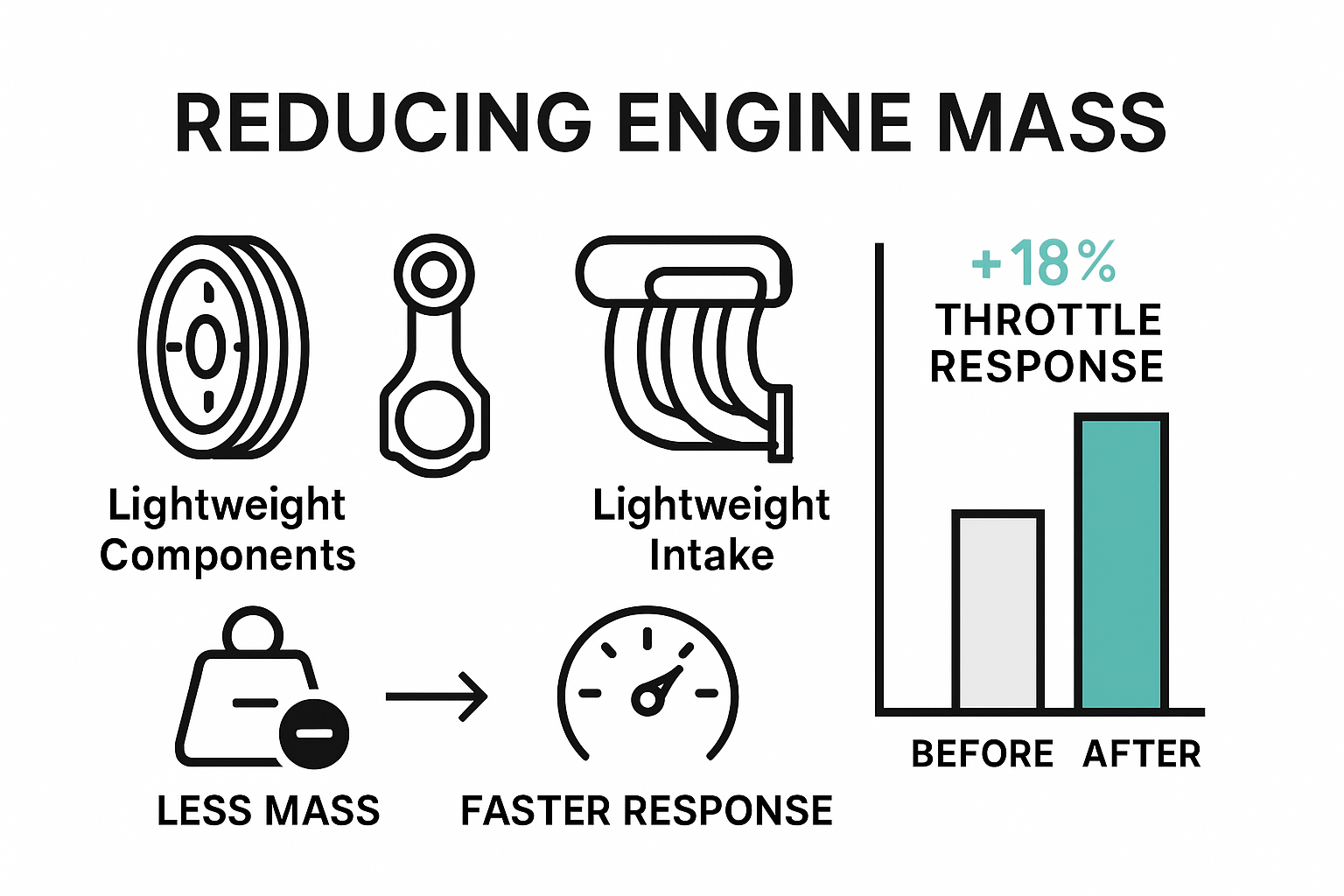
Additional hardware modifications include high-performance throttle bodies, upgraded electronic sensors, and precision-engineered throttle position sensors. These components work together to create a more direct and responsive connection between the accelerator pedal and engine performance.
The complexity of throttle response tuning requires a holistic approach. Professional tuners understand that improvements come from understanding the intricate relationships between electronic control systems, mechanical components, and driver input. By carefully balancing these elements, automotive experts can transform a vehicle’s responsiveness, creating a more engaging and dynamic driving experience that bridges the gap between driver intention and mechanical execution.
ECU Adjustments and Practical Tuning Tips
ECU adjustments represent a critical component of throttle response tuning, requiring precision, technical expertise, and a systematic approach to vehicle performance optimization. Professional tuners understand that successful ECU modifications go far beyond simple parameter changes, demanding a comprehensive understanding of complex automotive electronic systems.
Methodical Tuning Approaches
Dive into advanced ECU tuning techniques reveals the importance of a structured tuning process. According to North American Motorsports Research, effective tuning requires a methodical strategy that emphasizes root cause identification and data-driven decision making.
The Society of Automotive Engineers highlights the significance of Iterative Feedback Tuning (IFT) in optimizing electronic throttle systems. Research from SAE demonstrates that precise PID control adjustments can dramatically improve throttle response characteristics, allowing for more nuanced and responsive engine performance.
Practical Calibration Techniques
Successful ECU tuning involves multiple calibration strategies. The AEM EMS Guidebook provides insights into advanced tuning methodologies, including detailed approaches for fuel mapping and throttle injection correction. Key practical tips include:
- Baseline Mapping: Establish a comprehensive baseline of the vehicle’s current performance parameters before making any modifications.
- Incremental Adjustments: Make small, measurable changes to prevent unintended consequences and track specific performance improvements.
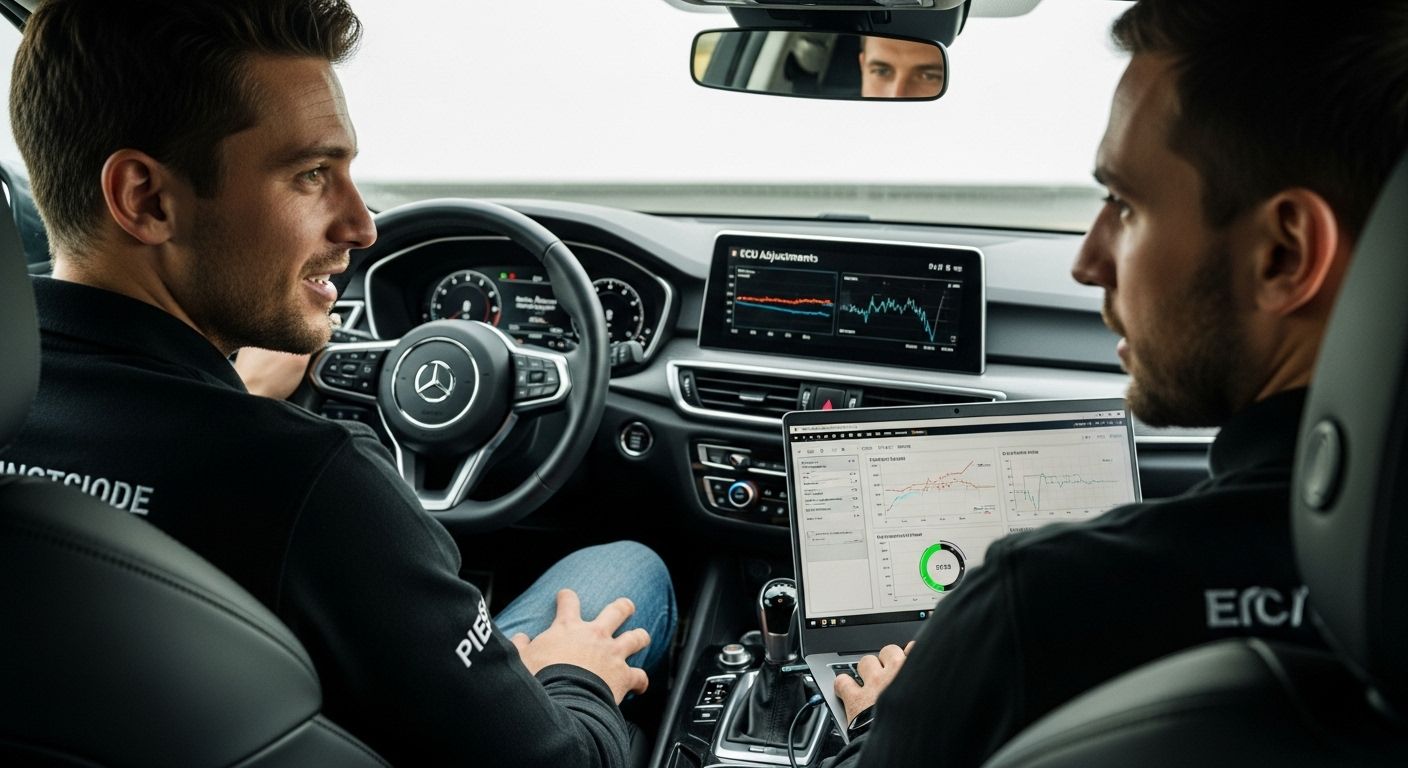
- Data Logging: Utilize advanced diagnostic tools to capture real-time performance data and validate tuning modifications.
Professional tuners recognize that throttle response tuning is not a one-size-fits-all process. Each vehicle requires a unique approach that considers its specific mechanical characteristics, intended use, and performance objectives. By combining technical expertise, sophisticated measurement tools, and a methodical approach, automotive performance specialists can unlock significant improvements in throttle responsiveness and overall engine performance.
Common Mistakes to Avoid in Throttle Tuning
Throttle response tuning requires precision and careful strategy. Professional automotive performance specialists understand that seemingly minor errors can significantly compromise vehicle performance and potentially cause long-term mechanical damage. Learn more about advanced ECU techniques helps enthusiasts recognize the critical nature of avoiding common tuning pitfalls.
Data-Driven Decision Making
According to North American Motorsports Research, one of the most prevalent mistakes in throttle tuning is making random adjustments without comprehensive data analysis. Professional tuners emphasize the importance of establishing a robust baseline and tracking incremental changes through precise measurement.
The International Society of Automation highlights several critical errors that can derail throttle response optimization. Research on control tuning reveals that excessive gain settings can lead to dangerous oscillations, potentially causing unstable engine performance and compromising vehicle safety.
Technical Configuration Errors
Technical configuration mistakes represent another significant risk in throttle response tuning. The FIRST Robotics Competition documentation provides insights into common control loop tuning issues that are equally applicable to automotive performance. Key configuration errors include:
Below is a table listing the common mistakes in throttle response tuning and their potential consequences, which helps readers quickly identify what to avoid and the associated risks.
| Common Mistake | Description | Potential Risk/Consequence |
|---|---|---|
| Random adjustments | Tuning without data or baseline | Inefficient changes, poor performance |
| Excessive gain settings | Setting controller gain too high | Dangerous oscillations, unstable engine |
| Integral windup | Failing to manage integral gain | System oversaturation, unpredictable response |
| Ignoring voltage compensation | Not accounting for voltage sag | Inconsistent throttle position |
| Overlooking actuator limits | Exceeding electronic throttle control constraints | Suboptimal performance, potential damage |
- Integral Windup: Failing to manage integral gain can cause system oversaturation and unpredictable responses.
- Voltage Compensation: Neglecting voltage sag can result in inconsistent throttle plate positioning.
- Actuator Limitations: Overlooking the specific constraints of electronic throttle control systems can lead to suboptimal performance.
Professional tuners recognize that successful throttle response optimization requires a holistic approach. Understanding the intricate relationships between electronic systems, mechanical components, and performance objectives is crucial. By avoiding these common mistakes and adopting a methodical, data-driven approach, automotive enthusiasts can unlock significant improvements in vehicle responsiveness and overall driving experience.
Frequently Asked Questions
What is throttle response tuning and why is it important?
Throttle response tuning is the process of optimizing how quickly and smoothly your engine responds to input from the accelerator pedal. It is important because it enhances the overall driving experience by reducing lag and providing immediate power delivery, making the vehicle feel more responsive.
How can electronic throttle control systems improve my car’s performance?
Electronic throttle control systems replace traditional mechanical linkages with sensors and actuators, allowing for more precise adjustments to throttle positioning. This precision leads to improved acceleration, reduced response time, and a generally more engaging driving experience.
What are some common methods to enhance throttle response?
Common methods to improve throttle response include optimizing the Electronic Control Unit (ECU) settings, using lightweight engine components, implementing advanced control strategies like PID controllers, and making mechanical modifications such as upgrading throttle bodies and sensors.
What mistakes should I avoid during throttle response tuning?
Common mistakes to avoid include making random adjustments without data analysis, using excessive gain settings which can cause engine instability, and not considering the specific constraints of the electronic throttle control system. A methodical, data-driven approach is essential for successful tuning.
Take Charge of Your Throttle Response with Trusted ECU Solutions
Does your car still feel sluggish or disconnected, even after trying the latest throttle response tuning tips? Many enthusiasts and professionals face the same frustration—the desire for sharper, more immediate engine feedback, but inconsistent results thanks to limited or unverified ECU files. The article highlighted how precision in ECU adjustments and reliable calibration data are critical for transforming throttle response and unlocking true driving satisfaction.

Bring your tuning goals within reach by choosing ECUFlashFiles.com as your performance partner. Browse a library of verified ECU files and DAMOS calibration maps designed for seamless integration with your tuning workflow. Our instant delivery platform ensures you always have secure, tested files for the specific engine, make, or model you are working on. If you want proven results and a smoother upgrade path, start exploring original and remapped ECU files for better throttle response today.