
Turbocharged engines promise serious power and speed, but unlocking their full potential takes more than bolting on new parts. Professional tuners rely on data from wide-band oxygen sensors, OBD2 scanning tools, and precise dyno tests to measure everything from air-fuel ratios to horsepower output. It sounds complicated at first, right? Strangely, the most critical step in getting more power is not the hardware—it’s all about methodical testing, patience, and dialing in changes one tiny step at a time.
Table of Contents
- Step 1: Assess The Current Performance Metrics
- Step 2: Gather Necessary Tools And Equipment
- Step 3: Adjust The ECU Settings For Turbo Optimization
- Step 4: Fine-Tune Turbocharger Boost Levels
- Step 5: Verify Performance Improvements Through Testing
Quick Summary
| Key Point | Explanation |
|---|---|
| 1. Thoroughly Assess Performance Metrics | Start tuning by gathering baseline data on boost pressure, air-fuel ratios, and engine output to guide modifications. |
| 2. Use Quality Diagnostic Tools | Invest in professional OBD2 scanners and diagnostic equipment to ensure accurate measurements and effective tuning. |
| 3. Optimize ECU Settings Methodically | Make incremental adjustments to fuel mapping and boost pressure while monitoring engine parameters to enhance performance. |
| 4. Fine-Tune Boost Levels Carefully | Adjust boost pressure in small increments and track related metrics to prevent engine damage and improve responsiveness. |
| 5. Verify Performance with Rigorous Testing | Conduct dynamometer tests and real-world evaluations to confirm performance enhancements and track reliability indicators. |
Step 1: Assess the Current Performance Metrics
Tuning a turbo car begins with a comprehensive performance assessment that provides a critical baseline for all subsequent modifications. Performance metrics are the diagnostic blueprint that reveals your vehicle’s current capabilities and potential improvements. Before making any adjustments, you need a precise understanding of where your turbocharged engine currently stands.
The initial assessment requires specialized diagnostic equipment and a systematic approach to gathering performance data. Professional automotive tuners typically utilize wide-band oxygen sensors, digital multimeters, and advanced OBD2 scanning tools to capture comprehensive engine performance information. These instruments allow you to measure critical parameters such as boost pressure, air-fuel ratios, exhaust gas temperatures, horsepower, and torque output.
Performance measurement techniques involve connecting diagnostic tools directly to your vehicle’s engine control unit (ECU). Start by establishing a baseline reading under standard operating conditions. This means measuring performance during consistent driving scenarios like steady-state highway cruising or controlled acceleration runs. Key metrics to record include:
- Current boost pressure levels
- Air-fuel ratio across different RPM ranges
- Exhaust gas temperatures
- Horsepower and torque output
- Ignition timing characteristics
Accurate data collection requires precision and patience. Avoid rush measurements or inconsistent testing environments. Professional tuners recommend performing multiple test runs to ensure statistical reliability and account for potential measurement variations. Each reading should be conducted under near-identical conditions to guarantee comparative accuracy.
Once you have collected these baseline metrics, document them meticulously. Create a comprehensive performance profile that serves as your reference point for future tuning efforts. This documentation will help you track incremental improvements and understand how specific modifications impact your turbocharged engine’s overall performance. Remember that every vehicle responds differently to tuning, so your baseline assessment is unique to your specific make, model, and current engine configuration.
Step 2: Gather Necessary Tools and Equipment
Successful turbo car tuning requires a strategic approach to equipment selection that balances precision, compatibility, and professional-grade performance. Professional tuners understand that having the right tools is just as critical as knowing how to use them. Your toolkit will serve as the foundation for transforming your turbocharged vehicle’s performance capabilities.
The core of your tuning arsenal begins with sophisticated diagnostic equipment designed specifically for automotive electronic systems. A high-quality OBD2 scanner becomes your primary interface with the vehicle’s engine control unit, allowing real-time data acquisition and potential file modifications. Professional-grade scanners offer advanced features like live data streaming, freeze frame analysis, and comprehensive ECU communication protocols that consumer-level devices cannot match.
According to automotive engineering research, comprehensive diagnostic toolkits should include several precision instruments:
- Wide-band air-fuel ratio meter
- Digital multimeter with automotive testing capabilities
- Laptop with specialized ECU tuning software
- Professional diagnostic interface cable
- Pyrometer for exhaust gas temperature measurement
Beyond electronic diagnostics, mechanical preparation is equally important. You will need a robust set of mechanical tools capable of handling potential hardware adjustments. This includes precision torque wrenches, specialized socket sets designed for automotive applications, and safety equipment like heat-resistant gloves and eye protection. Professional tuners recommend investing in quality tools that provide consistent, reliable performance across multiple tuning sessions.
Below is a quick-reference summary of essential tools and equipment mentioned in the article along with their main purposes for turbo car tuning.
| Tool/Equipment | Purpose |
|---|---|
| High-quality OBD2 scanner | Real-time data acquisition and ECU interface |
| Wide-band air-fuel ratio meter | Accurate air-fuel mixture measurement |
| Digital multimeter with automotive testing | Electrical diagnostics and measurements |
| Laptop with ECU tuning software | Adjustments to ECU programming |
| Professional diagnostic interface cable | Connects laptop/software to ECU |
| Pyrometer for exhaust gas temperature | Monitors exhaust gas temperatures |
| Torque wrenches and specialized sockets | Mechanical adjustments and part installation |
| Safety equipment (gloves/eye protection) | Ensures safe working environment |
Consider your specific vehicle’s requirements when assembling your toolkit. Different turbocharger configurations and vehicle makes demand unique approaches and potentially specialized adapters or measurement equipment. Research your exact vehicle model to identify any model-specific diagnostic connectors or calibration requirements that might necessitate additional specialized tools.
Verification of your toolkit involves more than just purchasing equipment. Calibrate electronic measurement devices regularly, ensure software is updated to the latest versions, and familiarize yourself thoroughly with each instrument’s operational parameters. A well-prepared tuner understands that precision comes from both high-quality equipment and comprehensive operational knowledge.
Step 3: Adjust the ECU Settings for Turbo Optimization
Electronic engine management represents the critical interface between raw mechanical potential and refined performance in turbocharged vehicles. ECU optimization transforms your engine’s capabilities by precisely calibrating fuel delivery, boost pressure, ignition timing, and other fundamental parameters that directly impact power output and engine efficiency.
The ECU adjustment process requires methodical precision and deep understanding of your specific engine’s characteristics. Start by connecting your professional diagnostic scanner to the vehicle’s OBD2 port, establishing a direct communication channel with the engine control unit.
read more about ECU tuning techniques to understand the nuanced approaches professional tuners employ when manipulating these critical electronic systems.
According to automotive engineering research, modern turbo engine tuning integrates sophisticated real-time adjustments that balance power delivery with critical engine protection mechanisms. These adjustments focus on several key performance domains:
- Boost pressure regulation
- Fuel mapping optimization
- Ignition timing calibration
- Knock sensor sensitivity adjustment
- Wastegate control parameters
Successful ECU tuning demands incremental modifications rather than aggressive, wholesale changes. Professional tuners recommend making small, calculated adjustments and conducting thorough performance testing after each modification. This approach allows you to understand how each parameter adjustment impacts overall engine performance while maintaining a safety margin that prevents potential mechanical stress or catastrophic failure.
Pay special attention to the air-fuel ratio during your ECU optimization process. The delicate balance between fuel enrichment and boost pressure determines not just power output but also engine longevity. Use your wide-band oxygen sensor to monitor these critical relationships in real-time, making precise adjustments that maximize performance without compromising engine reliability. Remember that every turbocharged engine has unique characteristics, so what works for one vehicle might require significant adaptation for another.
Step 4: Fine-Tune Turbocharger Boost Levels
Boost pressure represents the soul of turbocharger performance, transforming your engine’s potential into tangible power output. Fine-tuning boost levels requires a delicate balance between maximizing performance and maintaining critical mechanical integrity. Professional tuners understand that boost optimization is more art than simple numerical adjustment.
The process begins by establishing your current baseline boost pressure using precision diagnostic tools. Your wide-band oxygen sensor and boost pressure gauge become essential instruments in this calibration journey. learn more about reducing turbo lag and understand how precise boost management can dramatically improve your vehicle’s responsiveness.
According to automotive engineering research, adjusting turbocharger boost pressure must be executed with surgical precision to prevent potential engine damage. Professional tuners recommend incremental boost increases typically ranging between 2-4 PSI above stock configurations, carefully monitoring engine parameters during each adjustment.
Boost level modifications demand careful consideration of several critical factors:
- Ambient temperature and altitude
- Fuel octane rating
- Current engine mechanical condition
- Intercooler efficiency
- Wastegate spring tension
Successful boost tuning involves more than simply increasing pressure. You must simultaneously adjust related engine parameters like fuel mapping, ignition timing, and knock sensor sensitivity to accommodate the increased boost. Professional tuners typically use a staged approach, making small adjustments and conducting thorough real-world and dyno testing after each modification.
Verification of your boost level tuning requires comprehensive monitoring. Watch for signs of potential over-boosting such as unexpected exhaust gas temperature spikes, inconsistent power delivery, or unusual combustion noise. A properly tuned turbocharger should provide smooth, linear power progression without abrupt or unpredictable boost surges.
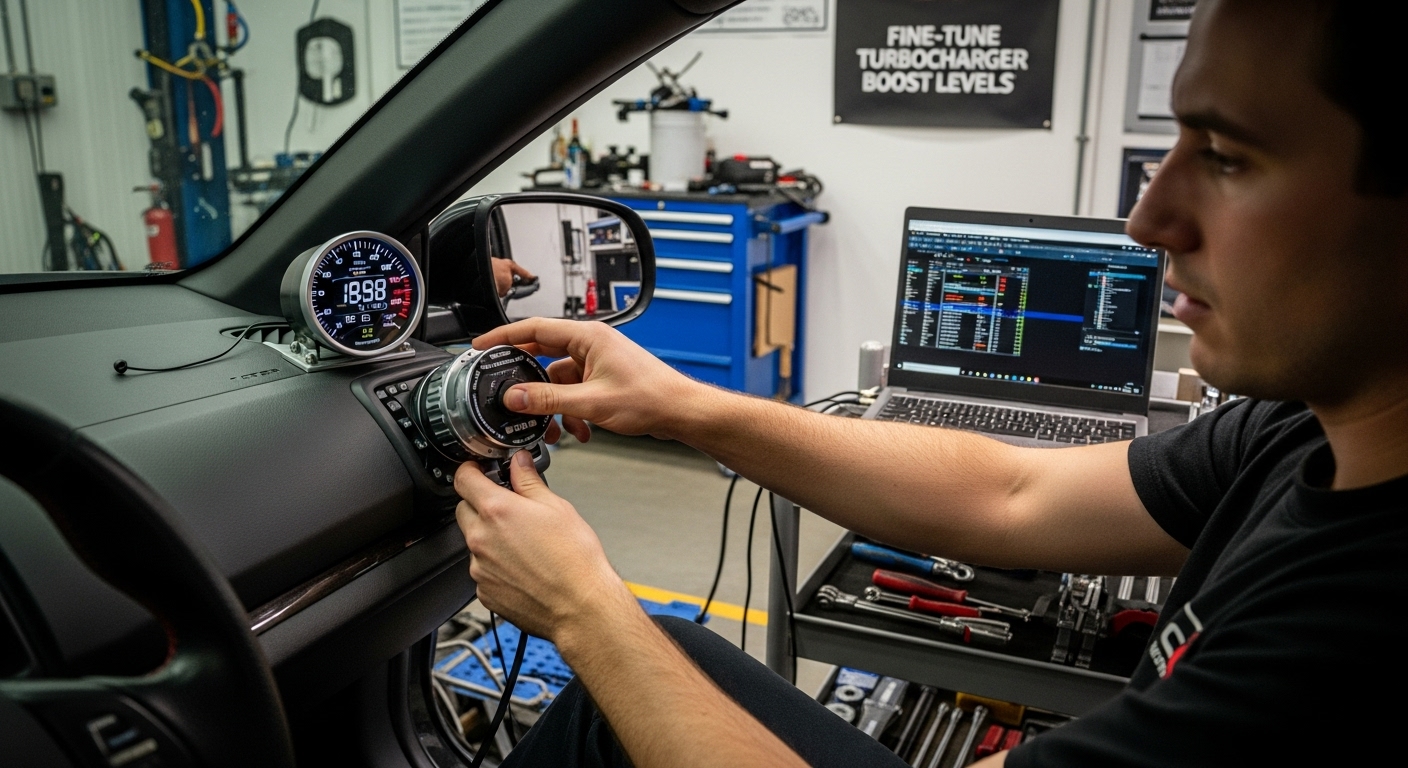 Remember that every vehicle responds differently, so patience and methodical testing are your most valuable tools in achieving optimal turbocharger performance.
Step 5: Verify Performance Improvements Through Testing
Performance verification transforms theoretical modifications into quantifiable automotive enhancements. The testing phase represents the critical moment where your tuning efforts transition from calculated adjustments to real-world performance validation. Professional tuners understand that comprehensive testing goes far beyond simple acceleration measurements.
Initial testing requires a strategic approach that combines controlled dynamometer evaluation with comprehensive real-world driving scenarios. Dynamometer testing provides precise, repeatable performance measurements, capturing horsepower, torque, and boost pressure characteristics under standardized conditions. explore performance testing techniques to understand the nuanced approaches professionals use to validate their modifications.
According to automotive engineering research, data acquisition systems play a pivotal role in performance verification, collecting comprehensive metrics that provide empirical evidence of tuning effectiveness. These systems track critical parameters such as:
- Horsepower and torque output
- Boost pressure stability
- Air-fuel ratio consistency
- Exhaust gas temperatures
- Engine load response
Real-world testing complements dynamometer measurements by exposing your tuned vehicle to diverse driving conditions. Professional tuners recommend a multi-stage testing protocol that includes highway acceleration, mountain road performance, and urban driving scenarios. Each environment challenges different aspects of your turbocharger and ECU modifications, revealing potential optimization opportunities or highlighting unexpected performance characteristics.
Verification extends beyond raw performance numbers. Monitor your vehicle’s long-term reliability indicators such as fuel efficiency, engine temperature stability, and overall drivetrain smoothness. Pay attention to subtle changes in throttle response, turbo spool-up time, and power delivery consistency. Successful tuning should produce a seamless enhancement that feels natural and controlled, not abrupt or unpredictable. Document your baseline and post-tuning performance metrics meticulously, creating a comprehensive record of your vehicle’s transformation that can guide future refinement efforts.
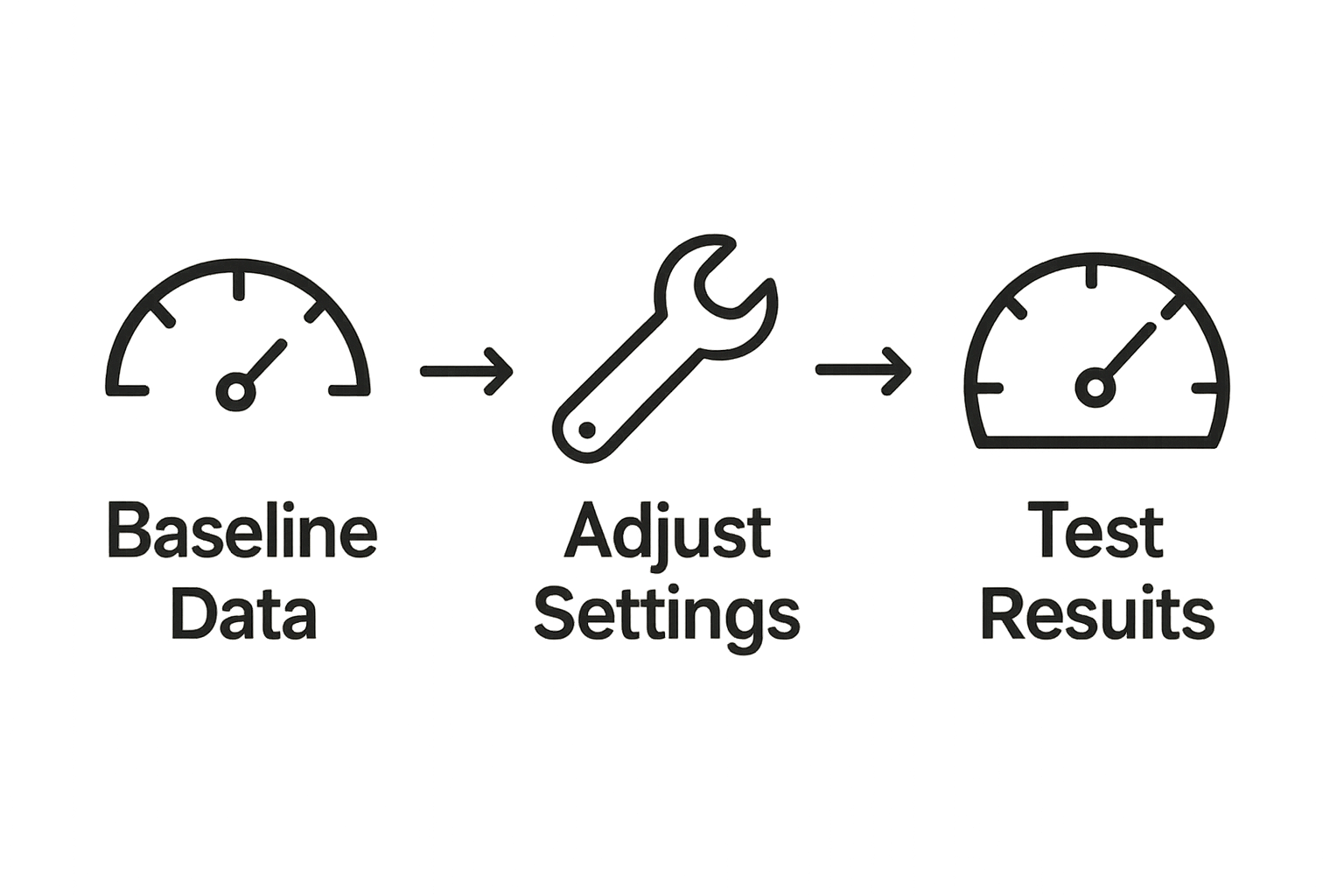
The following table recaps each main step in the turbo tuning process, highlighting key actions and objectives for every stage covered in this guide.
| Step | Key Action | Main Objective |
|---|---|---|
| 1. Assess Current Performance Metrics | Measure and document baseline engine data | Establish performance baseline for tuning |
| 2. Gather Necessary Tools and Equipment | Assemble diagnostic and mechanical tools | Prepare for accurate and safe tuning |
| 3. Adjust ECU Settings for Turbo Optimization | Modify fuel, boost, and ignition parameters | Maximize engine efficiency and power |
| 4. Fine-Tune Turbocharger Boost Levels | Incrementally adjust boost pressure | Enhance power without risking engine damage |
| 5. Verify Performance Improvements Through Testing | Conduct dyno and real-world tests | Confirm effectiveness and reliability |
Take Your Turbo Car Tuning to the Next Level with Verified ECU Files
Are you determined to turn your knowledge of boost optimization, precise ECU adjustments, and performance data into serious horsepower gains? Many tuners hit a wall with generic files or mismatched software that undermines their hard work. Relying on unverified resources leaves you at risk for unreliable results, wasted time, and even engine damage. At ECUFlashFiles.com, we know how critical it is to match each step–from baseline performance assessment to final verification–with tested, model-specific ECU solutions.

Choose a solution trusted by professionals who take car tuning seriously. Access original and tuned ECU files you can trust, designed for your exact make, model, or engine type. Instantly search and secure the perfect file for your project, whether you need performance tuning files for higher boost targets, or DAMOS calibration data for the most refined adjustments. Secure your gains and safeguard your turbo investment. Get started now at ECUFlashFiles.com and experience true custom performance.
Frequently Asked Questions
What metrics should I assess before tuning my turbo car?
Before tuning a turbo car, it’s essential to assess performance metrics such as current boost pressure levels, air-fuel ratio across different RPM ranges, exhaust gas temperatures, horsepower, torque output, and ignition timing characteristics to establish a baseline for tuning.
What tools are necessary for tuning a turbocharged vehicle?
Essential tools for tuning a turbocharged vehicle include a high-quality OBD2 scanner, a wide-band air-fuel ratio meter, a digital multimeter, specialized ECU tuning software, and mechanical tools such as torque wrenches and safety equipment.
How can I safely adjust boost levels in my turbo car?
To safely adjust boost levels, begin by establishing your current baseline and then incrementally increase the boost pressure by 2-4 PSI while simultaneously adjusting related parameters such as fuel mapping and ignition timing to ensure engine integrity.
What should I monitor during the performance testing phase after tuning?
During the performance testing phase, it’s crucial to monitor parameters such as horsepower and torque output, boost pressure stability, air-fuel ratio consistency, and exhaust gas temperatures to verify tuning effectiveness and identify any potential issues.