
People might think getting a car serviced is all about fixing engines and replacing parts. But customer expectations in automotive services stretch way past the garage. Research shows that empathy—not just technical skills—is the key factor in building customer satisfaction. Most shops focus on repairs, but the true difference comes from how well providers understand and communicate with their clients. This flips the script on what actually matters for success.
Table of Contents
- What Is Customer Expectations In Automotive Services?
- Why Customer Expectations Matter: Impact On Success
- How Customer Expectations Are Shaped In Tuning Services
- Key Concepts For Managing Customer Expectations Effectively
- Real-World Applications Of Customer Expectation Management
Quick Summary
| Takeaway | Explanation |
|---|---|
| Understand customer expectations deeply | Recognizing the complexities of customer expectations helps ensure service providers meet and exceed them. |
| Implement clear communication strategies | Proactive, honest communication is essential for managing customer perceptions effectively. |
| Integrate technical and emotional intelligence | Balancing technical skills with empathy fosters trust and satisfaction among clients. |
| Use data-driven models for predictions | Leveraging analytics can help set realistic expectations and improve customer experiences. |
| Create a customer-centric service ecosystem | A holistic approach focusing on customer needs leads to better service delivery and client loyalty. |
What is Customer Expectations in Automotive Services?
Customer expectations in automotive services represent the comprehensive set of anticipated experiences, performance standards, and service quality that clients anticipate when engaging with automotive service providers. These expectations encompass multiple dimensions beyond basic repair and maintenance, extending into areas of communication, professionalism, transparency, and overall customer experience.
Defining Customer Expectations
In the automotive service landscape, customer expectations are complex psychological and emotional benchmarks that clients establish based on prior experiences, recommendations, advertising, and personal requirements. These expectations typically include:
- Accurate diagnostic assessments
- Transparent pricing structures
- Timely service completion
- High quality repair work
- Professional and respectful communication
- Reliable technical expertise
Learn more about automotive service quality guidelines reveal that expectations are not merely transactional but deeply rooted in perceived value and trust.
Psychological Components of Automotive Service Expectations
Customer expectations are fundamentally driven by psychological factors that transcend mere technical competence. Clients seek not just mechanical repairs but a holistic service experience that validates their investment, addresses their concerns, and provides peace of mind. This involves creating an environment of trust, demonstrating technical competence, and showing genuine commitment to solving their automotive challenges.
Professional automotive service providers understand that meeting customer expectations requires a multifaceted approach. This means combining technical skills with exceptional interpersonal communication, clear explanations of diagnostic findings, realistic performance projections, and transparent pricing models. Our comprehensive ECU file management guide can help service providers understand the nuanced expectations of modern automotive enthusiasts.
Ultimately, managing customer expectations in automotive services is about creating a comprehensive, trustworthy, and customer-centric service ecosystem that consistently delivers beyond basic mechanical interventions.
Below is a summary table outlining the primary psychological and technical components that shape customer expectations in automotive service environments.
| Component | Description |
|---|---|
| Trust and Empathy | Customers value feeling heard, understood, and respected by service providers. |
| Technical Competence | Clients expect accurate diagnostics, quality repairs, and reliable expertise. |
| Transparent Communication | Clear explanations, honest assessments, and openness about processes ease customer concerns. |
| Transparent Pricing | Clearly stated pricing and honesty regarding potential costs build trust and reduce anxiety. |
| Professionalism | Courteous, respectful, and timely interactions establish confidence in service delivery. |
| Peace of Mind | Service environments and processes that provide reassurance and reduce stress for clients. |
| Commitment to Solutions | Demonstrating a proactive effort to solve challenges and meet customer needs. |
Why Customer Expectations Matter: Impact on Success
Customer expectations are not just abstract concepts but critical determinants of business performance, reputation, and long term sustainability. In the automotive service industry, understanding and managing these expectations can mean the difference between thriving businesses and those struggling to retain clientele.
Financial and Operational Significance
The impact of customer expectations extends far beyond mere satisfaction metrics. According to research in the Economic and Business Review, customer expectations have a direct positive correlation with a company’s financial performance, particularly influencing Return on Assets (ROA). This means that businesses which effectively manage and meet customer expectations can experience significant economic advantages.
Key financial implications include:
- Increased customer retention rates
- Higher likelihood of positive word of mouth referrals
- Reduced customer acquisition costs
- Enhanced brand reputation and market positioning
- Potential for premium pricing strategies
Psychological and Strategic Dimensions
Beyond financial metrics, customer expectations represent a complex psychological contract between service providers and clients. Customers do not merely seek technical competence but a comprehensive experience that validates their investment and addresses their underlying emotional needs.
Interestingly, research from Stanford Graduate School of Business suggests that explicitly asking customers about their expectations can paradoxically lead to more critical evaluations. This nuanced insight underscores the delicate balance automotive service providers must maintain in managing customer perceptions.
Strategically managing customer expectations requires a holistic approach that combines technical expertise, transparent communication, and a genuine commitment to understanding and exceeding client requirements.
The following table compares the financial, psychological, and strategic dimensions of why customer expectations matter in the automotive service industry.
| Dimension | Key Impact | Supporting Details |
|---|---|---|
| Financial | Directly affects retention, referrals, and pricing power | Positive expectations boost retention, reduce costs, enhance brand |
| Operational | Influences efficiency and service consistency | Meeting expectations streamlines processes and reduces complaints |
| Psychological | Forms a trust-based contract between client and provider | Addresses emotional needs beyond technical outcomes |
| Strategic | Shapes long-term reputation and competitive advantage | Transparent, proactive approaches drive loyalty and market growth |
| Evaluation Dynamics | Influences how customers rate and review services | Asking about expectations may prompt more critical evaluations |
How Customer Expectations are Shaped in Tuning Services
Customer expectations in automotive tuning services are complex psychological constructs developed through multiple interconnected influences, ranging from personal experiences to technological advancements and social perceptions. Understanding these formation mechanisms is crucial for service providers seeking to deliver exceptional customer experiences.
Information Sources and Perception Formation
Customers develop their expectations through diverse channels that collectively shape their understanding of automotive tuning services. These channels include:
- Personal past automotive service experiences
- Recommendations from friends and professional networks
- Online reviews and testimonials
- Technical forums and automotive enthusiast communities
- Marketing communications and brand positioning
- Professional publications and expert opinions
Research from the Indian automobile industry highlights that after-sale service experiences play a critical role in constructing and reinforcing customer expectations, demonstrating the cyclical nature of perception development.
Psychological and Technical Dimensions
Customer expectations in tuning services are not purely rational but involve complex emotional and technical considerations. Clients seek more than technical competence they desire a comprehensive understanding of how modifications will impact their vehicle’s performance, reliability, and overall driving experience.
ECU Tuning for Beginners: Essential Guide can provide deeper insights into how technical knowledge influences customer expectations. The psychological landscape of tuning services involves trust, technical credibility, transparency, and the ability to translate complex technical processes into meaningful customer benefits.
The formation of customer expectations is a dynamic process where technical expertise, communication skills, and emotional intelligence converge. Successful automotive tuning service providers recognize that managing expectations requires a holistic approach that balances technical precision with genuine customer understanding.
Key Concepts for Managing Customer Expectations Effectively
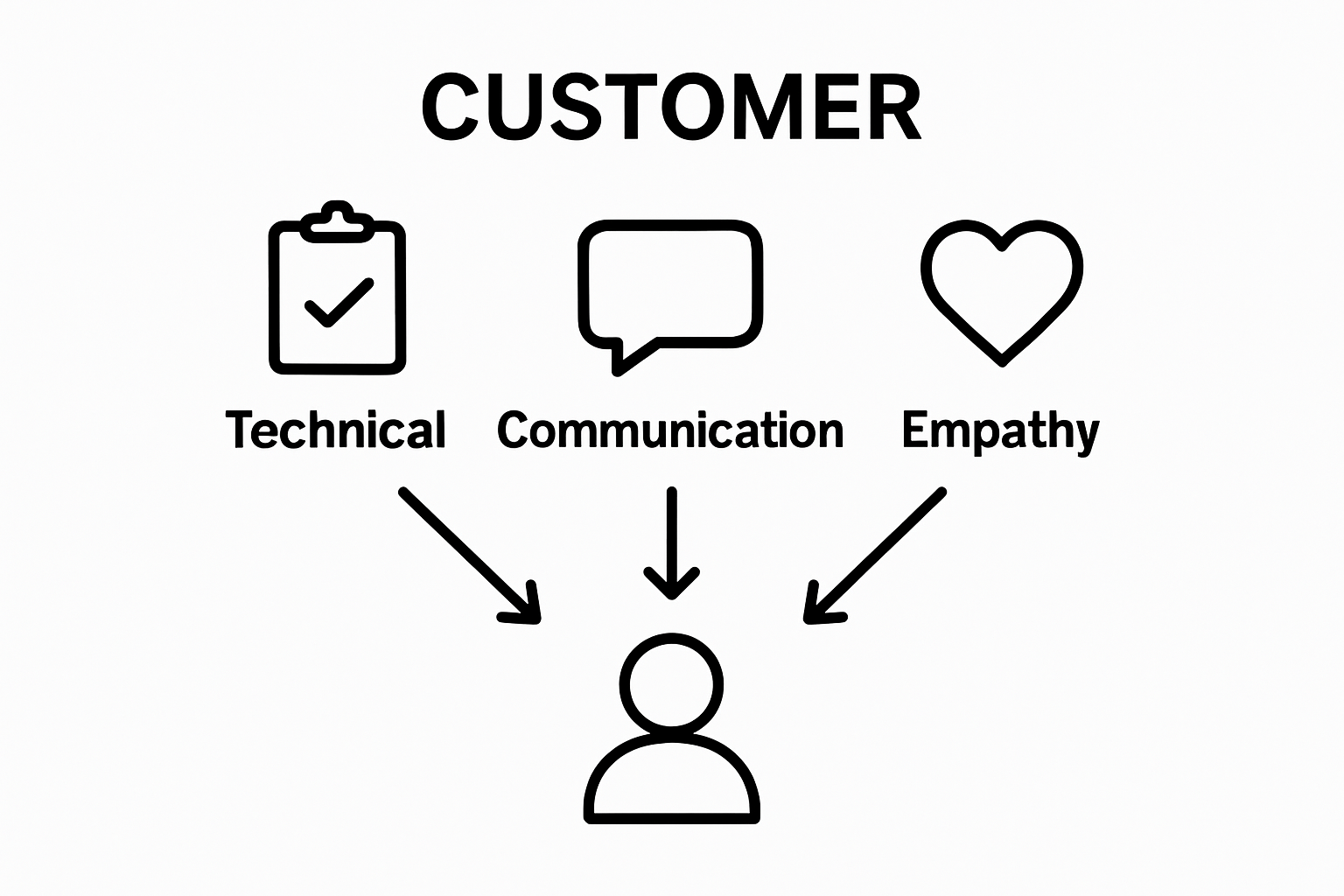
Managing customer expectations requires a strategic approach that combines technical proficiency, emotional intelligence, and systematic communication. Automotive service providers must develop comprehensive frameworks that address both rational and emotional dimensions of client interactions.
Communication and Transparency Strategies
Effective expectation management fundamentally relies on clear, proactive, and honest communication. This involves establishing robust channels that provide clients with realistic, comprehensive information about service processes, potential outcomes, and potential limitations.
Key communication principles include:
- Setting clear and realistic performance benchmarks
- Providing detailed explanations of technical processes
- Offering transparent pricing and service scope descriptions
- Maintaining consistent and responsive communication channels

- Documenting and confirming client requirements explicitly
Research from automotive service quality studies emphasizes that empathy emerges as the most critical dimension in managing customer expectations, highlighting the importance of understanding client perspectives beyond technical interactions.
Technical and Emotional Intelligence Integration
Successful expectation management transcends mere technical competence. It requires developing a holistic approach that combines precise technical skills with nuanced emotional understanding. Service providers must create an environment where clients feel technically supported and emotionally validated.
Throttle Response Tuning Guidelines demonstrate how technical expertise can be communicated in ways that build client confidence. The most effective automotive service providers recognize that managing expectations is an ongoing dialogue that requires continuous learning, adaptation, and genuine commitment to client satisfaction.
Ultimately, managing customer expectations is about creating a comprehensive service ecosystem that balances technical precision with empathetic communication, ensuring clients feel informed, respected, and confident in the services they receive.
Real-World Applications of Customer Expectation Management
Customer expectation management transforms from an abstract concept to a practical strategic tool when automotive service providers implement targeted, systematic approaches across various operational dimensions. Real world applications demonstrate how sophisticated expectation management techniques can revolutionize client interactions and service delivery.
Diagnostic and Communication Frameworks
Successful automotive service providers develop comprehensive diagnostic and communication frameworks that proactively address potential client concerns. These frameworks involve creating structured processes that anticipate and respond to customer inquiries before they become potential sources of dissatisfaction.
Practical implementation strategies include:
- Developing standardized diagnostic assessment protocols
- Creating detailed service outcome probability models
- Implementing pre emptive communication workflows
- Establishing multi channel customer support systems
- Designing transparent performance tracking mechanisms
Research in consumer psychology reveals that proactive communication significantly influences customer perception and loyalty, underscoring the importance of anticipatory service design.
Performance Modeling and Predictive Engagement
Advanced automotive service providers leverage data driven approaches to model and predict potential service outcomes. This involves using technological tools and analytical frameworks to create precise expectation management strategies that align technical capabilities with client requirements.
Stage 1 vs Stage 2 Tuning Guidelines illustrate how technical expertise can be systematically communicated to set realistic client expectations. By developing predictive models that transparently communicate potential performance variations, service providers can build trust and reduce potential misunderstandings.
Ultimately, real world customer expectation management is about creating adaptive, intelligent service ecosystems that continuously learn, adjust, and respond to evolving client needs while maintaining the highest standards of technical excellence and professional communication.
Elevate Customer Satisfaction in Tuning Services With Proven ECU Solutions
Struggling to align your technical expertise with rising customer expectations? Many automotive professionals find that clear communication and reliable results are crucial, especially when precision and trust are key. The article highlighted the importance of transparent service, proactive communication, and quality assurance—all vital for winning client confidence in tuning and diagnostics.
Stop letting unpredictable file quality or slow delivery undermine your reputation. At ECUFlashFiles.com, you can access a massive library of tested original factory and performance tuning files with instant, secure delivery. Whether you need original recovery files or DAMOS calibration data, our platform is built to support both seasoned pros and growing enthusiasts with real-time support and verified results. Take control of customer experience by reducing wait times, minimizing errors, and delivering exactly what your clients expect. Visit ECUFlashFiles.com to see how you can exceed expectations today.
Frequently Asked Questions
What are customer expectations in automotive services?
Customer expectations in automotive services refer to the anticipated experiences and service quality clients expect from service providers, including accurate diagnostics, transparent pricing, and professional communication.
How can automotive service providers effectively manage customer expectations?
Providers can manage expectations by ensuring clear communication, setting realistic performance benchmarks, offering transparent pricing, and developing empathetic relationships with clients to make them feel understood and valued.
Why are customer expectations important in the automotive service industry?
Customer expectations are critical as they directly influence a business’s financial performance, customer retention rates, and overall reputation, positioning them for long-term success in a competitive market.
What role does psychological understanding play in managing customer expectations?
Understanding the psychological aspects of customer expectations allows service providers to create a more comprehensive experience that addresses both emotional needs and technical competence, helping to build trust and satisfaction.