Getting more miles out of every gallon is on every driver’s mind. Americans spend over
$4,500 a year on fuel on average, and prices just keep climbing. Most people think you need fancy modifications or pricey gadgets to make a real difference. The truth is, simple tweaks and smarter habits can slash your fuel costs and stretch every tank way further than you’d expect.
Table of Contents
Quick Summary
| Key Point |
Explanation |
| 1. Assess your fuel efficiency baseline |
Track fuel consumption to establish a clear baseline for optimizing MPG. Aim for multiple fill-ups for accuracy. |
| 2. Regular vehicle maintenance is essential |
Consistent maintenance, including oil changes and tire checks, significantly enhances fuel efficiency and performance. |
| 3. Improve driving habits for fuel savings |
Gradual acceleration and maintaining steady speeds can lead to substantial fuel savings without mechanical changes. |
| 4. Upgrade key vehicle components strategically |
Replacing components like oxygen sensors and spark plugs can directly improve fuel economy and engine efficiency. |
| 5. Test and verify performance improvements |
Conduct multiple fuel economy tests under similar conditions to measure and document changes effectively. |
Step 1: Assess Your Current Fuel Efficiency
Understanding your vehicle’s current fuel efficiency is the critical first step in maximizing miles per gallon (MPG). Before implementing any performance improvements, you need a clear baseline measurement of your car’s existing fuel consumption. This initial assessment provides a roadmap for targeted optimization strategies.
Start by meticulously documenting your current fuel consumption through a systematic tracking process. Fill up your gas tank completely, reset your trip odometer, and carefully record the number of miles driven and gallons used during each fuel cycle. Professional automotive enthusiasts recommend maintaining a detailed log for at least three to four consecutive fill ups to establish an accurate average.
To calculate your current miles per gallon, divide the total miles driven by the number of gallons consumed. For example, if you drove 350 miles and used 12 gallons of fuel, your current MPG would be approximately 29.2.
Modern fuel efficiency tracking can be simplified with digital tools from the U.S. Department of Energy, which offer comprehensive vehicle performance databases and calculation assistance.
Beyond manual calculations, several digital tools can help you track fuel efficiency with precision. Many modern vehicles include built in trip computers that display real time fuel economy data. For older vehicles, smartphone apps like Fuelio or Gas Tracker can help you maintain detailed fuel consumption records.
Check out our guide on advanced ECU tuning for more sophisticated performance tracking methods.
Key verification factors for a successful baseline assessment include:
- Consistent driving conditions during tracking period
- Accurate fuel log with complete fill ups
- Multiple tracking cycles for statistical reliability
- Documentation of vehicle current condition and typical driving patterns
By establishing a precise baseline, you create a critical foundation for understanding how subsequent modifications and driving technique adjustments impact your vehicle’s fuel efficiency. This methodical approach transforms fuel economy optimization from guesswork into a targeted, data driven process.
Step 2: Maintain Your Vehicle Regularly
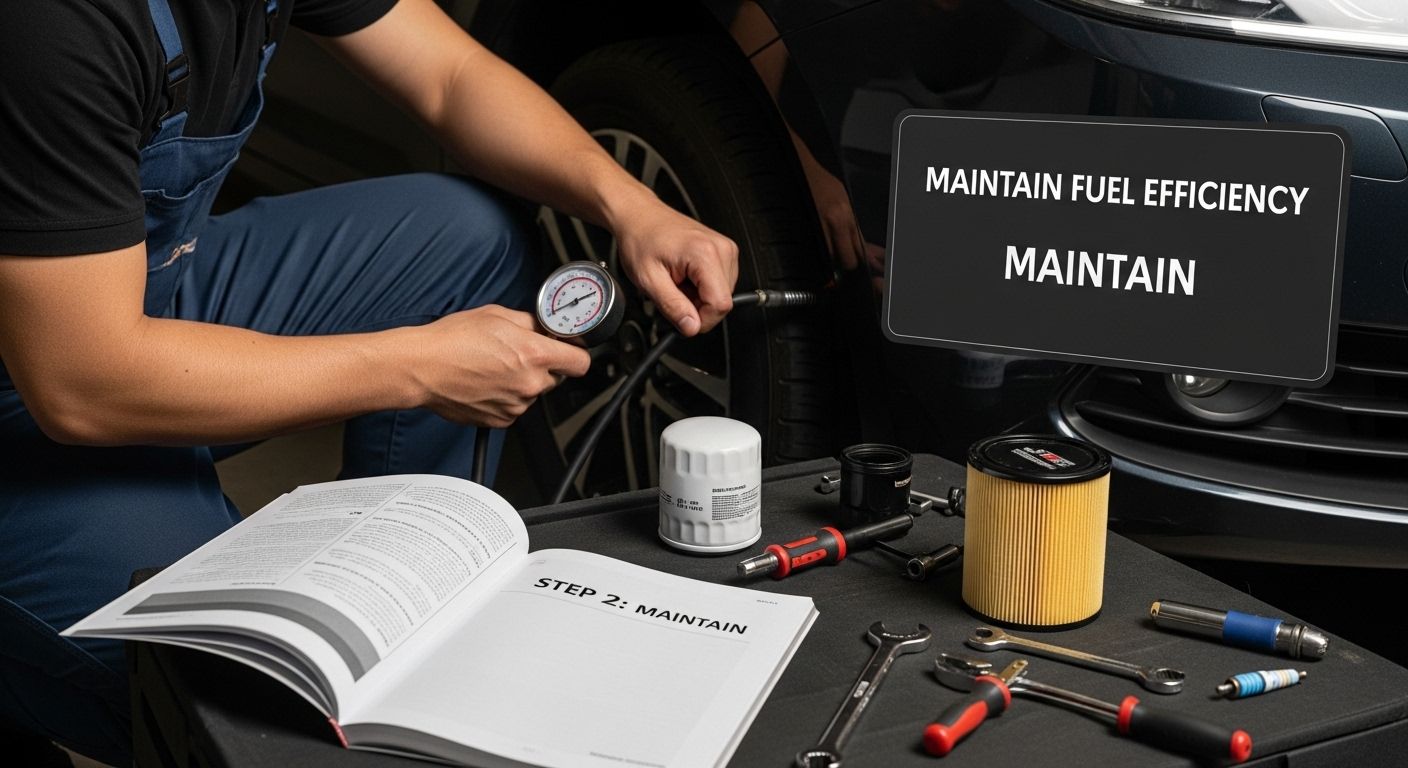
Regular vehicle maintenance is the foundation of optimal fuel efficiency, serving as a critical strategy to maximize miles per gallon. Think of your vehicle like a precision instrument that requires consistent care and attention. Neglecting routine maintenance can lead to decreased performance, increased fuel consumption, and potentially expensive repairs down the line.
Professional automotive experts emphasize the importance of creating a comprehensive maintenance schedule tailored to your specific vehicle. Start with fundamental tasks like regular oil changes, which are crucial for reducing engine friction and maintaining optimal performance.
High quality motor oil can improve fuel economy by reducing internal engine resistance. Select the manufacturer recommended grade of oil and adhere to prescribed change intervals, typically every 3,000 to 5,000 miles depending on your vehicle model and driving conditions.
Explore our detailed car engine maintenance checklist to ensure you’re covering all critical maintenance aspects. Beyond oil changes, several key maintenance areas directly impact fuel efficiency. Tire pressure is a prime example – underinflated tires create additional rolling resistance, forcing your engine to work harder and consume more fuel. Check tire pressure monthly and maintain manufacturer recommended inflation levels. Air filters are another critical component. A clean air filter allows proper airflow to the engine, supporting efficient combustion and preventing unnecessary fuel consumption.
Key maintenance tasks that boost fuel efficiency include:
- Regular oil changes with manufacturer recommended oil
- Monthly tire pressure checks and rotation
- Annual air filter replacement
- Spark plug inspection and timely replacement
- Wheel alignment verification
According to the U.S. Department of Energy, addressing serious maintenance issues like a faulty oxygen sensor can improve fuel economy by up to 40%. This statistic underscores the profound impact of proactive vehicle maintenance on fuel efficiency. By investing time and modest resources into consistent care, you can significantly enhance your vehicle’s performance and reduce long term fuel expenses.
Here is a checklist summarizing essential vehicle maintenance tasks that help boost fuel efficiency and should be performed regularly.
| Maintenance Task |
Frequency |
Impact on Fuel Efficiency |
| Oil change (correct grade) |
Every 3,000-5,000 miles |
Reduces engine friction, improves performance |
| Tire pressure check |
Monthly |
Minimizes rolling resistance, lowers fuel use |
| Tire rotation |
As recommended |
Ensures even wear, maintains optimal traction |
| Air filter replacement |
Annually |
Improves airflow for efficient combustion |
| Spark plug inspection/replacement |
Per vehicle timeline |
Supports proper combustion, enhances efficiency |
| Wheel alignment verification |
As needed (annual check) |
Reduces drag and resistance, improves MPG |
| Oxygen sensor inspection/replacement |
60,000-100,000 miles |
Corrects fuel mixture, can improve MPG up to 40% |
Step 3: Optimize Your Driving Habits
Driving style plays a pivotal role in fuel efficiency, with your personal habits potentially impacting miles per gallon more dramatically than any mechanical modification.
Transforming your driving approach can yield substantial fuel savings without requiring expensive vehicle upgrades or technical interventions.
Smooth and predictive driving is the cornerstone of fuel efficient performance. Professional drivers understand that aggressive acceleration and sudden braking consume significantly more fuel than gradual, controlled movements. When approaching traffic signals or congested areas, anticipate slowdowns by releasing the accelerator early and allowing your vehicle to coast naturally. This technique reduces unnecessary fuel consumption and minimizes wear on brake systems.
Maintaining a consistent, moderate speed proves far more fuel efficient than constant speed fluctuations.
Learn advanced techniques for enhancing vehicle performance that complement efficient driving strategies. Highway driving demands particular attention to fuel economy. Most vehicles achieve optimal fuel efficiency between 50 and 60 miles per hour. Exceeding 65 miles per hour dramatically increases aerodynamic drag, forcing your engine to work harder and consume more fuel.
Use cruise control during highway driving to maintain a steady speed and minimize unnecessary acceleration.
Practical strategies for fuel efficient driving include:
- Anticipate traffic flow and coast when possible
- Maintain steady speeds between 50 and 60 mph
According to the U.S. Department of Energy, driving habits can impact fuel economy by up to 30% in highway conditions. Additional fuel saving techniques include reducing vehicle weight by removing unnecessary cargo, minimizing air conditioning usage at lower speeds, and planning routes to avoid stop and go traffic. By adopting a more mindful approach to driving, you transform your vehicle into a more efficient machine, saving money and reducing environmental impact simultaneously.
Step 4: Upgrade Key Vehicle Components
Upgrading specific vehicle components represents a strategic approach to improving fuel efficiency, transforming your vehicle’s performance without requiring complete system replacement.
Targeted component upgrades can yield significant improvements in miles per gallon, focusing on parts that directly impact engine efficiency and energy consumption.
Oxygen sensors emerge as a critical upgrade for fuel economy enthusiasts. These small but powerful electronic components monitor exhaust gases and provide real time feedback to your vehicle’s engine control unit. Worn or outdated oxygen sensors can cause improper fuel mixture, leading to increased fuel consumption and reduced engine performance. Professional automotive technicians recommend replacing oxygen sensors every 60,000 to 100,000 miles, or when diagnostic tests indicate potential inefficiencies.
Explore advanced performance enhancement techniques that complement strategic component upgrades. High quality spark plugs represent another essential upgrade for fuel efficiency. Modern iridium or platinum spark plugs provide more consistent combustion, reducing fuel waste and improving overall engine efficiency. When selecting spark plugs, prioritize manufacturer recommended specifications and consider high performance options that offer better electrical conductivity and longer service intervals.
Key component upgrades that directly impact fuel efficiency include:
- High performance oxygen sensors
- Platinum or iridium spark plugs
- Lightweight performance air filters
- Low viscosity synthetic motor oils
According to the U.S. Department of Energy, strategic component upgrades can improve fuel efficiency by addressing energy loss points within your vehicle’s systems. Beyond sensors and spark plugs, consider upgrading to lightweight performance air filters that reduce intake restrictions and improve airflow. Low viscosity synthetic motor oils can also reduce internal engine friction, supporting smoother operation and enhanced fuel economy. By approaching component upgrades systematically, you transform your vehicle into a more efficient machine, balancing performance and fuel consumption with precision.
Step 5: Test and Verify Improvements
After implementing fuel efficiency strategies, rigorous testing and verification become crucial to quantify your actual performance gains.
Systematic measurement transforms hypothetical improvements into concrete, documentable results. Professional automotive enthusiasts understand that empirical data provides the most reliable evidence of optimization success.
Begin your verification process by establishing a consistent testing methodology. Reset your vehicle’s trip computer or odometer before conducting multiple fuel economy tests. Aim to perform these tests under similar driving conditions to ensure accurate comparisons. This means selecting routes with comparable terrain, traffic patterns, and driving speeds.
Tracking at least three consecutive fuel cycles provides statistically meaningful data, minimizing potential variations caused by individual driving sessions.
Discover advanced performance tracking techniques that can enhance your measurement precision. Digital tools play a significant role in modern fuel efficiency verification. Smartphone apps and onboard diagnostic (OBD) modules can provide real time fuel consumption data, offering more granular insights than traditional manual calculations. Some advanced systems even generate comprehensive reports tracking efficiency improvements across multiple parameters.
Key verification strategies for measuring fuel efficiency include:
- Conduct multiple consistent test cycles
- Use digital tracking tools for precise measurements
- Compare baseline and post modification fuel consumption
- Document driving conditions during each test
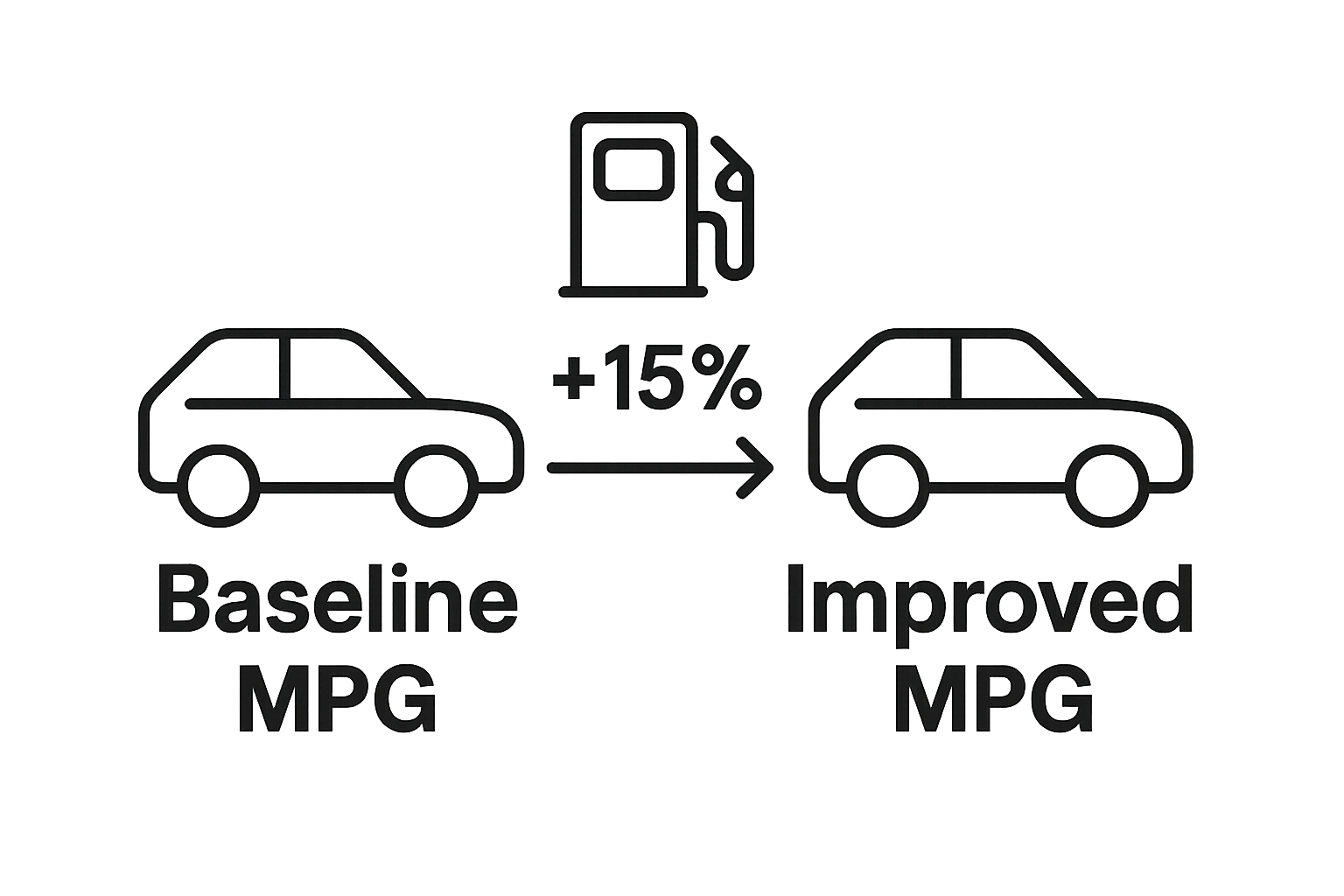
According to the U.S. Environmental Protection Agency, professional fuel economy testing involves simulating standardized driving cycles to ensure consistent and comparable results. While you may not have access to laboratory equipment, adopting a similar methodical approach can yield reliable performance insights. Calculate your miles per gallon by dividing total miles driven by gallons consumed, comparing these figures against your initial baseline measurements.
The table below outlines key actions and tools you can use to track and verify your vehicle’s fuel efficiency improvements with accuracy.
| Verification Method |
Description |
Tools/Resources |
| Manual Calculation |
Track miles and gallons over multiple fill-ups |
Pen/paper or spreadsheet |
| Trip Odometer Usage |
Reset and monitor trip miles directly via vehicle display |
Built-in trip computer |
| Smartphone Fuel Apps |
Log fill-ups, calculate averages, and store historical data |
Fuelio, Gas Tracker apps |
| OBD Diagnostic Tools |
Monitor real-time MPG data and efficiency improvements |
OBD-II scanner/tool |
| Route Consistency |
Use same/similar routes for before/after comparison |
Planning via GPS/maps |
Unlock True MPG Gains With Professional ECU Solutions
Are you frustrated by lackluster fuel savings despite tracking MPG and maintaining your car? Many drivers see only small improvements from basic habits and component swaps, leaving the real potential of their engine untouched. The real breakthrough starts with expert ECU file management and advanced tuning, letting you transform the strategies from your fuel efficiency journey into lasting results.

Upgrade your vehicle with
ECUFlashFiles.com’s trusted ECU files and tuning solutions. Tap into over 20 years of automotive expertise and access original, performance, or DAMOS files tailored for your exact make and engine. Optimize your engine control unit safely, boost MPG, and take your car’s economy and performance to the next level. Explore the difference on
ECUFlashFiles.com today to put data-driven, professional tuning behind every mile. Ready to see your fuel-efficiency numbers climb? Get started now.
Frequently Asked Questions
How can I assess my current fuel efficiency?
To assess your current fuel efficiency, fill up your gas tank completely, reset your trip odometer, and record the number of miles driven and gallons used during your fuel cycles. Divide the total miles driven by the number of gallons consumed to calculate your miles per gallon (MPG).
What regular maintenance should I perform to improve fuel efficiency?
To improve fuel efficiency, perform regular oil changes, check tire pressure monthly, replace air filters annually, inspect spark plugs, and verify wheel alignment. These maintenance tasks help ensure your vehicle operates at its best.
How can my driving habits affect fuel efficiency?
Your driving habits can significantly impact fuel efficiency. Smooth driving, maintaining a consistent speed, coasting to stop, and avoiding aggressive acceleration and braking can all contribute to better miles per gallon.
What vehicle components can I upgrade to enhance fuel efficiency?
Upgrading components like oxygen sensors, spark plugs, performance air filters, and using low viscosity synthetic motor oils can improve fuel efficiency. These upgrades help the engine operate more effectively and reduce fuel consumption.
Recommended
