
Thinking about car tuning can get your heart racing, especially with the idea of unlocking hidden potential under the hood. Most people just add flashy parts and hope for the best. But the real secret? Professional tuners start by diving into details, using tools like OBD2 scanners that reveal everything from current horsepower stats to engine software versions. This method lets you build performance safely and see results you can actually measure.
Table of Contents
- Step 1: Research Your Vehicle’s Specifications
- Step 2: Gather Essential Tuning Tools And Equipment
- Step 3: Adjust Engine Settings Using Ecu Remapping
- Step 4: Upgrade Performance Components Safely
- Step 5: Test Your Vehicle’s Performance Improvements
- Step 6: Document Changes And Monitor Progress
Quick Summary
| Key Point | Explanation |
|---|---|
| 1. Research vehicle specifications thoroughly. | Understand your vehicle’s make, model, and engine type to inform tuning strategies and avoid damaging modifications. |
| 2. Assemble essential tuning tools. | Invest in quality diagnostic tools like OBD2 scanners and precision instruments for accurate adjustments during performance tuning. |
| 3. Execute precision ECU remapping. | Use professional software to safely modify engine parameters and improve fuel efficiency and power while preserving reliability. |
| 4. Upgrade performance components carefully. | Select compatible components tailored to your vehicle’s systems and follow installation guidelines to maintain mechanical integrity. |
| 5. Test and document performance changes. | Conduct systematic tests to measure improvements, and maintain detailed records of modifications and their effects on vehicle performance. |
Step 1: Research Your Vehicle’s Specifications
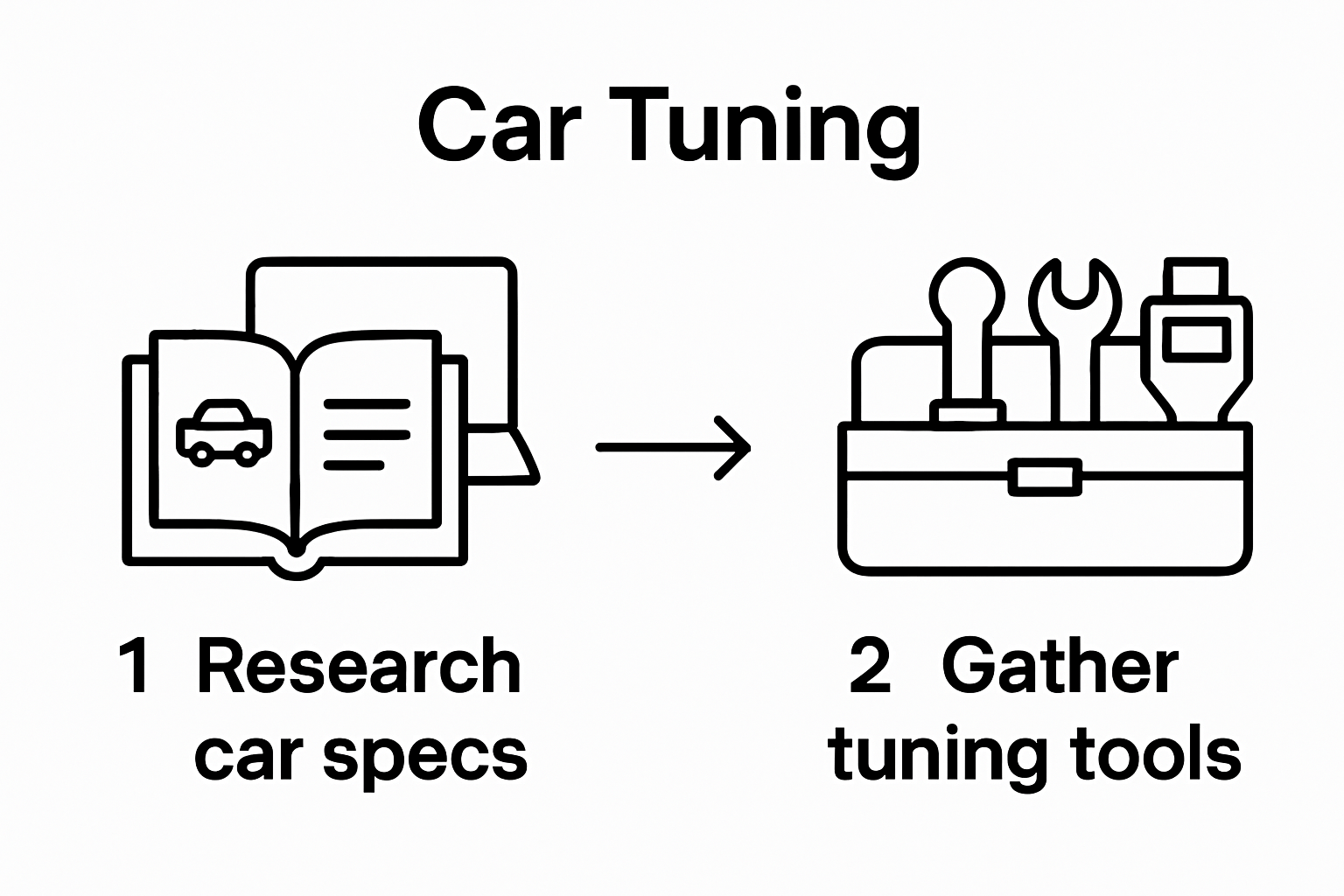
Before diving into car tuning, understanding your vehicle’s specific characteristics is crucial for successful performance enhancement. This initial research phase provides the foundation for intelligent modifications that will optimize your car’s potential without risking mechanical damage.
Start by gathering comprehensive details about your vehicle’s make, model, year, and engine type. Your vehicle’s owner manual, registration documents, and online vehicle identification number (VIN) lookup services are excellent resources for collecting accurate specifications. Focus on key parameters like engine displacement, horsepower, torque ratings, transmission type, and current factory configurations.
The National Academies Press research highlights the importance of understanding vehicle characteristics such as weight distribution, structural design, and center of gravity. These factors significantly influence how your tuning modifications will impact overall performance. Pay special attention to your vehicle’s current powertrain configuration, as this determines the most appropriate tuning strategies.
Critical specifications you need to document include:
- Current engine configuration (turbocharged, naturally aspirated, hybrid)
- Stock horsepower and torque measurements
- Transmission type and gear ratios
- Vehicle weight and drivetrain configuration
- Existing ECU software version
Professional tuners recommend using diagnostic tools like OBD2 scanners to extract precise electronic data about your vehicle’s current performance parameters. These devices can provide real-time insights into engine health, existing modifications, and potential tuning opportunities. Take detailed notes and consider creating a comprehensive spreadsheet documenting all discovered specifications.
Verification is key in this research phase. Cross-reference information from multiple sources to ensure accuracy. Online forums, manufacturer technical documentation, and professional automotive databases can help confirm the specifications you’ve gathered. By thoroughly understanding your vehicle’s baseline configuration, you’ll be prepared to make informed decisions about performance enhancements that are both effective and safe.
Here is a step overview table summarizing each tuning phase, estimated difficulty, and key outcomes, to help you plan your car tuning journey more efficiently.
| Step | Estimated Difficulty | Key Outcome |
|---|---|---|
| Research Vehicle Specifications | Easy | Accurate baseline for safe tuning |
| Gather Tuning Tools & Equipment | Easy | Fully equipped for diagnostics and adjustments |
| ECU Remapping | Moderate | Enhanced engine performance and fuel efficiency |
| Upgrade Performance Components | Moderate-Hard | Improved mechanical systems and reliability |
| Test Performance Improvements | Moderate | Verified results and data-driven adjustments |
| Document Changes & Monitor Progress | Easy | Comprehensive records for future reference |
Step 2: Gather Essential Tuning Tools and Equipment
Successful car tuning requires a strategic investment in quality tools and equipment that will support safe and effective vehicle modifications. Your toolkit represents the foundation of every performance enhancement project, enabling precise diagnostics, accurate measurements, and professional-level adjustments.
Professional automotive technicians recommend assembling a comprehensive set of tools that includes both general automotive repair equipment and specialized tuning instruments. Start with foundational tools like a high-quality OBD2 scanner, digital multimeter, torque wrench, socket set, and diagnostic laptop. These core tools will provide the basic infrastructure needed for most performance tuning tasks.
According to SUNY Delhi’s Automotive Technology program, investing in professional-grade equipment ensures long-term reliability and accuracy. Consider purchasing tools from reputable manufacturers that offer durability and precision. Budget-conscious tuners can gradually build their toolkit, prioritizing essential instruments over expensive specialized equipment.
Critical tools for car tuning include:
- Professional-grade OBD2 scanner with advanced diagnostic capabilities
- Digital multimeter with automotive electrical testing functions
- Precision torque wrench with adjustable settings
- Comprehensive socket and wrench set
- Laptop with performance tuning software
- ECU programming interface
Beyond physical tools, you will need software and digital resources. Research compatible performance tuning software that supports your specific vehicle make and model. Learn more about minimum system requirements for automotive tuning to ensure your computer setup meets the necessary specifications for advanced ECU modifications.
Before beginning any tuning project, verify your toolkit’s completeness and compatibility. Double-check that all instruments are calibrated, functional, and appropriate for your specific vehicle. Proper preparation prevents potential errors and reduces the risk of expensive mistakes during the tuning process.
Below is a summary of essential tuning tools, including specifications and their main purposes, to help beginners effectively prepare for any car tuning project.
| Tool/Equipment | Key Specification/Type | Purpose |
|---|---|---|
| OBD2 Scanner | Professional-grade, advanced diagnostics | Extracts vehicle data and diagnostics |
| Digital Multimeter | Automotive-rated, multiple functions | Tests electrical circuits, sensors |
| Torque Wrench | Adjustable, precision-calibrated | Ensures correct torque for fasteners |
| Socket & Wrench Set | Comprehensive, quality steel | General mechanical work and upgrades |
| Diagnostic Laptop | Meets ECU software requirements | Runs ECU tuning software |
| ECU Programming Interface | Compatible with vehicle make/model | Interfaces for ECU data transfer |
Step 3: Adjust Engine Settings Using ECU Remapping
ECU remapping represents a sophisticated method of optimizing your vehicle’s performance by reprogramming the engine’s electronic control unit to enhance power, efficiency, and overall driving characteristics. This critical step transforms your vehicle’s fundamental operating parameters, requiring precision, knowledge, and careful execution.
Begin by connecting your diagnostic laptop to the vehicle’s OBD2 port, ensuring a stable and secure connection. Professional-grade diagnostic software is essential for accessing and modifying the ECU’s intricate programming. Select software compatible with your specific vehicle make and model, as generic tools might produce inconsistent or potentially damaging results.
According to research on real-time adaptive optimization, modern ECU modifications involve complex computational strategies that adjust performance parameters dynamically. Your goal is to optimize fuel injection timing, boost pressure, ignition advance, and other critical engine management functions without compromising mechanical integrity.
Key considerations during ECU remapping include:
- Maintaining safe operating parameters for engine components
- Preserving manufacturer warranty conditions
- Balancing performance gains with long-term reliability
- Ensuring compatibility with existing vehicle modifications
Carefully review the current ECU file, documenting baseline performance metrics before making any modifications. Understand the potential benefits of ECU remapping to set realistic performance expectations. Some tuners recommend incremental adjustments, making small modifications and testing performance progressively rather than attempting radical transformations in a single session.
Verification is crucial after completing the remapping process. Use diagnostic tools to confirm that all parameters have been correctly implemented, and conduct a series of controlled test drives to assess the performance changes. Monitor engine temperatures, fuel consumption, and overall vehicle behavior during these initial test drives. Pay close attention to any unusual sounds, vibrations, or performance inconsistencies that might indicate improper ECU configuration.
Step 4: Upgrade Performance Components Safely
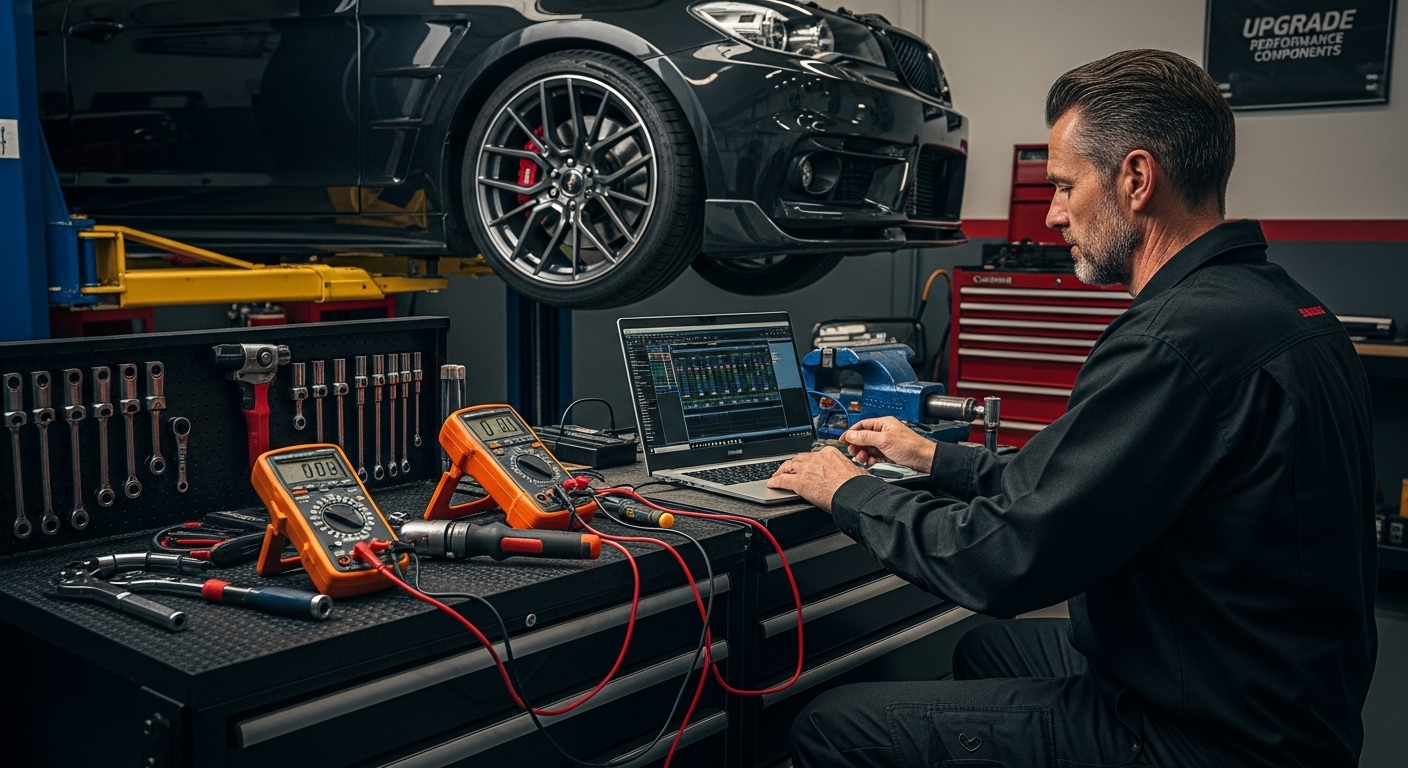
Selecting and installing performance components requires a strategic approach that balances potential gains with vehicle reliability and safety. This step involves carefully chosen upgrades that complement your vehicle’s existing mechanical systems while avoiding potential damage or unintended performance consequences.
Start by identifying performance bottlenecks in your current vehicle configuration. Critical upgrade areas typically include air intake systems, exhaust components, turbochargers, intercoolers, and suspension elements. Research components specifically designed for your vehicle make and model to ensure maximum compatibility and optimal performance enhancement.
According to research on mechanical system design, incorporating uncertainty modeling is crucial when modifying complex automotive systems. Professional tuners recommend a systematic approach that considers each component’s impact on overall vehicle performance and mechanical integrity.
Key performance component upgrade considerations include:
- Ensuring component compatibility with existing vehicle systems
- Maintaining manufacturer warranty conditions
- Balancing performance gains with long-term reliability
- Selecting high-quality components from reputable manufacturers
Careful installation is as critical as component selection. Use precision tools and follow manufacturer specifications exactly during installation. Torque specifications, alignment procedures, and proper fitment are non-negotiable aspects of safe performance upgrades. Learn more about different stages of vehicle tuning to understand how incremental modifications can progressively enhance your vehicle’s performance.
After installation, conduct comprehensive system checks to verify proper fitment and functionality. This includes diagnostic scans, visual inspections, and controlled test drives to assess the upgrade’s impact. Listen for unusual sounds, monitor temperature and pressure readings, and be prepared to make fine adjustments. Professional tuners recommend a break-in period for new performance components, allowing mechanical parts to settle and interact smoothly with your vehicle’s existing systems.
Step 5: Test Your Vehicle’s Performance Improvements
Testing performance improvements represents the critical validation phase of your car tuning journey, where theoretical modifications transform into measurable real-world results. This step requires systematic assessment to ensure that your vehicle’s upgrades deliver the expected performance enhancements without compromising mechanical reliability or safety.
Professional testing requires precise measurement techniques and controlled environments that simulate various driving conditions. Begin by establishing baseline performance metrics before your modifications, capturing data on acceleration times, fuel efficiency, horsepower, torque output, and overall engine responsiveness. Use professional-grade diagnostic tools and GPS-enabled performance meters to record accurate, repeatable measurements.
According to research from the Florida Solar Energy Center, maintaining your vehicle in top condition is crucial for performance optimization. This testing phase allows you to verify that your modifications genuinely improve vehicle performance and identify any potential areas requiring further refinement.
Key performance testing parameters include:
- Acceleration from 0-60 mph
- Quarter-mile elapsed time and terminal velocity
- Fuel consumption rates
- Engine temperature stability
- Transmission shift quality
- Handling characteristics during high-speed maneuvers
Consider conducting tests in multiple environments, including highway driving, urban streets, and controlled track conditions. Learn how to maximize your vehicle’s fuel efficiency to complement your performance improvements. Professional tuners recommend multiple test runs to ensure consistency and eliminate potential anomalies caused by temporary factors like weather conditions or road surface variations.
Carefully document all test results, comparing them against your initial baseline measurements. Look for statistically significant improvements in performance metrics. Pay close attention to any unexpected behaviors, unusual sounds, or warning indicators during testing. If performance gains do not meet expectations or introduce mechanical stress, be prepared to revisit and fine-tune your modifications systematically.
Step 6: Document Changes and Monitor Progress
Documenting your vehicle’s performance modifications creates a comprehensive record that serves as both a personal reference and a critical diagnostic tool for future maintenance and potential further enhancements. This step transforms your tuning journey from a series of isolated modifications into a structured, strategic approach to vehicle performance optimization.
Create a detailed digital logbook that captures every modification, including specific dates, component details, installation procedures, and performance test results. Professional tuners recommend using spreadsheet software or specialized automotive logging applications to maintain organized and easily searchable records. Include photographs of installation processes, component specifications, and diagnostic readings to provide visual documentation of your tuning progress.
According to documentation guidelines from the New York State Education Department, systematic tracking helps ensure ongoing vehicle safety and performance reliability. Your documentation should capture not just successful modifications, but also challenges encountered, adjustments made, and incremental improvements observed during the tuning process.
Critical documentation elements include:
- Original baseline performance measurements
- Specific component upgrade details
- ECU modification parameters
- Performance test results
- Fuel efficiency changes
- Maintenance intervals and observations
Implement a consistent monitoring strategy that involves regular diagnostic scans, performance assessments, and mechanical inspections. Learn about essential car maintenance steps to complement your tuning documentation process. Schedule quarterly performance evaluations to track long-term impacts of your modifications, watching for any emerging patterns or potential wear indicators.
Consider sharing your documentation with professional automotive networks or forums, which can provide additional insights and peer review. Maintain digital backups of all records, storing them securely in cloud storage or external hard drives. This comprehensive approach transforms your car tuning project from a simple modification process into a systematic, data-driven performance enhancement strategy.
Ready to Transform Your Car Tuning Experience?
You have learned how crucial it is to start with accurate research, use reliable tools, and carefully approach ECU remapping when tuning your vehicle for better performance. But the real pain point many beginners face is finding trusted ECU files and verified tuning resources. Risking your engine with files from unproven sources can lead to performance issues, safety concerns, or even permanent damage. Your goal is clear: make each step—from initial specifications to ECU updates—safe and effective with expert-backed data tailored exactly to your car’s requirements.

Take the next step with confidence. Discover a world of certified and carefully tested ECU tuning files at ECUFlashFiles.com, your dedicated platform for everything from original ECU files to performance tuning solutions. Leverage over 20 years of professional automotive experience, get instant access to the files that match your specific make and model, and enjoy secure support every step of the way. Start optimizing your car’s potential now with ECUFlashFiles.com—your expert partner in safe, results-driven car tuning.
Frequently Asked Questions
What are the first steps in car tuning for beginners?
Before starting car tuning, research your vehicle’s specifications by determining its make, model, year, and engine type. This includes documenting key parameters like engine configuration, horsepower, torque, and current ECU software version.
What tools do I need for successful car tuning?
Essential tools for car tuning include a high-quality OBD2 scanner, a digital multimeter, a torque wrench, socket sets, and a laptop with performance tuning software. These will help in diagnostics and adjustments during the tuning process.
How does ECU remapping improve vehicle performance?
ECU remapping enhances vehicle performance by reprogramming the engine’s electronic control unit. This adjustment optimizes parameters like fuel injection timing and boost pressure for better power and efficiency while ensuring mechanical reliability.
What should I monitor after upgrading vehicle components?
After upgrading, monitor parameters such as acceleration, engine temperature, fuel consumption, and transmission performance. Conduct test drives to observe any unusual sounds or behaviors, ensuring that the upgrades are improving performance without risking reliability.
Recommended
- What is Wideband Tuning? Understanding Performance Solutions – Ecu flash files
- ECU Tuning for Beginners: Essential Guide for 2025 – Ecu flash files
- Stage 1 vs Stage 2 Tuning: Key Differences Explained – Ecu flash files
- Understanding Minimum System Requirements for Automotive Tuning – Ecu flash files
- How Window Tint Works: Essential Guide for Auto Professionals 2025 – AEONCUT PPF Pre-cut Cutting software