
Almost every modern vehicle depends on tiny memory chips to remember crucial details about how the car runs. Yet, EEPROM chips can store vital vehicle data even after the battery is disconnected and have write endurance as high as 1 million cycles. Most people assume these chips are just for computers, but in cars, they quietly shape everything from performance tuning to engine diagnostics. The real story is that EEPROM is not just about data storage. It is the backbone that lets vehicles remember, adapt, and evolve—no matter how many times you turn the key.
Table of Contents
- What Is Eeprom And Its Role In Modern Vehicles?
- Why Eeprom Matters For Automotive Performance Tuning
- How Eeprom Functions: The Basics Of Electrically Erasable Memory
- Key Concepts Of Eeprom: Architecture And Data Storage
- Real-World Applications Of Eeprom In Automotive Systems
Quick Summary
| Takeaway | Explanation |
|---|---|
| EEPROM retains data without power | This non-volatile memory ensures critical vehicle data remains accessible even if the battery is disconnected. |
| Facilitates precise performance tuning | Tuners can modify key engine parameters electronically without hardware changes, enhancing customization and efficiency. |
| Supports essential vehicle functions | EEPROM stores vital settings like emission control and diagnostic data, enabling improved vehicle performance and monitoring. |
| Robust against environmental factors | This memory type withstands temperature variations, ensuring reliability and longevity in automotive applications. |
| Enables adaptive learning capabilities | EEPROM allows real-time adjustments to vehicle systems, enhancing responsiveness and overall driving experience. |
What is EEPROM and Its Role in Modern Vehicles?
Electrically Erasable Programmable Read-Only Memory (EEPROM) represents a critical technological foundation in modern automotive electronics. This specialized memory type enables vehicles to store and retain essential configuration data and operational parameters even when electrical power is disconnected. Understanding how EEPROM works reveals its fundamental importance in automotive systems.
The Core Characteristics of EEPROM
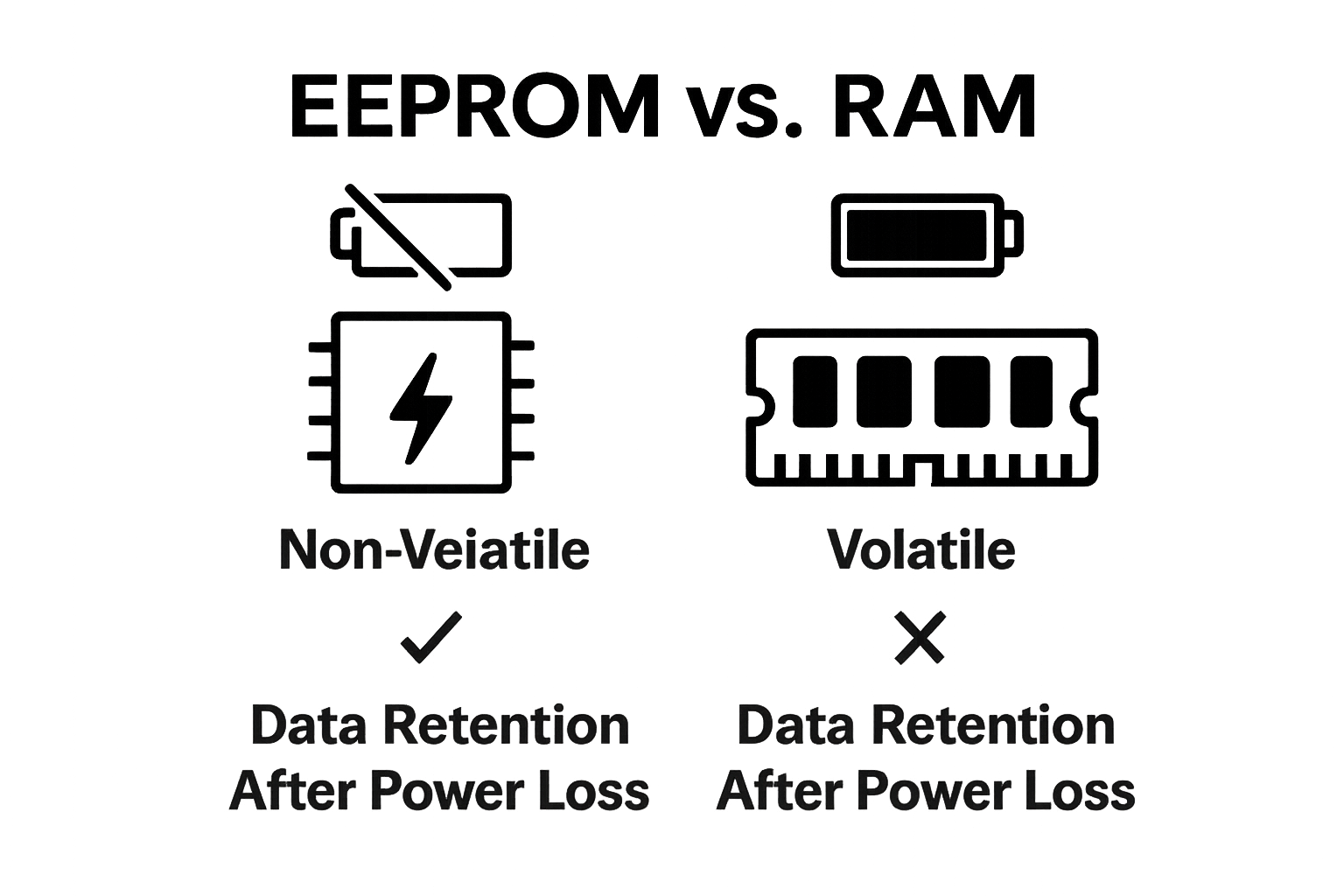
EEPROM distinguishes itself through its unique non-volatile memory capabilities. Unlike traditional computer memory that loses information when powered off, EEPROM maintains data integrity across power cycles. In automotive contexts, this means critical system configurations, calibration values, and diagnostic information remain preserved.
Key characteristics of automotive EEPROM include:
Here is a table outlining the core characteristics of EEPROM, providing an easy reference for its primary advantages in automotive use.
| Characteristic | Description |
|---|---|
| Non-volatile Memory | Retains data when power is removed |
| Electrically Erasable & Programmable | Can be erased and rewritten without physical removal |
| High Endurance | Endures up to 1 million write/erase cycles |
| Low Power Consumption | Uses minimal power during read/write operations |
| Resistance to Environmental Changes | Withstands automotive temperature and electrical fluctuations |
| Stores Small to Medium Data Volumes | Ideal for configuration, calibration, and settings preservation |
- Ability to electrically erase and reprogram data without removing the chip
- High durability and resistance to environmental challenges like temperature variations
- Low power consumption during read and write operations
- Capacity to store small to medium volumes of critical configuration data
Practical Applications in Vehicle Electronics
In modern vehicles, EEPROM plays a crucial role across multiple electronic systems. According to automotive electronics research, these memory chips are extensively used in engine control units, transmission control modules, and various sensor systems.
Vehicle systems leverage EEPROM for storing:
- Emission control parameters
- Vehicle identification numbers
- Calibration data for engine performance
- Adaptive learning values for transmission shifts
The technology enables automotive engineers to create more intelligent, responsive vehicles by providing a reliable method of storing and updating critical operational data.
To clarify the specific roles of EEPROM in different vehicle systems, the following table summarizes practical EEPROM applications in automotive electronics.
| Automotive System | EEPROM Role |
|---|---|
| Engine Control Unit (ECU) | Stores calibration data and emission control values |
| Transmission Control Module | Maintains adaptive shift points and learning values |
| Sensor Systems | Holds individual sensor calibration data |
| Anti-theft/Security System | Retains security codes and authentication data |
| Vehicle Identification Management | Stores vehicle identification numbers (VIN) |
| Emission Control Subsystems | Preserves system settings and regulatory data |
| For automotive enthusiasts seeking deeper insights into vehicle electronics, our comprehensive guide on ECU functionality offers additional context about how these memory systems integrate into broader vehicle control architectures. |
Why EEPROM Matters for Automotive Performance Tuning
In the intricate world of automotive performance tuning, EEPROM technology emerges as a pivotal enabler of precision and customization. Performance enthusiasts and professional tuners recognize that this memory technology provides the foundational platform for sophisticated vehicle modifications and electronic control unit (ECU) reprogramming.
Data Storage and Modification Capabilities
EEPROM allows performance tuners to make targeted, strategic modifications to vehicle parameters with unprecedented precision. Unlike traditional memory systems, EEPROM enables direct electrical reprogramming without physically removing the chip. This capability means tuners can adjust critical engine characteristics such as fuel injection timing, boost pressure, and ignition advance with minimal invasive intervention.
Key advantages for performance tuning include:
- Ability to store multiple custom performance profiles
- Quick and reversible electronic calibration adjustments
- Preservation of original manufacturer settings
- Minimal risk of permanent hardware modifications
Performance Tuning Flexibility
The real power of EEPROM in automotive performance lies in its remarkable flexibility. According to automotive electronics research, these memory chips provide a robust platform for adaptive learning and dynamic performance optimization. Tuners can implement complex performance strategies that respond to real-time driving conditions.
Specifically, EEPROM enables tuners to modify:
- Turbocharger boost pressure limits
- Fuel mixture ratios
- Throttle response characteristics
- Transmission shift points and firmness
For automotive enthusiasts seeking deeper insights into ECU modifications, our comprehensive guide to tuning data files provides additional context about leveraging these advanced memory technologies effectively.
How EEPROM Functions: The Basics of Electrically Erasable Memory
At the heart of EEPROM technology lies a sophisticated electrical mechanism that enables data storage and retrieval through precise electronic manipulation. Understanding the fundamental operation of these memory chips reveals the intricate engineering that supports modern automotive electronic systems.
Memory Cell Architecture
EEPROM memory operates through specialized transistor structures called floating gate transistors. These unique electronic components can trap and retain electrical charge, effectively storing binary information. Each memory cell contains a control gate and a floating gate separated by an insulating layer, allowing for the precise storage and modification of electrical states.
Key structural characteristics include:
- Ability to maintain electrical charge without continuous power
- Microscopic transistor design enabling compact memory storage
- Electrical isolation preventing unintended data modifications
- Multiple layers of protective insulation for enhanced durability
Electrical Programming and Erasure Mechanism
The programming process in EEPROM involves applying specific voltage levels to modify the electrical charge within memory cells. According to semiconductor engineering research, this process allows electrons to tunnel through the insulating layer, changing the floating gate’s electrical potential and effectively storing new information.
The electrical programming mechanism operates through:
- Precise voltage tunneling techniques
- Selective electron movement between gate layers
- Controlled electrical field applications
- Minimal physical wear during data modification
For automotive enthusiasts interested in deeper insights into electronic memory technologies, our comprehensive guide to ECU data management provides additional context about how these advanced memory systems function within vehicle electronic architectures.
Key Concepts of EEPROM: Architecture and Data Storage
EEPROM technology represents a sophisticated approach to electronic data storage, combining intricate architectural design with advanced electrical engineering principles. Understanding its core architectural concepts provides insight into how these memory systems effectively preserve and manage critical information in automotive and electronic applications.
Multilayer Memory Cell Structure
The EEPROM memory cell is engineered as a complex, multilayered electronic component designed to maximize data retention and minimize potential information loss. Unlike simple binary storage mechanisms, these cells employ sophisticated electron trapping techniques that allow precise electrical state management. Each memory cell functions as an independent microstructure capable of maintaining its programmed state across extended periods.
Critical architectural elements include:
- Precise electron tunneling pathways
- Nanoscale insulation layers
- Sophisticated charge retention mechanisms
- Multiple redundancy protection strategies
Data Storage and Electrical State Management
Data storage in EEPROM occurs through nuanced electrical state modifications within the memory cell. According to semiconductor engineering research, the process involves manipulating electron charges across microscopic transistor gates, enabling binary information representation through controlled electrical potentials.
The data storage mechanism leverages:
- Quantum tunneling electron movement
- Precise voltage differential measurements
- Electrical charge preservation techniques
- Minimal physical degradation during write cycles
For automotive enthusiasts seeking deeper technical understanding, our comprehensive guide to ECU data management offers additional insights into advanced memory technologies and their practical applications in vehicle electronic systems.
Real-World Applications of EEPROM in Automotive Systems
EEPROM technology plays a critical role in modern automotive electronic systems, serving as a reliable memory platform that enables sophisticated data management across various vehicle subsystems. Its unique ability to retain information without continuous power makes it an indispensable component in contemporary automotive engineering.
Critical Vehicle System Data Storage
In automotive applications, EEPROM serves as a foundational memory technology for storing essential vehicle configuration and operational data. These memory chips capture and preserve critical information across multiple electronic control units, ensuring consistent performance and enabling advanced diagnostic capabilities. Vehicle systems rely on EEPROM to maintain important parameters that define vehicle behavior and performance characteristics.
Key areas of EEPROM application include:
- Engine management system calibration settings
- Vehicle identification and manufacturing data
- Emission control system configurations
- Adaptive learning parameters for transmission systems
Electronic Control Unit Memory Management
Electronic Control Units (ECUs) leverage EEPROM technology to manage complex data storage requirements. According to automotive electronics research, these memory systems enable precise tracking and storage of vehicle operational data, supporting advanced diagnostic and performance monitoring capabilities.
Critical ECU memory management functions encompass:
- Storing manufacturer-specific calibration data
- Recording vehicle maintenance and service history
- Preserving error codes and diagnostic information
- Maintaining security and anti-theft system configurations
For automotive enthusiasts seeking deeper insights into electronic data management, our comprehensive guide to automotive data logging provides additional context about how these advanced memory technologies function within modern vehicle systems.

Unlock Safe and Professional EEPROM-Based Automotive Tuning With Verified ECU Files
If you are ready to leverage the power of EEPROM for smarter engine management, but worry about data loss, corrupted files, or unsupported configurations, ECUFlashFiles.com is here for you. We understand how critical it is to get the right file the first time, especially when dealing with complex EEPROM structures and ECU memory handling. Our platform solves the exact challenges discussed in this article—from securing authentic calibration data to supporting advanced tuning and recovery tasks tailored to your vehicle’s unique requirements.

Explore our huge library of original, tuned, and DAMOS calibration files, all expertly verified for safety and instant download. Our intuitive ECU file search tool lets you find precise solutions for your car’s make, model, and engine, ensuring flawless compatibility. Do not wait to protect your projects and boost your performance. Visit ECUFlashFiles.com today to experience secure, professional ECU file management backed by more than 20 years of expertise.
Frequently Asked Questions
What is EEPROM used for in modern vehicles?
EEPROM is used in modern vehicles to store critical configuration data such as emission control parameters, vehicle identification numbers, calibration data for engine performance, and adaptive learning values for transmission shifts.
How does EEPROM help in automotive performance tuning?
EEPROM allows performance tuners to make precise modifications to vehicle parameters like fuel injection timing and boost pressure without physically removing the chip, providing flexibility for quick and reversible adjustments.
What are the advantages of using EEPROM over traditional memory systems in vehicles?
The advantages of EEPROM include non-volatility, which means data is retained without power, the ability to electrically erase and reprogram data, and preservation of original manufacturer settings, minimizing risks associated with permanent modifications.
How does the programming process work in EEPROM technology?
The programming process in EEPROM involves applying specific voltage levels to change the electrical charge in memory cells. This precise voltage tunneling allows for storing new information while maintaining data integrity and minimal physical wear during modifications.