
Engine remapping is changing the way people think about tuning their cars. Most assume it is just about more power under the hood, and they might picture risky hacks or quick fixes. The truth is that a well-done remap can boost horsepower by up to 30 percent while actually improving fuel efficiency for many drivers. That unexpected double win is making car owners everywhere take another look.
Table of Contents
- What Is Engine Remapping And Why Is It Done?
- Factors Influencing The Duration Of Remapping
- The Science Behind Engine Remapping: How It Works
- Understanding The Impact Of Remapping On Vehicle Performance
- Real-World Timeframes: How Long Does Remapping Typically Take?
Quick Summary
| Takeaway | Explanation |
|---|---|
| Engine remapping enhances vehicle performance | Remapping adjusts ECU parameters to optimize power, torque, and throttle response without physical changes. |
| ECU Remapping duration varies by vehicle complexity | Basic remapping typically takes 2-4 hours, while specialized vehicles may require up to 8 hours. |
| Proper diagnostics are essential before ECU remapping | Technicians must analyze ECU software and performance metrics to tailor modifications effectively. |
| Not all vehicles benefit equally from ECU remapping | Factors like engine design and condition influence the success of ECU recalibrations. |
| Performance gains can be significant | Remapping may yield power increases of 25-30% and torque improvements of 20-35%, depending on the vehicle. |
What is Engine Remapping and Why is It Done?
Engine remapping represents a sophisticated process of modifying a vehicle’s Engine Control Unit (ECU) software to optimize vehicle performance, fuel efficiency, and overall driving characteristics. At its core, remapping involves reprogramming the default manufacturer settings to unlock additional potential within an engine’s existing hardware.
The Fundamental Purpose of ECU Remapping
The primary objective of engine remapping is to adjust the engine’s electronic parameters to enhance its performance beyond factory specifications. According to research from the International Journal of Automotive Engineering, engine calibration can significantly improve key performance metrics by fine-tuning critical parameters such as:
- Fuel injection timing
- Ignition advance
- Boost pressure for turbocharged engines
- Air-fuel mixture ratios
Professional tuners utilize advanced diagnostic tools to read the existing ECU software and make precise modifications that can result in improved horsepower, torque, and overall engine responsiveness. These adjustments are carefully calculated to maintain the integrity of the engine while extracting additional performance potential.
Performance and Efficiency Considerations
Remapping isn’t merely about increasing raw power. It represents a nuanced approach to vehicle optimization that balances performance gains with practical considerations. By recalibrating engine parameters, owners can achieve multiple benefits, including enhanced throttle response, smoother power delivery, and potentially improved fuel economy.
For those interested in diving deeper into the technical aspects of ECU modifications, our comprehensive guide on performance tuning provides additional insights into the intricate world of automotive electronic performance enhancement.
While remapping offers significant advantages, it’s crucial to understand that not all vehicles respond identically to these modifications. Factors such as engine design, existing wear, and mechanical condition play critical roles in determining the ultimate success of an ECU recalibration.
Factors Influencing the Duration of ECU Remapping
Remapping duration is not a uniform process and can vary significantly depending on multiple complex variables. Professional automotive technicians understand that each vehicle represents a unique scenario requiring precise evaluation and tailored approach.
Vehicle Complexity and Electronic Architecture
The sophistication of a vehicle’s electronic system plays a critical role in determining remapping time. Modern vehicles with advanced electronic control units (ECUs) typically require more intricate recalibration processes. According to research on automotive electronic systems, the complexity of electronic architecture directly impacts the time needed for comprehensive remapping.
Key factors affecting remapping complexity include:
- Number of electronic control modules
- Vehicle’s make and model
- Age of the vehicle’s electronic systems
- Existing software and firmware configurations
Technical Preparation and Diagnostic Requirements
Before actual remapping begins, technicians must conduct thorough diagnostic assessments. This preparatory phase involves:
- Comprehensive ECU software analysis
- Baseline performance measurement
- Identifying potential system limitations
- Selecting appropriate performance parameters
Professional remapping requires meticulous preparation, which can extend the overall process duration. Some high-performance or specialized vehicles might necessitate more extensive diagnostic procedures, potentially increasing the time investment.
For enthusiasts wanting deeper insights into the technical nuances of vehicle performance optimization, explore our specialized tuning resources that provide advanced perspectives on electronic vehicle modifications.
Ultimately, while general remapping might take between 2 to 4 hours, the actual duration depends on individual vehicle characteristics, technician expertise, and the specific performance goals being pursued. Patience and precision are key to achieving optimal results.
The Science Behind Engine Remapping: How It Works
Engine remapping represents a sophisticated electronic optimization process that fundamentally transforms how a vehicle’s Engine Control Unit (ECU) manages performance parameters. This intricate procedure goes far beyond simple software modifications, involving complex interactions between hardware sensors, computational algorithms, and precise calibration techniques.
Electronic Signal Mapping and Interpretation
At its core, engine remapping involves reinterpreting the electronic signals that control critical engine functions. According to research from the Environmental Protection Agency, the process requires creating comprehensive data sets that represent how an engine generates maximum brake torque across different operational speeds.
The ECU receives and processes signals from multiple sensors, including:
- Throttle position sensors
- Mass airflow meters
- Oxygen sensors
- Manifold absolute pressure sensors
- Engine temperature sensors
Precise signal interpretation allows technicians to recalibrate these inputs, effectively reprogramming the engine’s performance characteristics without physically modifying mechanical components.
Performance Optimization Strategies
Remapping involves strategic adjustments to key electronic parameters that directly influence engine performance. Professional tuners meticulously analyze and modify:
- Fuel injection timing
- Ignition advance curves
- Turbocharger boost pressure
- Throttle response algorithms
- Air-fuel mixture ratios
For automotive enthusiasts seeking deeper insights into the technical nuances of electronic performance tuning, understanding these complex interactions becomes crucial.
The scientific approach to remapping requires an intricate balance between theoretical computational modeling and real-world performance verification. Technicians utilize advanced diagnostic tools to ensure that modifications enhance performance without compromising engine reliability or exceeding manufacturer-specified operational tolerances.
Understanding the Impact of ECU Remapping on Vehicle Performance
Engine remapping represents a sophisticated approach to vehicle performance enhancement that goes beyond traditional mechanical modifications. By strategically adjusting electronic parameters, technicians can unlock significant improvements in a vehicle’s overall performance characteristics without invasive physical alterations.
Performance Metrics and Quantifiable Improvements
According to research on motorcycle ECU modifications, remapping can produce substantial performance gains. The study demonstrated remarkable transformations in critical performance indicators:
- Power output increases of up to 25-30%
- Torque enhancement ranging from 20-35%
- Improved throttle response
- More consistent power delivery across RPM ranges
Quantitative performance improvements depend on multiple factors, including the vehicle’s existing configuration, engine type, and specific remapping objectives. Professional tuners carefully calibrate modifications to ensure optimal results without compromising mechanical integrity.
Performance Enhancement Mechanisms
Remapping achieves performance improvements through precise electronic interventions that modify how the Engine Control Unit (ECU) interprets and responds to various sensor inputs. Key performance enhancement mechanisms include:
- Advancing ignition timing
- Optimizing fuel injection strategies
- Increasing turbocharger boost pressure
- Refining throttle response curves
- Adjusting air-fuel mixture ratios
For automotive enthusiasts seeking deeper insights into advanced performance tuning techniques, understanding these intricate electronic modifications becomes crucial.
While remapping offers significant performance potential, it requires a nuanced approach. Professional technicians must balance performance gains with mechanical limitations, ensuring that modifications enhance rather than compromise the vehicle’s overall reliability and operational efficiency.
Real-World Timeframes: How Long Does ECU Remapping Typically Take?
The duration of engine remapping varies significantly based on multiple technical and vehicle-specific factors. Professional automotive technicians understand that each remapping project represents a unique scenario requiring precise evaluation and specialized approach.
Standard ECU Remapping Duration Expectations
According to research on ECU calibration systems, modern vehicle electronic systems have increased complexity that impacts the overall remapping timeline. Typical professional remapping processes generally follow these duration parameters:
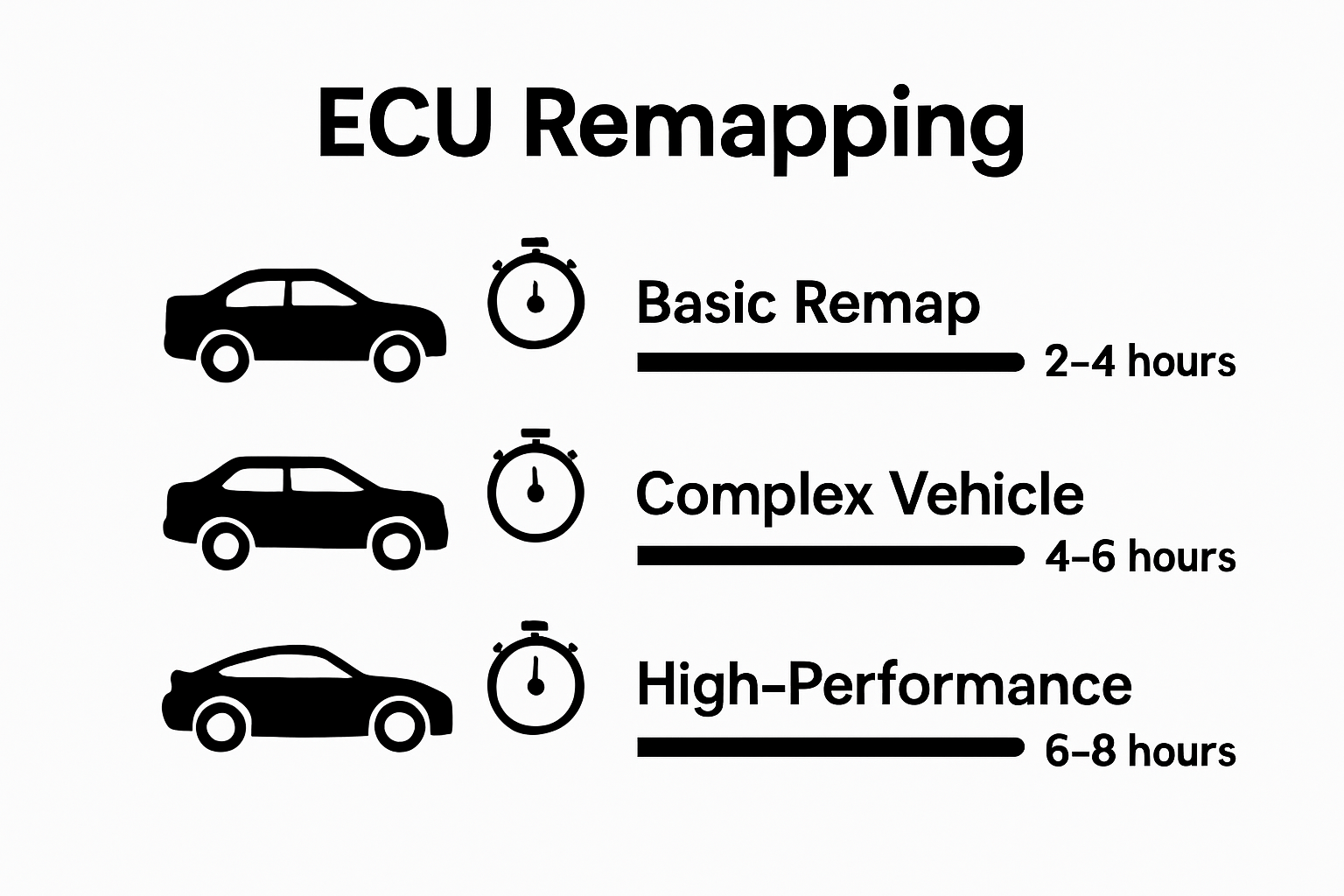
- Basic vehicle remapping: 2-4 hours
- Complex performance vehicles: 4-6 hours
- High-performance or specialized vehicles: 6-8 hours
- Diagnostic preparation and testing: Additional 1-2 hours
Precise timing depends on several critical variables, including the vehicle’s electronic architecture, existing software configuration, and the specific performance objectives being pursued.
Factors Influencing ECU Remapping Duration
Multiple technical considerations directly impact the time required for comprehensive remapping:
- Vehicle’s make and model complexity
- Number of electronic control modules
- Age and condition of existing electronic systems
- Specific performance modification goals
- Availability of manufacturer-specific diagnostic tools
For automotive enthusiasts interested in understanding the intricacies of electronic performance optimization, recognizing these time-related nuances becomes essential.
Professional technicians prioritize thorough diagnostic assessments and precision over rushed modifications.
To help you understand the different factors that impact how long engine remapping takes, here is a table summarizing the major influences mentioned in the article.
| Factor | Description | Impact on Duration |
|---|---|---|
| Vehicle Make & Model | Specific brand and model determine ECU complexity and access | More complex models take longer |
| Number of Control Modules | Multiple ECUs add to remapping steps and time | Increases total process time |
| Age of Electronic Systems | Older or outdated systems may require extra care and diagnostics | May prolong preparation and remapping |
| System Condition | Wear or existing issues can complicate calibration | Additional troubleshooting needed |
| Performance Goals | More aggressive performance targets require finer calibration | Requires extra tuning time |
| Diagnostic Tools Availability | Manufacturer-specific tools speed up data access and adjustments | Shortens or extends preparation phase |
| While some basic remapping procedures might seem quick, comprehensive and responsible tuning requires meticulous attention to detail. Vehicle owners should expect a professional process that balances speed with technical excellence, ensuring optimal performance and long-term reliability. |
Here is a table that summarizes typical remapping durations based on vehicle type and additional diagnostic requirements for easy reference.
| Vehicle Type/Process | Typical Duration |
|---|---|
| Basic vehicle remapping | 2-4 hours |
| Complex performance vehicles | 4-6 hours |
| High-performance/specialized | 6-8 hours |
| Diagnostic preparation/testing | Additional 1-2 hours |
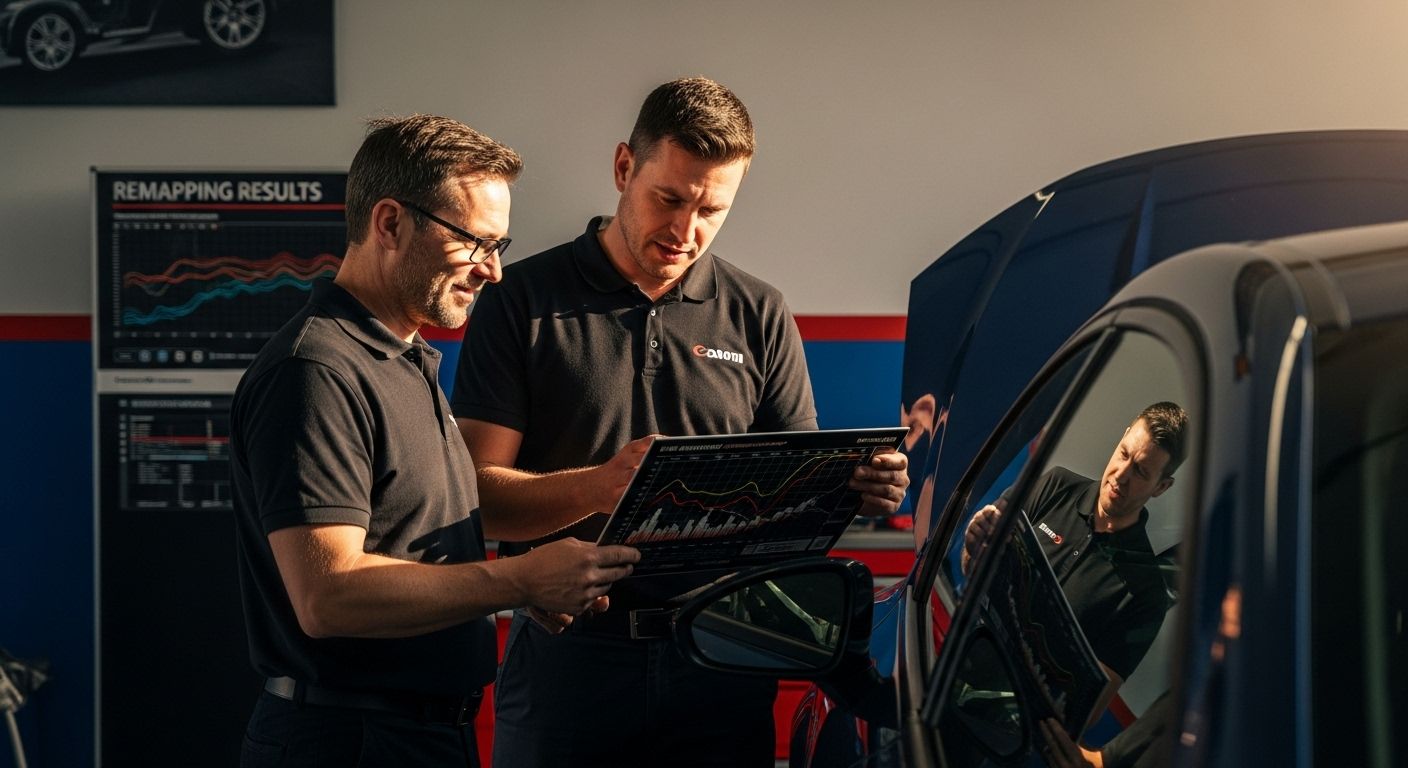
Unlock Faster, Safer Remapping with ECUFlashFiles.com
Are you overwhelmed by the uncertainty of remapping times and the risk of using unverified files on your vehicle? You are not alone. Many car owners and professional tuners worry about delays, compatibility problems, and the safety of ECU software adjustments. This article highlighted how the complexity of modern ECUs, lengthy diagnostics, and the need for precise calibration can drag out the entire remapping process. But there is a smarter, more efficient solution.
Save hours and protect your investment by choosing ECUFlashFiles.com. With instant access to rigorously tested and verified original factory files, advanced performance tuning files, and detailed calibration data, you can eliminate guesswork and uncertainty. Our platform connects you with expert support and a comprehensive search system for your specific vehicle. Take control of your remapping journey today—visit ECUFlashFiles.com and get the reliable files your project demands right now.
Frequently Asked Questions
How long does the engine remapping process typically take?
The duration for engine remapping usually ranges from 2 to 8 hours, depending on the complexity of the vehicle and specific performance goals.
What factors influence the time it takes to remap a vehicle’s ECU?
Factors that affect remapping duration include the vehicle’s make and model, the number of electronic control modules, the age and condition of existing systems, and the specific modifications sought.
Is there a difference in remapping duration for basic vs. high-performance vehicles?
Yes, basic remapping may take around 2 to 4 hours, while high-performance or specialized vehicles can extend the process to 6 to 8 hours due to their complexity.
Why is diagnostic preparation necessary before starting the remapping?
Diagnostic preparation is essential to perform thorough assessments of the ECU software, establish baseline performance, identify system limitations, and select the appropriate performance parameters, which can add 1 to 2 hours to the process.