
Map sensor calibration sounds tedious, right? And yet, a single MAP sensor miscalibration can throw off your engine’s entire fuel delivery system and cause a drop in performance you will actually feel. Here’s what most tuners miss: even a tiny mistake in calibration can result in up to a 10 percent loss in fuel efficiency and increased emissions. That’s why mastering this step-by-step process does more than just protect your engine. It can unlock levels of power and reliability you did not know you were missing.
Table of Contents
- Understanding Map Sensor Calibration Basics
- Why Proper Calibration Matters For Performance
- Step-By-Step Map Sensor Calibration Process
- Common Problems And Troubleshooting Tips
Quick Summary
| Takeaway | Explanation |
|---|---|
| Proper MAP sensor calibration is crucial. | It optimizes fuel delivery, timing, and combustion for better engine performance and efficiency. |
| Calibration affects overall engine performance. | Inaccurate settings can lead to poor fuel economy, increased emissions, and potential engine damage. |
| Follow systematic calibration steps. | Use precise techniques, including diagnostic assessments and step-by-step calibration procedures to ensure accuracy. |
| Regular verification is necessary. | Conduct periodic checks and adjustments based on environmental changes and vehicle modifications to maintain sensor accuracy. |
| Troubleshoot common sensor issues. | Understand typical problems and diagnostic codes to efficiently address sensor performance and maintain engine health. |
Understanding Map Sensor Calibration Basics
Map sensor calibration represents a critical process in automotive performance tuning that directly impacts engine efficiency and overall vehicle performance. At its core, the manifold absolute pressure (MAP) sensor serves as a fundamental communication link between the engine’s intake system and the engine control unit (ECU), providing real-time data about intake manifold pressure conditions.
The Fundamental Role of MAP Sensors
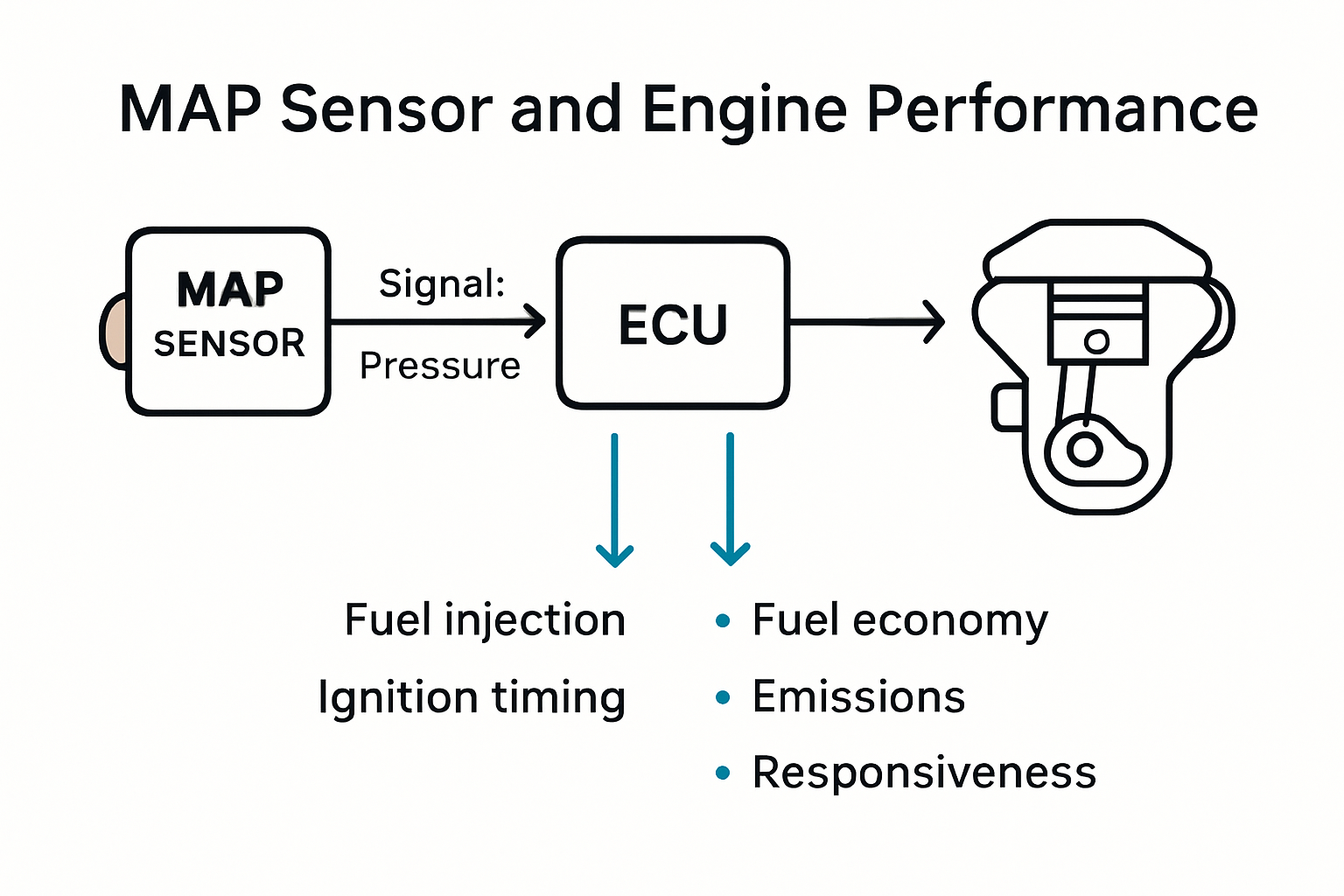
A MAP sensor operates by measuring the pressure inside the intake manifold and converting this information into an electrical signal that the ECU can interpret. Research from Clemson University’s Automotive Engineering Department indicates that this sensor plays a crucial role in determining the precise fuel delivery and engine timing requirements. The sensor typically consists of a sensitive diaphragm made from ceramic or silicon, which flexes in response to pressure changes within the intake manifold.
The voltage signal generated by the MAP sensor helps the ECU make critical decisions about fuel injection, ignition timing, and overall engine performance. When the intake manifold pressure increases, the sensor’s voltage signal rises proportionally, allowing the ECU to adjust fuel and timing parameters in real-time. Conversely, when manifold pressure decreases, the sensor provides a corresponding lower voltage signal.
Calibration Principles and Precision
Automotive pressure sensor research reveals that MAP sensor calibration involves establishing a precise relationship between intake manifold pressure and the electrical signal produced. This calibration process ensures that the sensor provides accurate readings across various operating conditions. A properly calibrated MAP sensor delivers several key benefits:
- Optimal Fuel Efficiency: Precise pressure measurements enable more accurate fuel injection
- Enhanced Engine Performance: Accurate sensor readings support optimal timing and combustion
- Reduced Emissions: Proper calibration helps maintain the correct air-fuel mixture
Professional tuners understand that MAP sensor calibration is not a one-size-fits-all procedure. Each vehicle requires specific calibration parameters based on its unique engine characteristics, modification level, and intended performance goals. Factors such as altitude, ambient temperature, and modifications to the intake system can significantly influence the required calibration settings.
Technical precision is paramount during map sensor calibration. Even minor discrepancies in sensor readings can lead to suboptimal engine performance, increased fuel consumption, or potential engine damage. Automotive professionals utilize specialized diagnostic equipment and advanced tuning software to ensure precise calibration across different operating conditions.
Understanding the intricate mechanics of MAP sensor calibration requires a comprehensive approach that combines technical knowledge, specialized equipment, and a deep understanding of engine dynamics. By mastering these calibration techniques, automotive tuners can unlock significant performance improvements and ensure optimal engine efficiency.
Why Proper Calibration Matters for Performance
For automotive performance enthusiasts and professional tuners, map sensor calibration represents a critical precision process that directly impacts an engine’s overall performance, efficiency, and reliability. Improper calibration can lead to significant complications that extend far beyond simple mechanical adjustments.
Performance and Efficiency Implications
Research from Wikipedia’s automotive sensor documentation reveals that the MAP sensor provides instantaneous manifold pressure data essential for calculating air density and determining the engine’s air mass flow rate. This intricate process directly influences fuel metering and ignition timing, making precise calibration paramount for optimal engine performance.
The consequences of inaccurate MAP sensor calibration can manifest in multiple detrimental ways. An improperly calibrated sensor may cause the engine control unit (ECU) to miscalculate fuel injection volumes, resulting in rich or lean fuel mixtures. Rich mixtures waste fuel and increase emissions, while lean mixtures can cause potential engine damage through increased combustion temperatures and detonation risks.
Diagnostic and Performance Metrics
Clemson University’s Automotive Engineering Research indicates that MAP sensor calibration directly influences several critical performance metrics:
- Engine Responsiveness: Accurate sensor readings ensure immediate and precise ECU responses
- Fuel Economy: Proper calibration minimizes unnecessary fuel consumption
- Emission Control: Precise air-fuel ratios help maintain lower emission levels
- Engine Longevity: Correct calibration reduces unnecessary stress on engine components
Professional tuners understand that map sensor calibration is not a universal procedure. Each vehicle requires nuanced calibration based on specific engine characteristics, modifications, and performance objectives. Environmental factors such as altitude, ambient temperature, and intake system configurations significantly impact calibration requirements.
Technical precision during MAP sensor calibration demands sophisticated diagnostic equipment and advanced tuning software. Minute discrepancies in sensor readings can cascade into substantial performance degradations, increased fuel consumption, and potential long-term engine damage. Automotive professionals must approach this process with meticulous attention to detail and a comprehensive understanding of engine dynamics.
For those looking to dive deeper into performance tuning fundamentals, our comprehensive ECU tuning guide provides additional insights into advanced calibration techniques. Understanding these intricate calibration processes empowers tuners to unlock significant performance improvements and maintain optimal engine efficiency across diverse operating conditions.
Step-by-Step Map Sensor Calibration Process
Map sensor calibration requires a systematic and precise approach that demands technical expertise, specialized equipment, and a comprehensive understanding of automotive electronic systems. Professional tuners must follow a meticulous process to ensure accurate sensor performance and optimal engine efficiency.
To help tuners ensure accuracy and efficiency, here’s a breakdown of the step-by-step MAP sensor calibration process in a clear, organized table.
| Step | Action Description |
|---|---|
| 1. Preparation | Gather tools (scan tool, multimeter, vacuum pump, gauge, etc.) |
| 2. Initial Diagnostic Assessment | Check sensor voltage, wiring, and physical condition |
| 3. Zero-point calibration | Verify sensor reads atmospheric pressure accurately |
| 4. Full-scale calibration | Test sensor response across entire pressure range |
| 5. Voltage output verification | Compare sensor outputs at set pressures with specifications |
| 6. Documentation | Record all calibration parameters and results |
| 7. Verification and Fine-Tuning | Run engine, monitor data, and refine sensor calibration |
Preparation and Initial Diagnostic Assessment
Research from Clemson University’s Vehicular Electronics Laboratory highlights the critical importance of thorough initial diagnostics before beginning the calibration process. Professional tuners must first conduct a comprehensive system evaluation to identify potential underlying issues that might impact MAP sensor performance.
Before commencing calibration, gather the following essential tools and equipment:
- Professional diagnostic scan tool
- Multimeter with high precision
- Vacuum pump
- Reference pressure gauge
- Laptop with advanced tuning software
- Vehicle-specific wiring diagrams
The initial diagnostic phase involves performing a comprehensive electrical system check. This includes verifying the MAP sensor’s voltage output, examining wiring connections, and checking for any signs of physical damage or corrosion that might compromise sensor accuracy.
Calibration Procedure and Precision Techniques
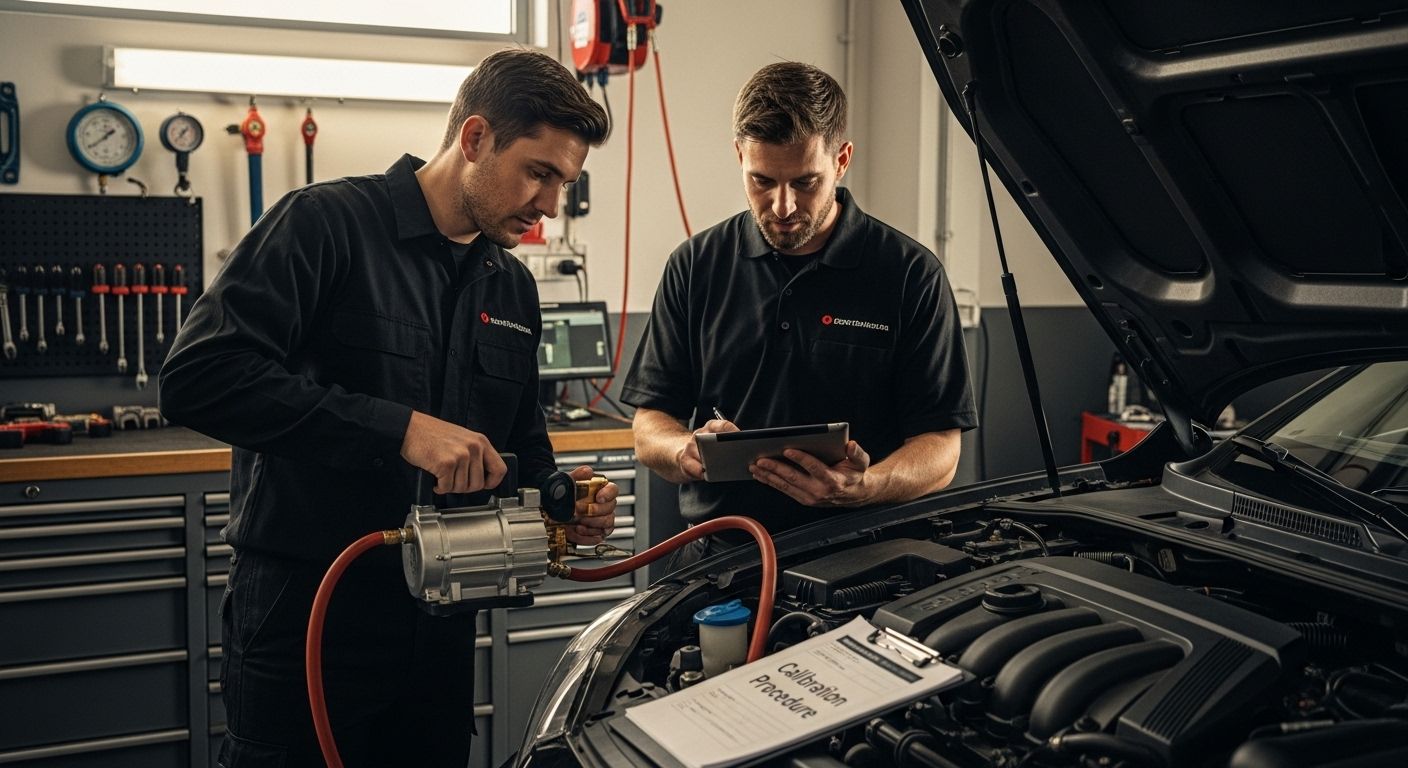
The calibration process demands meticulous attention to detail and a systematic approach. Begin by connecting the diagnostic scan tool to the vehicle’s ECU and establishing a baseline reading. Disconnect the MAP sensor from its mounting location and connect it to the vacuum pump and reference pressure gauge.
Proceed with the following calibration steps:
- Zero-point calibration: Ensure the sensor reads atmospheric pressure accurately
- Full-scale calibration: Test sensor response across complete pressure range
- Verify voltage output at different pressure points
- Compare sensor readings with manufacturer specifications
- Record and document all calibration parameters
Verification and Fine-Tuning
After completing the initial calibration, conduct a comprehensive verification process. This involves running the engine under various operating conditions to confirm the MAP sensor’s accuracy and performance. Use advanced tuning software to compare real-time sensor data against expected parameters.
Key verification techniques include:
- Idle speed stability assessment
- Acceleration and deceleration response monitoring
- Fuel trim value analysis
- Comprehensive data logging
Professional tuners understand that map sensor calibration is not a one-time procedure but an ongoing process of refinement. Environmental factors, engine modifications, and wear can gradually impact sensor performance, necessitating periodic recalibration.
For automotive enthusiasts seeking to expand their technical knowledge, our comprehensive ECU tuning guide offers additional insights into advanced sensor calibration techniques. Mastering these intricate procedures requires continuous learning and a commitment to technical excellence.
Common Problems and Troubleshooting Tips
Map sensor calibration and maintenance present unique challenges for automotive technicians and performance enthusiasts. Understanding the most frequent issues and implementing effective troubleshooting strategies can prevent significant engine performance complications.
Diagnostic Trouble Code Analysis
Research from automotive diagnostic resources reveals that Diagnostic Trouble Code (DTC) P0107 represents a critical MAP sensor circuit low voltage issue. This code signals potential problems with sensor performance that require immediate attention.
When encountering DTC P0107, professional technicians recommend a systematic diagnostic approach:
- Verify voltage readings at the MAP sensor connector
- Inspect wiring harness for potential damage or corrosion
- Check electrical connections for loose terminals
- Test sensor resistance using a high-precision multimeter
Physical Sensor Evaluation and Testing
Specialized automotive sensor documentation highlights critical testing procedures for MAP sensor functionality. Professional tuners utilize manual vacuum pumps to assess the sensor’s ability to maintain consistent pressure. A sensor unable to hold vacuum typically indicates internal damage such as a compromised diaphragm.
Key physical inspection points include:
- Diaphragm integrity: Check for visible tears or deformation
- Electrical connector condition: Examine for corrosion or damage
- Vacuum line connections: Verify tight and secure mounting
- Physical mounting: Ensure sensor is correctly positioned
Performance Indicators and Potential Complications
Clemson University’s Vehicular Electronics Laboratory emphasizes that MAP sensor failures can manifest through multiple performance symptoms. Professional tuners should be alert to indicators such as:
Below is a summary table of the most common MAP sensor problems, their indicators, and recommended troubleshooting actions, making it easier for tuners to diagnose and address issues efficiently.
| Problem/Indicator | Symptom or DTC | Recommended Action |
|---|---|---|
| Low voltage (DTC P0107) | DTC P0107, erratic readings | Verify voltage, inspect wiring/connectors |
| Physical sensor damage | Sensor won’t hold vacuum | Replace sensor if diaphragm is compromised |
| Corroded or loose connectors | Irregular output, poor connection | Clean or repair connectors and wiring |
| Engine performance changes | Poor idle, lost power, high emissions | Data log; recalibrate or replace as necessary |
| Vacuum line issues | Inaccurate pressure readings | Inspect and secure all vacuum connections |
- Unexpected changes in fuel consumption
- Irregular engine idling
- Reduced acceleration responsiveness
- Increased exhaust emissions
- Intermittent engine performance fluctuations
These symptoms often suggest underlying MAP sensor calibration or functionality issues. Advanced diagnostic techniques involve comprehensive data logging and comparative analysis of real-time sensor performance against manufacturer specifications.
Precision is paramount when addressing MAP sensor problems. Technicians must approach troubleshooting methodically, utilizing advanced diagnostic equipment and maintaining a systematic verification process. Each identified issue requires careful analysis to determine whether repair, recalibration, or complete sensor replacement represents the most appropriate solution.
For automotive enthusiasts seeking deeper insights into sensor diagnostics, our comprehensive ECU tuning guide provides advanced troubleshooting strategies and technical recommendations. Continuous learning and technical expertise remain the most effective tools in managing complex automotive sensor systems.
Frequently Asked Questions
What is a MAP sensor and why is calibration important?
A MAP sensor measures the pressure inside the intake manifold and sends that data to the engine control unit (ECU). Proper calibration is essential for optimal fuel delivery, timing, and overall engine performance, while preventing inefficient fuel consumption and increased emissions.
How do I perform a MAP sensor calibration?
To calibrate a MAP sensor, follow a systematic process: 1) prepare with necessary tools, 2) conduct an initial diagnostic assessment, 3) perform zero-point calibration to verify atmospheric pressure, 4) conduct full-scale calibration by testing pressure responses, 5) verify the voltage output at set pressure points, and 6) document all results.
What are common problems that can arise from improper MAP sensor calibration?
Improper MAP sensor calibration can lead to rich or lean fuel mixtures, poor fuel economy, increased emissions, erratic engine performance, and potential engine damage due to heat and detonation risks.
How can I troubleshoot MAP sensor issues effectively?
To troubleshoot MAP sensor issues, check for Diagnostic Trouble Codes (DTCs), evaluate the physical condition of the sensor, inspect wiring and connectors for damage, and ensure vacuum lines are properly connected to maintain accurate pressure readings.
Take MAP Sensor Calibration Further With Verified ECU Solutions
Struggling to achieve perfect map sensor calibration can leave you frustrated, especially when every inaccurate reading, poor idle, or drop in power slows down your tuning goals. You have followed every calibration step, yet achieving peak efficiency and reliability still feels out of reach. This is where having trusted, performance-optimized ECU files makes all the difference.
Accelerate your results by using professionally tested original and tuned ECU files designed specifically for your vehicle and hardware version. Reduce costly trial and error and get access to DAMOS calibration data that supports precise sensor adjustments. Discover resources and expert support from ECUFlashFiles.com, your partner for secure, instant ECU file delivery and advanced calibration help. Visit today and find what your project needs to achieve next-level performance—because when sensor accuracy matters, every detail counts.
Recommended
- ECU Tuning for Beginners: Essential Guide for 2025 – Ecu flash files
- How Does ECU Work? 2025 Guide for Car Performance – Ecu flash files
- ECU Tuned File | stage 1 | VW Transporter Bosch EDC17CP20 EDC17 CB.03.15.00 C34.00 1.0 03L906022JD
- ECU Tuned File | stage 1 | VW Transporter Bosch EDC17CP20 EDC17 CB.03.15.00 C34.00 1.0 03L906022CD
- gps tracker installation guide