
ECU remapping lets you rewrite the software that controls how your car’s engine runs and this translates to more power, sharper acceleration, and better mileage. Some drivers have seen horsepower jumps of up to 30 percent after a professional remap. Most people think newer cars are already tuned for peak performance right off the lot. In reality, manufacturers leave a lot of hidden potential untapped just to play it safe.
Table of Contents
- Defining ECU Remapping And Its Purpose
- Why ECU Remapping Matters For Vehicle Performance
- How ECU Remapping Works: The Science Behind It
- Key Concepts And Terms In ECU Remapping
- Potential Benefits And Risks Of ECU Remapping
Quick Summary
| Takeaway | Explanation |
|---|---|
| ECU remapping enhances vehicle performance. | By modifying ECU parameters, overall engine performance and efficiency can be significantly improved. |
| Expect increased horsepower and torque. | Professional tuning boosts power output, allowing for faster acceleration and improved vehicle dynamics. |
| Fuel efficiency can improve with remapping. | Correctly adjusted fuel injection and timing optimize consumption, leading to better efficiency in daily driving. |
| Technical expertise is crucial for remapping. | Proper ECU modifications require skilled knowledge and advanced tools to ensure mechanical integrity and reliability. |
| Be aware of potential risks involved. | Modifying ECU settings carries risks like warranty issues, increased wear, and possible electronic system complications. |
Defining ECU Remapping and Its Purpose
ECU remapping represents a sophisticated automotive performance optimization technique that transforms how vehicles operate by directly modifying the Engine Control Unit’s software parameters. At its core, this process involves reprogramming the electronic brain of a vehicle to enhance overall performance, efficiency, and responsiveness.
What Exactly is ECU Remapping?
Engine Control Unit (ECU) remapping is a precision tuning method where the default manufacturer software within a vehicle’s computer system gets strategically modified. According to the Institute of the Motor Industry, manufacturers originally program ECUs with broad tolerances to accommodate diverse global markets, creating significant optimization potential.
The primary objectives of ECU remapping include:
- Optimizing fuel efficiency and consumption
- Increasing horsepower and torque output
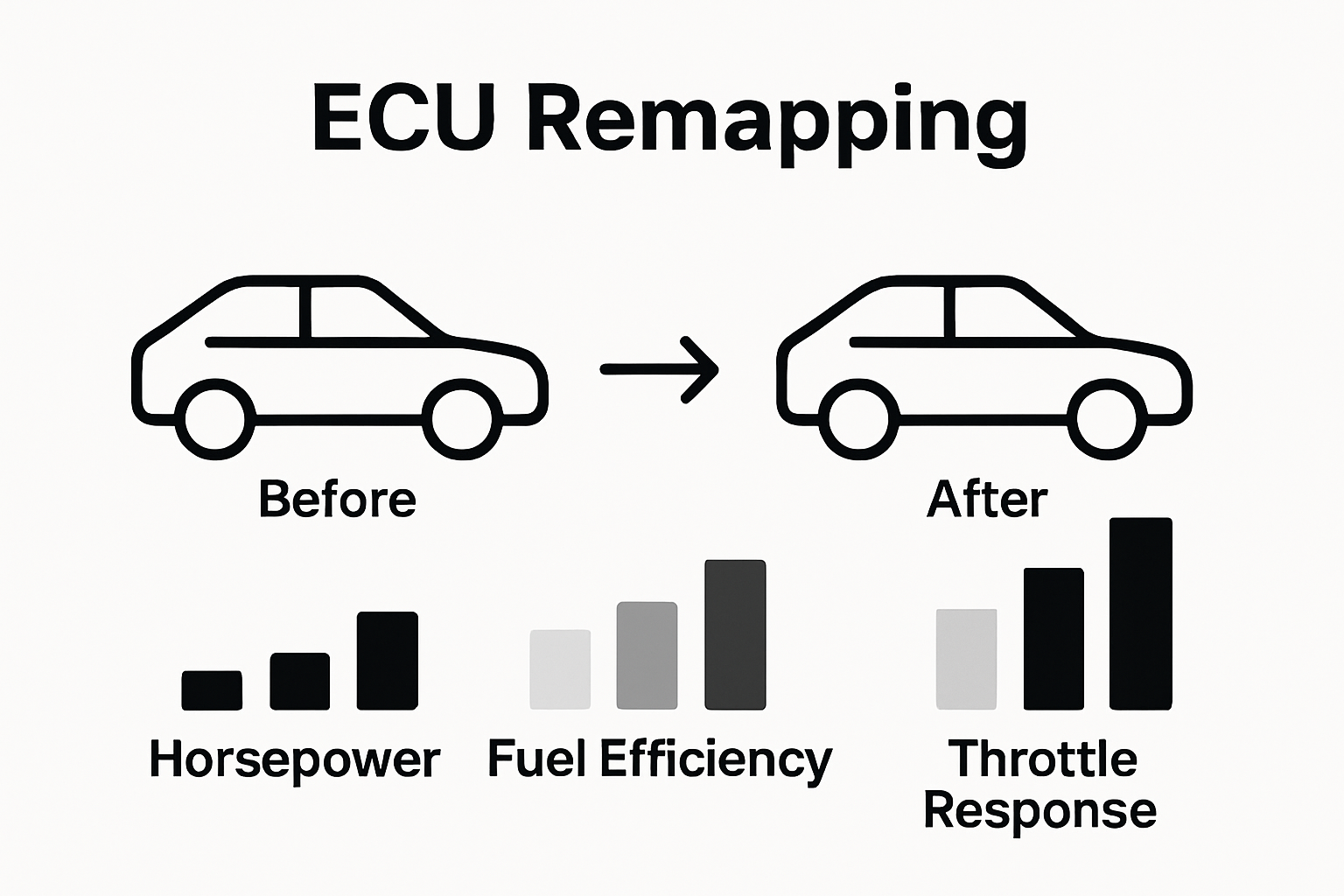
- Improving throttle response and acceleration
- Fine-tuning engine performance characteristics
How ECU Remapping Works
Remapping involves accessing the ECU’s firmware and adjusting critical parameters like fuel injection timing, turbo boost pressure, and ignition advance. These modifications allow automotive professionals to unlock additional performance capabilities that were previously constrained by conservative factory settings.
Professional tuners use specialized diagnostic tools to read the existing ECU software, create a modified file, and then upload the new configuration. This process requires deep technical understanding and precision to ensure optimal results without compromising vehicle reliability.
For automotive enthusiasts seeking deeper insights, our comprehensive guide on ECU performance tuning offers additional details about this intricate process.
Why ECU Remapping Matters for Vehicle Performance
ECU remapping transcends basic vehicle modifications by offering a strategic approach to unlocking a vehicle’s true performance potential. This sophisticated technique addresses the limitations inherent in manufacturer-programmed settings, providing automotive enthusiasts and professionals with a powerful method to optimize engine characteristics.
Performance Enhancement Beyond Standard Configurations
Modern vehicles come with predetermined ECU settings that prioritize broad market adaptability over maximum performance. Research from the automotive performance field demonstrates that these conservative factory configurations intentionally restrict an engine’s capabilities to accommodate varied environmental conditions, maintenance schedules, and fuel quality standards.
Key performance improvements through ECU remapping include:
- Significant horsepower and torque increases
- Enhanced throttle response and acceleration
- More precise fuel management and efficiency
- Customized driving experience tailored to specific requirements
Economic and Technical Advantages
ECU remapping offers substantial economic benefits by improving a vehicle’s overall efficiency. By fine-tuning fuel injection, ignition timing, and boost pressure, professional tuners can help vehicle owners achieve better fuel consumption without expensive mechanical modifications.
The technical precision of modern remapping goes beyond simple power gains. Professional tuners utilize advanced diagnostic tools to create carefully calibrated software profiles that maintain mechanical integrity while extracting optimal performance. If you want to understand potential risks associated with this process, check out our comprehensive guide that explores the nuanced aspects of ECU modifications.
Ultimately, ECU remapping represents a sophisticated intersection of automotive engineering and software optimization, enabling vehicles to perform closer to their true mechanical potential.
How ECU Remapping Works: The Science Behind It
ECU remapping represents a complex technological process that involves intricate software manipulation to optimize vehicle performance. This sophisticated technique goes far beyond simple modifications, requiring deep understanding of automotive electronic systems and precision engineering.
Electronic Architecture of Vehicle Performance
At the core of ECU remapping lies a sophisticated interaction between software algorithms and hardware components. According to research published in automotive engineering journals, the process involves analyzing and strategically adjusting multiple critical parameters within the vehicle’s electronic control unit.
Key electronic parameters typically modified during remapping include:
- Fuel injection timing and duration
- Turbocharger boost pressure settings
- Ignition advance and retard mechanisms
- Air to fuel ratio calculations
- Throttle response sensitivity
Technical Methodology of Remapping
Professional tuners employ specialized diagnostic tools to extract the existing ECU firmware, creating a base map that serves as the foundation for performance optimization. This intricate process requires connecting advanced diagnostic equipment directly to the vehicle’s onboard computer system, allowing technicians to read and modify the original manufacturer’s software configuration.
The modification involves creating custom calibration files that replace the stock ECU parameters. These custom files are meticulously designed to unlock additional performance potential while maintaining critical mechanical tolerances. For a detailed understanding of the time investment involved in this process, explore our guide on remapping duration.
Ultimately, successful ECU remapping demands a delicate balance between pushing performance boundaries and preserving the vehicle’s long term mechanical reliability. Professional tuners combine technical expertise, specialized software, and deep understanding of automotive engineering to transform stock vehicle configurations into optimized performance machines.
Key Concepts and Terms in ECU Remapping
ECU remapping involves a specialized vocabulary that encompasses complex automotive electronic engineering principles. Understanding these technical terms provides insight into the sophisticated process of optimizing vehicle performance through software modification.
Essential ECU Remapping Terminology
According to research in automotive electronic systems, several critical technical terms define the ECU remapping landscape. These specialized concepts help professionals and enthusiasts comprehend the intricate process of vehicle performance optimization.
Critical terminology in ECU remapping includes:
- Base Map: The original manufacturer’s software configuration stored in the ECU
- Lookup Tables: Predefined software matrices that define engine performance parameters
- Calibration Files: Custom software configurations designed to modify stock ECU settings
- Flash Memory: The storage medium where ECU programming is permanently saved
- OBD Port: Diagnostic connection point used for accessing vehicle computer systems
Technical Parameters and Performance Metrics
ECU remapping revolves around manipulating specific technical parameters that directly influence vehicle performance. Fuel mapping, ignition timing, and boost pressure represent core elements that professional tuners adjust to extract maximum efficiency and power from an engine.
These performance metrics are interconnected, requiring precise mathematical modeling and software engineering skills. Professional tuners must understand how modifying one parameter can cascade into broader systemic changes within the vehicle’s electronic architecture.
For a comprehensive understanding of the technical process involved, explore our detailed guide on ECU modification techniques.
Mastering these technical concepts transforms ECU remapping from a mysterious process into a structured, scientific approach to automotive performance enhancement.
To clarify essential concepts for readers new to ECU remapping, here is a table summarizing key technical terms and their explanations mentioned in the article.
| Term | Definition |
|---|---|
| Base Map | The original manufacturer’s software configuration stored in the ECU |
| Lookup Tables | Predefined software matrices that define engine performance parameters |
| Calibration Files | Custom software configurations designed to modify stock ECU settings |
| Flash Memory | The storage medium where ECU programming is permanently saved |
| OBD Port | Diagnostic connection point used for accessing vehicle computer systems |

Potential Benefits and Risks of ECU Remapping
ECU remapping represents a nuanced automotive performance modification technique that offers significant advantages while simultaneously presenting potential challenges. Understanding these complex dynamics requires a balanced perspective that evaluates both performance enhancements and potential mechanical risks.
Performance and Efficiency Advantages
ECU remapping delivers substantial benefits for vehicle owners seeking optimized performance. By strategically recalibrating electronic parameters, professional tuners can unlock remarkable improvements in vehicle capabilities.
Key performance benefits include:
- Increased horsepower and torque output
- Enhanced fuel efficiency and consumption optimization
- Improved throttle response and acceleration characteristics
- More refined driving experience tailored to specific preferences
- Potential reduction in overall fuel expenditure
Security and Technical Considerations
Research examining automotive electronic system vulnerabilities reveals that ECU modifications introduce complex technical considerations beyond simple performance enhancements. Professional tuners must navigate potential security risks and maintain strict protocols to preserve vehicle integrity.
Critical risk factors to consider during ECU remapping include:
- Potential warranty invalidation
- Risk of compromising vehicle electronic systems
- Possible increased mechanical stress on engine components
- Challenges with future software updates
- Complex interactions with vehicle insurance policies
Learn more about potential risks associated with ECU modifications in our comprehensive guide.
Successful ECU remapping demands a sophisticated approach that balances performance aspirations with technical prudence.
Below is a table summarizing the main potential benefits and associated risks of ECU remapping as discussed in the article.
| Category | Description |
|---|---|
| Performance | Increased horsepower, torque, improved fuel efficiency, and enhanced throttle response |
| Efficiency | More refined driving experience and potential reduction in overall fuel expenditure |
| Risks | Potential warranty invalidation, increased mechanical stress, electronic system complications, insurance challenges |
| Technical Needs | Requires professional expertise, advanced tools, and careful calibration to avoid negative effects |
Unlock Your Car’s True Performance with Verified ECU Remapping Solutions
Are you frustrated by the limits set by your car’s original ECU software? Many car enthusiasts and professional tuners know that factory settings can hold back horsepower, throttle response, and overall driving enjoyment. This article explains how ECU remapping can optimize fuel efficiency and power, but it also highlights one critical challenge: finding safe, tested ECU files that protect your vehicle and deliver real results. You do not have to risk your investment or navigate complex tuning on your own.

Harness the expertise behind ECUFlashFiles.com, where over 20 years of experience support your tuning goals. Search our vast library of verified performance ECU files and original maps to match your car’s exact make and model. Get secure, instant delivery so you can transform your engine’s potential the smart way. Ready to experience a customized driving upgrade? Visit ECUFlashFiles.com now to find your perfect ECU file and get hands-on support from true professionals.
Frequently Asked Questions
What is ECU remapping?
ECU remapping is the process of modifying the software within a vehicle’s Engine Control Unit to enhance performance, efficiency, and responsiveness by adjusting critical parameters such as fuel injection timing and turbo boost pressure.
How does ECU remapping improve vehicle performance?
ECU remapping enhances vehicle performance by optimizing factory settings, which typically prioritize broad market adaptability over maximum performance. This results in significant increases in horsepower, torque, throttle response, and fuel efficiency.
Are there any risks associated with ECU remapping?
Yes, potential risks include warranty invalidation, compromising the vehicle’s electronic systems, increased mechanical stress on components, and issues with future software updates. It’s important to consult professional tuners to mitigate these risks.
How long does the ECU remapping process take?
The duration of the ECU remapping process can vary but typically requires a few hours. This includes the time needed to extract the existing ECU firmware, create a custom calibration file, and upload the modified configuration.