
Car enthusiasts love squeezing extra performance out of their engines. ECU tuning can boost torque by up to 80 percent and power by nearly 76 percent according to published research. That sounds extreme, right? Yet the real surprise is that these gains happen without touching a single mechanical part. The secret is all in the software.
Table of Contents
- Defining Ecu Tuning And Its Purpose
- The Importance Of Ecu Tuning For Performance Enhancement
- How Ecu Tuning Works: Key Mechanisms Explained
- Essential Concepts In Vehicle Ecu Modifications
- Real-World Applications And Considerations For Ecu Tuning
Quick Summary
| Takeaway | Explanation |
|---|---|
| ECU tuning enhances vehicle performance | ECU tuning optimizes engine parameters for better horsepower, torque, and fuel efficiency beyond factory settings. |
| Professional expertise is crucial | Improper ECU modifications can compromise engine reliability, making professional tuning essential for safety and performance. |
| Electronic mapping is key | This technique modifies stored engine parameters, allowing for precise adjustments that enhance vehicle capabilities. |
| Comprehensive understanding is required | Successful tuning demands knowledge of engine mechanics, electronic systems, and how each adjustment affects overall performance. |
| Testing validates performance gains | Rigorous testing ensures modifications translate into real-world performance improvements without harming engine integrity. |
Defining ECU Tuning and Its Purpose
ECU tuning represents a sophisticated approach to optimizing vehicle performance by strategically modifying the Engine Control Unit’s software parameters. At its core, this process involves reprogramming the vehicle’s computer system to unlock enhanced engine capabilities beyond factory settings.
Understanding the ECU’s Role
The Engine Control Unit serves as the vehicle’s central nervous system, managing critical functions like fuel injection, ignition timing, and air-fuel mixture. By precisely adjusting these parameters, tuners can achieve significant improvements in vehicle performance. Learn more about ECU functionality in our comprehensive guide.
Key aspects of ECU tuning include:
- Performance Enhancement: Increasing horsepower and torque
- Fuel Efficiency: Optimizing fuel consumption and combustion
- Driving Dynamics: Improving throttle response and overall engine behavior
Performance and Technical Objectives
According to Wikipedia’s comprehensive overview of engine tuning, ECU tuning aims to modify an engine’s internal parameters to achieve specific performance goals. These objectives can range from increasing raw power output to improving fuel economy or extending engine longevity.
Professional tuners approach ECU modifications with precision, understanding that each adjustment impacts multiple interconnected systems. The process requires deep technical knowledge, specialized diagnostic tools, and an intricate understanding of engine mechanics and electronic systems.
While ECU tuning offers remarkable potential for vehicle optimization, it demands a careful, calculated approach. Improper modifications can lead to reduced engine reliability or potential mechanical damage, underscoring the importance of professional expertise in this specialized field.
The Importance of ECU Tuning for Performance Enhancement
ECU tuning represents a pivotal strategy for automotive enthusiasts and professionals seeking to extract maximum potential from their vehicles. This sophisticated process goes far beyond simple mechanical adjustments, offering a nuanced approach to performance optimization through advanced software modifications.
Performance Optimization Mechanisms
Modern vehicles come with factory ECU settings designed to accommodate diverse driving conditions, environmental regulations, and broad performance requirements. These conservative configurations often leave significant performance headroom untapped. Explore advanced techniques for ECU performance enhancement to understand how professional tuners unlock this hidden potential.
Key performance enhancement aspects include:
- Power Output: Increasing horsepower and torque
- Throttle Response: Improving acceleration and engine responsiveness
- Fuel Efficiency: Optimizing combustion parameters
Performance Verification through Scientific Research
According to research published in the Journal of Physics Conference Series, strategic ECU modifications can yield remarkable performance gains. The study demonstrated that precise ECU reprogramming could increase maximum torque by approximately 80% and maximum power by nearly 76% across various vehicle platforms.
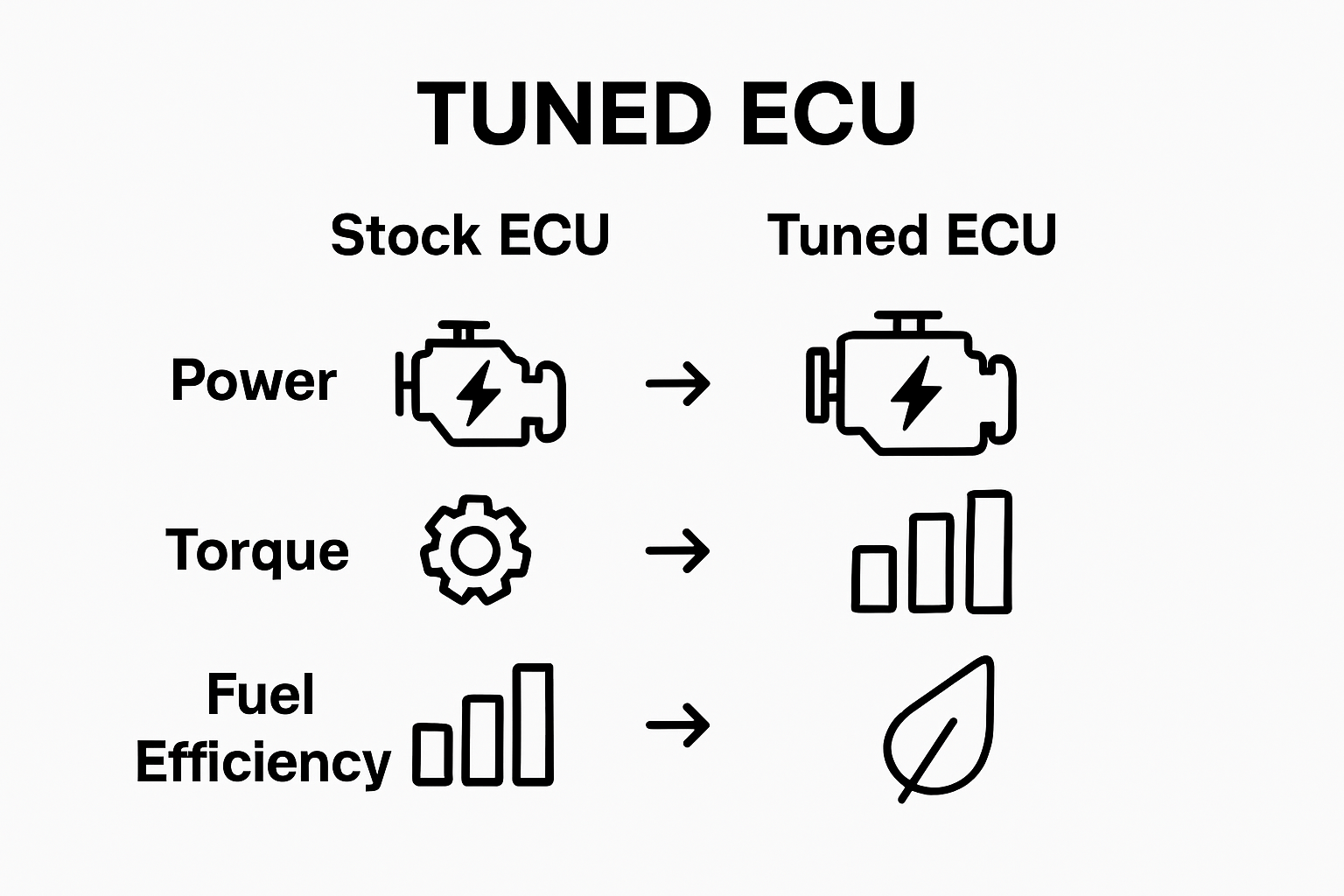
Professional tuners approach performance enhancement with a holistic perspective, understanding that each electronic adjustment reverberates through multiple interconnected vehicle systems.
To provide a concise overview of the primary mechanisms ECU tuning uses to enhance vehicle performance, the following table breaks down the main adjustment areas and their impacts.
| Mechanism | Description | Impact on Performance |
|---|---|---|
| Fuel Injection Timing | Modifies when fuel is injected during engine cycles | Improves power delivery and efficiency |
| Ignition Advance | Adjusts spark timing relative to piston position | Maximizes combustion and responsiveness |
| Air-Fuel Ratio | Balances air and fuel mixture entering the engine | Optimizes combustion for power and economy |
| Electronic Mapping | Alters stored digital engine parameter maps | Customizes throttle response and behavior |
| Throttle Response | Fine-tunes how the engine reacts to accelerator inputs | Enhances driving dynamics |
While ECU tuning offers extraordinary performance potential, it requires meticulous precision. Improper modifications can compromise vehicle reliability, emphasizing the critical need for professional expertise and advanced diagnostic capabilities in this specialized field of automotive engineering.
How ECU Tuning Works: Key Mechanisms Explained
ECU tuning involves a complex interplay of software manipulation and electronic system recalibration, transforming a vehicle’s performance characteristics through precise computational adjustments. This intricate process requires deep understanding of automotive electronic systems and their interconnected parameters.
Electronic Mapping and Computational Optimization
At the heart of ECU tuning lies electronic mapping, a sophisticated technique where tuners modify critical engine parameters stored within the vehicle’s computer system. Learn more about advanced chip tuning techniques to understand the nuanced approaches professionals employ.
Key computational optimization mechanisms include:
- Fuel Injection Timing: Precise control of fuel delivery windows
- Ignition Advance: Adjusting spark timing for maximum combustion efficiency
- Air-Fuel Ratio: Optimizing mixture parameters for improved performance
Scientific Foundations of ECU Modification
According to research from the Clemson Vehicular Electronics Laboratory, ECU tuning fundamentally involves reprogramming the engine control module to modify critical operational parameters. This process requires a comprehensive understanding of how electronic signals translate into mechanical performance.
Professional tuners utilize specialized diagnostic tools and software interfaces to access and modify the ECU’s firmware. These advanced systems allow for granular adjustments to engine management parameters, enabling precise performance enhancements without compromising fundamental mechanical integrity.
The transformation occurs through careful manipulation of digital maps that govern engine behavior.
 By recalibrating these electronic instructions, tuners can unlock performance potential that remains dormant within factory settings, effectively bridging the gap between standard manufacturing specifications and high performance automotive engineering.
Essential Concepts in Vehicle ECU Modifications
Vehicle ECU modifications represent a complex intersection of automotive engineering, computer science, and precision electronics. This sophisticated process goes beyond simple mechanical adjustments, requiring a comprehensive understanding of intricate electronic systems and their interconnected parameters.
Core Modification Principles
Successful ECU modifications demand a nuanced approach that balances technical expertise with strategic computational thinking. Explore the fundamental workings of automotive computer systems to grasp the intricate mechanisms behind these transformative interventions.
Key principles of ECU modification include:
- System Integrity: Maintaining electronic system stability
- Performance Optimization: Carefully calibrating computational parameters
- Risk Management: Preventing potential electronic system failures
Technological Foundations of ECU Interventions
According to research exploring advanced automotive control frameworks, modern ECU modifications leverage sophisticated machine-learning techniques and dynamic modeling approaches. These advanced methodologies enable precise computational adjustments that transcend traditional mechanical tuning strategies.
Professional technicians approach ECU modifications with a multidimensional perspective, understanding that each electronic adjustment creates a cascading effect across multiple vehicle systems. The process requires not just technical proficiency but a deep comprehension of automotive electronic architecture, signal processing, and computational dynamics.
The art of ECU modification lies in its ability to unlock latent performance potential while maintaining the delicate balance between mechanical reliability and computational enhancement. Skilled practitioners navigate this complex landscape by employing advanced diagnostic tools, specialized software interfaces, and an intimate understanding of automotive electronic ecosystems.
Real-World Applications and Considerations for ECU Tuning
ECU tuning transcends theoretical concepts, finding critical applications across diverse automotive domains. From professional racing environments to everyday vehicle performance enhancement, the strategic modification of electronic control systems represents a sophisticated approach to automotive engineering.
Performance and Industry Applications
Professional automotive sectors leverage ECU tuning as a precision tool for optimizing vehicle performance. Learn advanced techniques for reading and interpreting ECU data to understand the intricate process of electronic system manipulation.
Key real-world application domains include:
- Motorsports: Maximizing competitive vehicle performance
- Commercial Transportation: Improving fuel efficiency and engine reliability
- Performance Automotive: Customizing vehicle characteristics for specific driving requirements
Technological and Practical Constraints
According to research from Texas A&M University, successful ECU modifications require comprehensive understanding of engine control systems. The study highlighted the complexity of developing effective electronic control strategies, particularly in high-performance racing environments.
Professional tuners must navigate a complex landscape of technological limitations, regulatory constraints, and mechanical tolerances. Each ECU modification represents a delicate balance between potential performance gains and maintaining overall system reliability. This requires not just technical expertise, but a nuanced understanding of automotive electronic architectures and mechanical interactions.
The practical implementation of ECU tuning demands rigorous testing, precise computational modeling, and an intimate comprehension of how electronic adjustments translate into tangible mechanical performance.
The following table summarizes key real-world applications and technological constraints associated with ECU tuning, clarifying both its uses and the limitations professionals must consider.
| Application Domain | Purpose/Benefit | Technological/Practical Constraint |
|---|---|---|
| Motorsports | Maximize competitive vehicle performance | Must balance performance with reliability |
| Commercial Transportation | Improve fuel efficiency and reliability | Regulatory restrictions and emissions standards |
| Performance Automotive | Customize vehicle characteristics for drivers | Mechanical tolerances limit extent of modifications |
| High-Performance Racing | Develop precise electronic control strategies | Complex ECU systems require advanced expertise |
| Everyday Vehicles | Enhance driving experience and power | Testing required to ensure engine safety |
Take Your ECU Tuning Knowledge and Unlock Real Vehicle Performance
You have just learned about the complexities of ECU tuning, from electronic mapping to the challenges of optimizing engine parameters. But understanding how to enhance performance, improve throttle response, and calibrate fuel injection timing is only part of the journey. The real challenge is accessing reliable ECU files and accurate calibration data that empower you to put theory into practice. Many tuners and enthusiasts struggle to find tested, safe, and professionally verified ECU software tailored to their specific car make, model, and engine.

Why wait when you can access a trusted source for original files, performance upgrades, and expert support right now? Visit ECUFlashFiles.com and explore our proven tuning and calibration solutions. Browse files by engine type and software version, get instant delivery, and count on professional help at every step. Start your ECU remapping journey today for results you can measure and trust.
Frequently Asked Questions
What is ECU tuning, and how does it enhance vehicle performance?
ECU tuning involves modifying the Engine Control Unit’s software parameters to optimize vehicle performance, leading to enhancements in horsepower, torque, and fuel efficiency.
What are the key aspects to consider during ECU tuning?
Key aspects of ECU tuning include performance enhancement, fuel efficiency optimization, and improving driving dynamics such as throttle response.
Is ECU tuning safe for my vehicle?
While ECU tuning can significantly improve performance, improper modifications can lead to engine reliability issues. Professional expertise is essential to ensure safe tuning.
How does ECU tuning impact fuel efficiency?
ECU tuning optimizes combustion parameters, which can enhance fuel efficiency by ensuring more effective fuel usage and better air-fuel mixture ratios.
Recommended
- How to Read ECU Data: Step-by-Step Guide for Tuners – Ecu flash files
- ECU Tuning for Beginners: Essential Guide for 2025 – Ecu flash files
- How Does ECU Work? 2025 Guide for Car Performance – Ecu flash files
- What IS ChipTuning – Ecu flash files
- ECU Tuned File | stage 1 | VW Transporter Bosch EDC17CP20 EDC17 CB.03.15.00 C34.00 1.0 03L906022CD
- Chip tuning Nissan Skyline 02.mai 2006 – ECU Hitachi hitachi SW ZMD6222
- Tunned file for Toyota Supra Bosch MG1CS201
- Tunned file for Subaru WRX Denso SH7058 GW MSR_RFCC_SHCV9 FE9D452WXM
- Tunned file for Chip tuning Chevrolet Camaro 6.2 V8 SS 455hp 2021 – ECU Delco E92 SW 12712197