
ECU cloning sounds like something out of a tech thriller, but in the world of modern automotive repair, it is a real and powerful tool. Car tuners and shops can now create exact digital copies of a vehicle’s brain, matching the original down to every encrypted key and fuel map. Here is the twist. Some of the newest cars use security features like Physically Unclonable Functions (PUFs) that make unauthorized cloning nearly impossible. Forget everything you thought you knew about copying car computers, because these advances are changing the rules for everyone from performance tuners to vintage restorers.
Table of Contents
- Understanding What Is ECU Cloning
- How ECU Cloning Works in Modern Cars
- Benefits and Use Cases of ECU Cloning
- Common Challenges and Best Practices
Quick Summary
| Takeaway | Explanation |
|---|---|
| ECU cloning creates exact electronic replicas. | This process involves duplicating firmware and configuration data, crucial for performance and diagnostics. |
| Advanced techniques are required for accurate cloning. | Professionals must extract specific data like encryption keys and configurations for successful replication. |
| Cloning must adhere to ethical standards. | Unauthorized duplication can lead to legal issues; technicians should respect intellectual property rights. |
| Modern vehicles have enhanced security measures. | Advanced countermeasures like Physically Unclonable Functions (PUFs) make cloning more complex and secure. |
| Cloning benefits both performance and restoration. | It allows for performance tuning while preserving original configurations, especially for rare vehicles. |
Understanding What Is ECU Cloning
ECU cloning represents a critical technical process in automotive electronics where an exact digital copy of an Engine Control Unit’s firmware and configuration is created. This sophisticated procedure allows automotive professionals to duplicate the precise electronic settings of a vehicle’s brain, enabling everything from performance tuning to backup and recovery strategies.
The Technical Mechanics of ECU Cloning
At its core, ECU cloning involves creating an identical digital replica of an original ECU’s software and hardware configuration. According to research from the University of Michigan, the process requires extracting unique digital signatures and intrinsic characteristics that define a specific ECU’s operational parameters. Professionals must capture every nuanced detail – from fuel injection timing to ignition advance curves – ensuring the cloned unit functions identically to the original.
The cloning process is not merely about copying binary data. It demands precise understanding of vehicle-specific encryption, immobilizer codes, and hardware authorization keys. North American Motorsports Research emphasizes that successful cloning requires transferring critical authorization elements that validate the ECU within the vehicle’s complex electrical ecosystem.
Security and Ethical Considerations
While ECU cloning offers remarkable technical advantages, it simultaneously presents significant security challenges. A comprehensive study on ‘Physical and Mechatronic Security’ highlights potential risks including intellectual property theft and potential economic losses. Automotive manufacturers have responded by developing advanced countermeasures like Physically Unclonable Functions (PUFs) designed to create clone-resistant electronic units.
Professional tuners must navigate these ethical boundaries carefully. Cloning should never involve unauthorized duplication of proprietary software or violation of manufacturer intellectual property rights. Instead, it should be viewed as a legitimate technical procedure for backup, performance optimization, or diagnostic purposes.
For those interested in diving deeper into automotive electronics, our comprehensive guide on ECU fundamentals provides additional insights into the intricate world of vehicle control systems. Understanding ECU cloning requires not just technical skill, but a nuanced appreciation of automotive electronic architecture and its evolving security landscape.
How ECU Cloning Works in Modern Cars
Modern ECU cloning represents a sophisticated technical process that goes far beyond simple file copying, involving intricate digital forensics and precise electronic replication techniques. Automotive professionals must navigate complex technological landscapes to successfully clone an Engine Control Unit with accuracy and precision.
Advanced Data Extraction Techniques
The core of ECU cloning involves extracting exact digital signatures and system-specific configurations. Research from the University of Michigan reveals a groundbreaking approach to ECU fingerprinting using advanced image classification techniques. Professionals utilize specialized diagnostic tools to read the original ECU’s binary data, capturing every minute configuration detail including fuel mapping, ignition timing, and vehicle-specific adaptation parameters.
According to North American Motorsports Research, successful cloning requires extracting critical authorization elements like immobilizer codes and hardware-specific encryption keys. This process demands precision hardware interfaces that can communicate directly with the ECU’s internal memory circuits, reading EEPROM and flash memory with microscopic accuracy.
Security Challenges and Detection Methods
As ECU cloning technologies evolve, so do countermeasures designed to prevent unauthorized duplication. A cutting-edge study on vehicular security introduces an innovative Two-Point Voltage Fingerprinting scheme that detects potential ECU masquerading attacks. This method measures voltage signals at two distinct points, creating a unique electronic fingerprint that makes unauthorized cloning exponentially more difficult.
Modern automotive manufacturers have implemented multiple layers of protection, including Physically Unclonable Functions (PUFs) that generate unique cryptographic keys inherent to each specific electronic control unit. These advanced security mechanisms make ECU cloning increasingly complex, requiring sophisticated technical expertise and specialized equipment.
Professional tuners interested in expanding their technical knowledge might want to explore our comprehensive ECU fundamentals guide to understand the intricate world of automotive electronic systems. The art of ECU cloning continues to challenge even the most experienced automotive electronics professionals, demanding continuous learning and adaptation to emerging technological innovations.
Benefits and Use Cases of ECU Cloning
ECU cloning offers automotive professionals and enthusiasts a range of strategic advantages that extend far beyond simple electronic replication. This sophisticated technique provides critical solutions for performance optimization, vehicle restoration, and diagnostic troubleshooting across various automotive applications.
Here is a table summarizing the main benefits and use cases of ECU cloning discussed in the article. This overview helps readers quickly identify practical applications and strategic advantages of the technique.
| Use Case / Benefit | Description |
|---|---|
| Performance Tuning | Enables experimentation with engine profiles and optimization without altering the original ECU. |
| Vehicle Customization | Allows creation of multiple performance profiles for diverse driving needs, from daily use to racing. |
| Diagnostics | Offers a reliable method for troubleshooting and restoring malfunctioning or damaged ECUs. |
| Restoration of Rare/Vintage Vehicles | Preserves unique configurations when original ECUs are unavailable or obsolete. |
| Backup & Recovery | Creates digital replicas to safeguard original data and settings against data loss or hardware failure. |
| Security Enhancement | Supports implementation of new security features while maintaining precise electronic control. |
| Manufacturer Compliance | Facilitates testing and development within manufacturer guidelines for secure and authorized modifications. |
Performance Tuning and Vehicle Customization
In the realm of automotive performance, ECU cloning emerges as a powerful tool for precision engineering. Research on automotive electronics security reveals that professional tuners can leverage cloning to create backup configurations, experiment with performance modifications, and develop intricate engine management strategies. By creating exact digital replicas, technicians can test advanced tuning parameters without risking permanent alterations to the original ECU.
Professionals can develop multiple performance profiles, switching between stock configurations and high-performance setups with unprecedented ease. This flexibility allows for nuanced engine optimization tailored to specific driving conditions, from daily commuting to competitive racing environments. A cutting-edge security framework suggests that modern cloning techniques incorporate advanced cryptographic protections, ensuring that these modifications remain secure and manufacturer-compliant.
Diagnostic and Restoration Applications
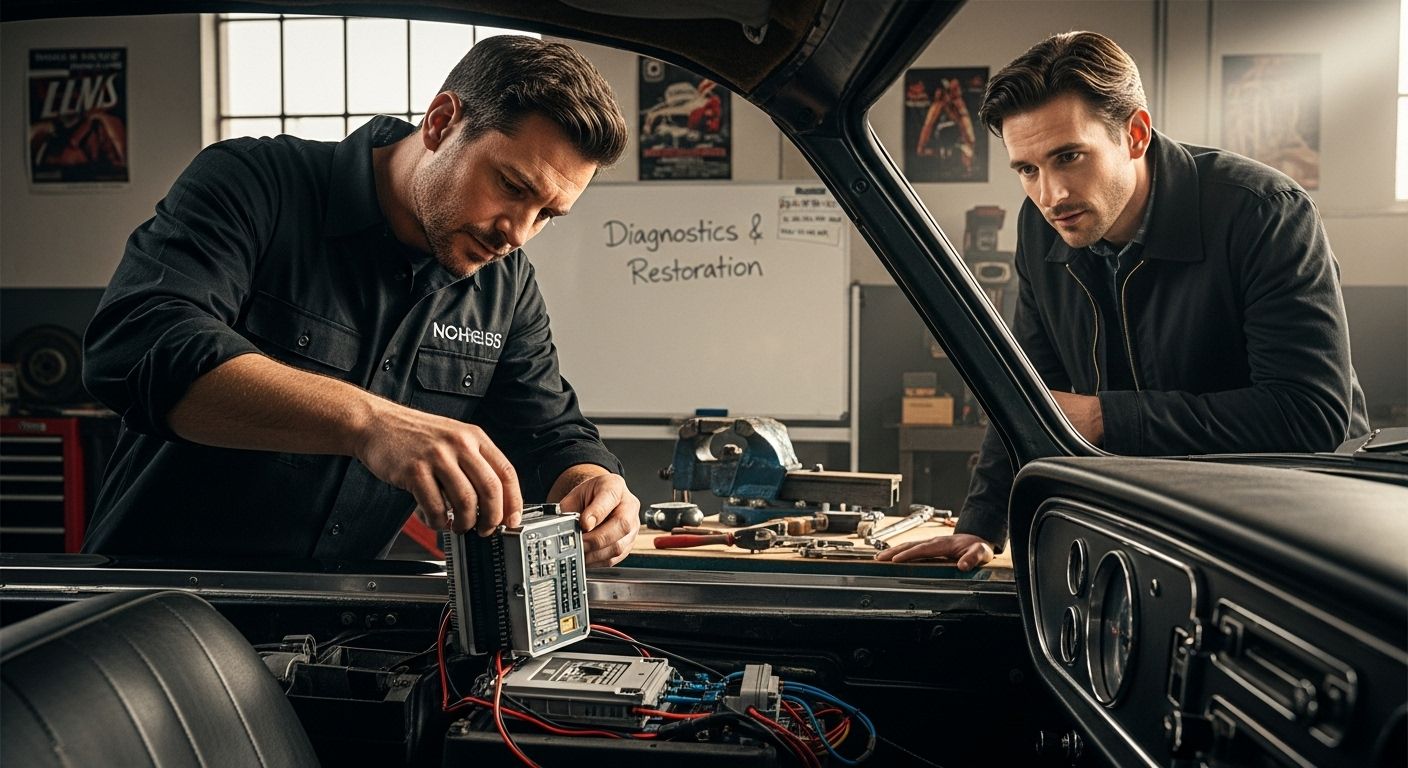
ECU cloning plays a critical role in vehicle diagnostics and restoration processes. When original ECUs become damaged or malfunction, cloning provides a precise method of preserving vehicle-specific configuration data. The ability to extract and transfer exact electronic signatures becomes particularly valuable for rare or vintage vehicles where original electronic components are difficult to replace.
For classic car enthusiasts and professional restoration specialists, ECU cloning represents a technological lifeline. It enables the preservation of original vehicle characteristics, allowing mechanics to recreate precise electronic configurations that might otherwise be lost to time or component failure.
Our comprehensive guide on ECU fundamentals offers deeper insights into these intricate electronic restoration techniques.
Security and Technological Advancements
Modern ECU cloning is not just about duplication but involves sophisticated security considerations. An innovative study on vehicular network security introduces advanced voltage fingerprinting techniques that enhance the integrity of electronic control units. These developments demonstrate how cloning technologies are evolving to address potential security vulnerabilities while providing increasingly precise electronic replication methods.
Automotive professionals must recognize that ECU cloning represents a delicate balance between technological innovation and ethical considerations. While the technique offers remarkable capabilities, it requires strict adherence to manufacturer guidelines and intellectual property regulations. The future of ECU cloning lies in continued technological refinement, with an emphasis on creating more secure, intelligent, and adaptable electronic management systems.
Common Challenges and Best Practices
ECU cloning presents a complex landscape of technical challenges and ethical considerations that demand meticulous attention from automotive professionals. Navigating this intricate process requires deep technical expertise, advanced diagnostic tools, and a comprehensive understanding of vehicle electronic systems.
The following table outlines the main security challenges and recommended best practices when performing ECU cloning. It organizes crucial technical and ethical considerations for professionals in a clear, actionable format.
| Challenge / Best Practice | Details |
|---|---|
| Technical Complexity | Requires deep technical expertise, precise tools, and understanding of encryption/immobilizer systems. |
| Authentication Challenges | Complicated by advanced features like PUFs and lack of traditional sender authentication methods. |
| Ethical Considerations | Necessitates strict respect for OEM intellectual property and adherence to legal requirements. |
| Obtain Manufacturer Authorization | Recommended to avoid legal risk and ensure compliance with warranty and IP rights. |
| Use Approved Tools | Essential to ensure compatibility, effectiveness, and safety in cloning operations. |
| Maintain Detailed Documentation | Keeps records of procedures for validation, transparency, and troubleshooting. |
| Implement Security Innovations | Utilizes measures like voltage fingerprinting and advanced authentication to enhance clone detection. |
Technical Complexity and Authentication Challenges
Research from the automotive security domain reveals significant challenges in creating clone-resistant electronic units. The primary obstacle lies in developing methods that prevent unauthorized duplication while maintaining the flexibility needed for legitimate automotive diagnostics and performance tuning. Physically Unclonable Functions (PUFs) emerge as a critical technology, providing unique digital signatures that make ECU replication exponentially more difficult.
A groundbreaking study on CAN network authentication highlights the vulnerabilities inherent in traditional automotive communication protocols. The lack of robust sender authentication mechanisms creates significant risks, allowing potential impersonation of electronic control units. Professionals must implement advanced authentication techniques that go beyond traditional security measures, utilizing sophisticated power side-channel monitoring to verify the genuine origin of electronic components.
Ethical and Legal Considerations
Professional tuners and automotive technicians must navigate a complex ethical landscape when approaching ECU cloning. The process demands strict adherence to manufacturer guidelines and intellectual property regulations. Unauthorized cloning can result in significant legal repercussions, potentially voiding vehicle warranties and exposing technicians to potential litigation.
Best practices dictate a comprehensive approach that prioritizes:
- Obtaining explicit manufacturer authorization
- Using only approved diagnostic tools
- Maintaining detailed documentation of all cloning procedures
- Respecting original equipment manufacturer (OEM) intellectual property rights
Emerging Security Solutions
An innovative research approach on ECU security introduces advanced voltage fingerprinting techniques that significantly enhance the detectability of unauthorized cloning attempts. This two-point voltage analysis creates a unique electronic fingerprint, making it exponentially more challenging to create undetectable ECU duplicates.
Professionals interested in mastering these advanced techniques might want to explore our comprehensive ECU tuning guide to gain deeper insights into modern automotive electronic management. The future of ECU cloning lies in continuous technological innovation, balancing performance optimization with robust security measures.

Ultimately, successful ECU cloning requires a holistic approach that combines technical expertise, ethical considerations, and a commitment to maintaining the integrity of automotive electronic systems. Professionals must remain adaptable, continuously updating their knowledge and techniques to address the evolving challenges in this dynamic technological landscape.
Frequently Asked Questions
What is ECU cloning?
ECU cloning is the process of creating an exact digital copy of a vehicle’s Engine Control Unit (ECU), including its firmware and configuration settings, enabling precise diagnostics and performance tuning.
Why is ECU cloning important for tuners and shops?
ECU cloning is vital for tuners and shops as it allows them to experiment with performance modifications, restore vintage vehicles, and troubleshoot malfunctions while preserving original configurations.
What are the security challenges associated with ECU cloning?
Modern vehicles use advanced security measures like Physically Unclonable Functions (PUFs) which make unauthorized cloning difficult. These security features prevent intellectual property theft and protect vehicle integrity.
How can automotive professionals ensure ethical ECU cloning practices?
To ensure ethical practices, professionals should obtain manufacturer authorization, use approved tools, respect intellectual property rights, and maintain detailed documentation of the cloning processes.
Make ECU Cloning Work for You with Verified ECU Files
ECU cloning is a powerful solution, but the process often hits a wall when you lack access to secure, tested, and model-specific ECU files. You want to offer reliable tuning, flawless restoration, or quick recovery, but complicated security protocols and the risk of using unverified or incomplete data make your job harder. The article highlights issues like encryption, unique digital signatures, and the growing complexity of modern ECUs. With each new generation of vehicles, the challenge grows—professional tuners and shops need precision and peace of mind.

Stop guessing and get access to original files, performance remaps, and DAMOS data trusted by experts for over two decades. Visit ECUFlashFiles.com to search by make, model, or engine and download only certified, up-to-date ECU files instantly. Discover how our library of original ECU files and professional tuning solutions can make your next cloning project safer, faster, and more successful. Get ahead now—unlock secure ECU cloning support today.
Recommended
- ECU Tuning for Beginners: Essential Guide for 2025 – Ecu flash files
- How Does ECU Work? 2025 Guide for Car Performance – Ecu flash files
- A Compact Guide to ECU Reading & Chiptuning Tool Fundamentals – Ecu flash files
- ECU Tuned File | stage 1 | VW Transporter Bosch EDC17CP20 EDC17 CB.03.15.00 C34.00 1.0 03L906022CD