
Sports cars and performance vehicles are all about nailing that perfect takeoff every single time. The latest launch control systems can help drivers hit zero to sixty faster and more reliably than ever, managing everything from engine power to wheel traction in real time. It sounds like something only race teams would need, right? The real surprise is that this tech has quietly made its way into vehicles anyone can buy, transforming ordinary drives with a push of a button.
Table of Contents
- Defining Launch Control: What It Is And Its Purpose
- The Importance Of Launch Control In Performance Driving
- How Launch Control Works: The Technology Behind It
- Key Components Of Launch Control Systems
- Real-World Applications And Benefits Of Launch Control
Quick Summary
| Takeaway | Explanation |
|---|---|
| Launch control enhances acceleration performance | This system optimizes vehicle dynamics for quick, efficient starts by managing engine power and traction control. |
| Prevents mechanical stress during acceleration | By controlling RPM and power distribution, launch control minimizes potential damage to drivetrain components during rapid acceleration. |
| Reduces human error in driving | Launch control allows for consistent acceleration, helping drivers perform better by removing the variability of manual control. |
| Integrates advanced sensor systems | The technology relies on precise data from various sensors to manage variables like wheel speed and throttle position. |
| Beneficial for both motorsports and daily driving | Originally for racing, launch control technology is now common in high-performance consumer vehicles, enhancing the driving experience for all. |
Defining Launch Control: What It Is and Its Purpose
Launch control represents an advanced automotive technology designed to maximize acceleration performance for performance vehicles and racing applications. This sophisticated electronic system enables drivers to achieve the most efficient and consistent acceleration from a complete stop, transforming how high-performance cars initiate movement.
The Core Mechanism of Launch Control
At its fundamental level, launch control is an electronic intervention system that manages multiple vehicle parameters simultaneously. By precisely controlling engine power, transmission shifting, and wheel traction, the system helps drivers execute near perfect acceleration sequences.
Research from automotive engineering experts indicates that launch control optimizes power delivery while preventing potentially damaging wheel spin.
The system operates through complex interactions between several critical components:
To clarify the different components and their critical functions within launch control systems, the table below provides a concise overview of each element and its main role.
| Component | Description | Function within Launch Control |
|---|---|---|
| Engine Control Unit (ECU) | Main computational module | Processes data and manages power distribution |
| Transmission Management Systems | Electronic control of transmission | Ensures optimal shifting during acceleration |
| Traction Control Sensors | Devices measuring wheel traction | Detects slip and helps regulate power output |
| Wheel Speed Monitoring Technology | Sensors tracking individual wheel speeds | Identifies wheel spin for precise intervention |
| Throttle Position Sensors | Monitors accelerator input | Communicates driver intent to management systems |
| Transmission Engagement Trackers | Monitors gear engagement status | Ensures proper gear is selected for launch |
| Engine RPM Measurement Devices | Monitors engine revolutions per minute | Maintains ideal RPM for consistent acceleration |
- Engine control unit (ECU)
- Transmission management systems
- Traction control sensors
- Wheel speed monitoring technology
Performance and Technical Significance
Launch control goes beyond simple acceleration enhancement. It represents a calculated approach to managing vehicle dynamics during high-stress acceleration scenarios. By electronically limiting engine RPM and controlling power distribution, the system ensures that vehicles can repeatably achieve maximum acceleration without risking mechanical damage.
Professional racing drivers and automotive enthusiasts appreciate launch control for its ability to:
- Minimize human error during acceleration
- Provide consistent starting performance
- Protect drivetrain components from excessive stress
- Enable predictable and controlled acceleration sequences
While originally developed for motorsport applications, launch control technology has progressively migrated into high-performance consumer vehicles, demonstrating its broader engineering value and technological sophistication.
The Importance of Launch Control in Performance Driving
Performance driving demands precision, control, and technological sophistication. Launch control emerges as a critical technological intervention that transforms how high-performance vehicles accelerate, bridging the gap between professional racing techniques and consumer automotive experiences.
Performance Optimization and Mechanical Protection
Launch control serves multiple critical functions beyond simple acceleration enhancement. Automotive engineering research demonstrates that this system strategically manages vehicle dynamics during intense acceleration scenarios. By implementing sophisticated electronic controls, launch control protects critical mechanical components while simultaneously maximizing performance potential.
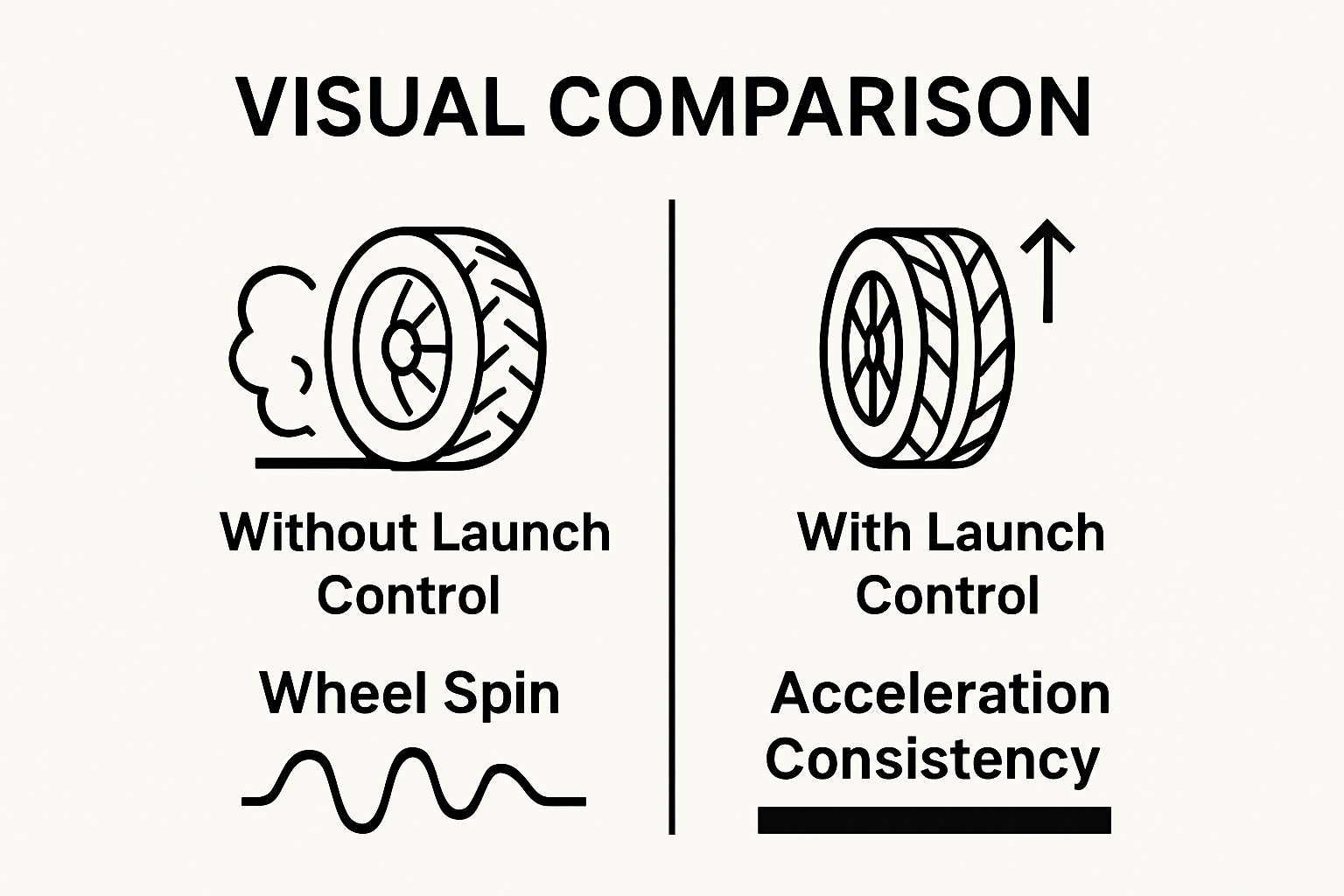
The system provides comprehensive advantages for performance vehicles:
- Prevents catastrophic mechanical stress during rapid acceleration
- Reduces potential transmission and drivetrain damage
- Maintains consistent acceleration performance across different driving conditions
- Minimizes human error during high-intensity driving scenarios
Technical Precision in Acceleration Management
Advanced launch control systems represent a complex interaction between vehicle electronics and mechanical systems. The technology analyzes multiple parameters simultaneously, including wheel traction, engine RPM, transmission status, and road surface conditions. This real-time computational approach allows drivers to achieve near-perfect acceleration sequences with remarkable consistency.
Key technical components involved in launch control include:
- Sophisticated engine control unit algorithms
- High-speed traction monitoring sensors
- Precise power distribution management systems
- Advanced torque regulation technologies
Ultimately, launch control transforms raw automotive performance potential into controlled, repeatable acceleration experiences, bridging the gap between professional racing techniques and consumer vehicle capabilities.
How Launch Control Works: The Technology Behind It
Launch control represents a complex electronic system that transforms vehicle acceleration through precise computational management. By integrating multiple automotive technologies, this system creates a sophisticated approach to optimizing performance during initial vehicle acceleration.
Electronic Signal Processing and Sensor Integration
Automotive technology research reveals that launch control operates through an intricate network of electronic sensors and computational algorithms. These systems continuously monitor critical vehicle parameters in real-time, allowing instantaneous adjustments during acceleration sequences.
The primary sensor systems engaged during launch control include:
- Wheel speed monitoring sensors
- Throttle position indicators
- Engine RPM measurement devices
- Transmission engagement trackers
- Traction control interface modules
Computational Power and Performance Management
At its core, launch control functions as an intelligent intervention system that manages power distribution with remarkable precision. The engine control unit (ECU) processes incoming sensor data and makes instantaneous decisions about power delivery, ensuring optimal acceleration while preventing mechanical stress.
Key computational strategies employed include:
- Limiting maximum engine RPM during initial acceleration
- Modulating throttle response
- Controlling torque distribution across drive wheels
- Preventing excessive wheel spin
- Maintaining consistent power output
By implementing these advanced technological interventions, launch control transforms raw mechanical potential into controlled, efficient acceleration experiences that protect vehicle components while maximizing performance capabilities.
Key Components of Launch Control Systems
Launch control systems represent a sophisticated network of interconnected automotive technologies designed to optimize vehicle acceleration performance. These systems integrate multiple electronic and mechanical components to deliver precise power management and controlled acceleration sequences.
Electronic Control Unit: The Computational Brain
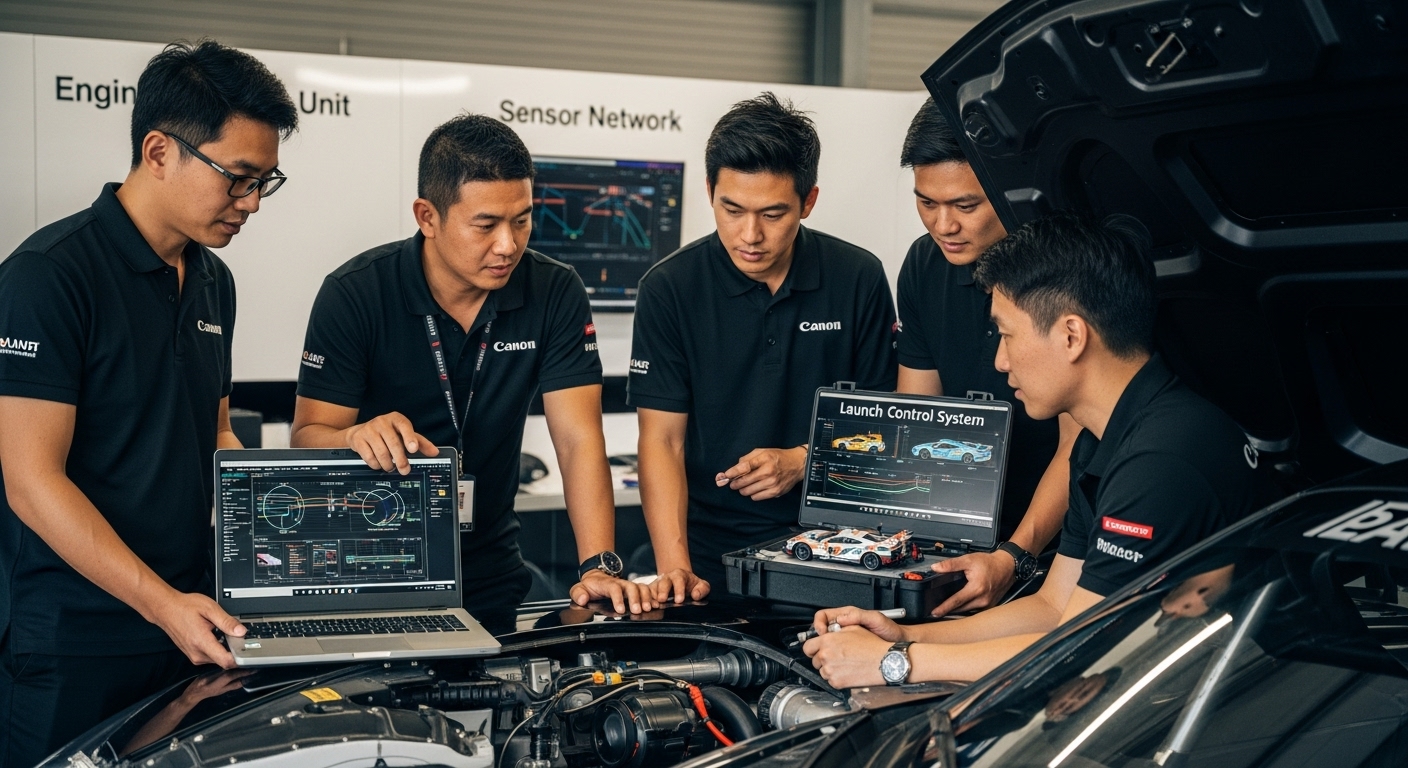
Automotive engineering research identifies the Engine Control Unit (ECU) as the primary computational center for launch control systems. This advanced electronic module acts as the primary decision-making component, processing vast amounts of sensor data and executing complex algorithmic calculations within milliseconds.
The ECU manages several critical functions during launch control:
- Real-time sensor data interpretation
- Instantaneous power distribution calculations
- Predictive traction management
- Dynamic RPM and throttle regulation
- Mechanical stress prevention protocols
Sensor Network: Gathering Performance Intelligence
A comprehensive sensor network forms the sensory foundation of launch control systems. These precision instruments continuously collect critical performance data, enabling the ECU to make instantaneous decisions about vehicle dynamics and power management.
Key sensors integrated into launch control systems include:
- Wheel speed monitoring sensors
- Accelerometer and gyroscopic position trackers
- Transmission engagement position indicators
- Throttle position sensors
- Engine temperature and pressure monitors
By synthesizing data from these advanced sensors, launch control systems create a dynamic, responsive performance management environment that transforms raw mechanical potential into controlled, efficient acceleration experiences.
Real-World Applications and Benefits of Launch Control
Launch control technologies have dramatically transformed performance driving across multiple automotive domains, extending far beyond traditional racing applications. This sophisticated system delivers tangible performance advantages that resonate with professional racers, automotive enthusiasts, and everyday performance vehicle owners.
Performance Motorsports and Competitive Racing
NASA’s advanced engineering research demonstrates how precise control systems can optimize vehicle performance under extreme conditions. In competitive racing environments, launch control provides drivers with a critical competitive edge by ensuring consistent and repeatable acceleration sequences.
Key advantages in motorsports include:
- Minimizing human error during critical acceleration moments
- Achieving consistently faster starting line performances
- Reducing mechanical stress during high-intensity acceleration
- Enabling more predictable vehicle behavior under competitive conditions
Consumer Vehicle Performance Enhancement
Modern performance vehicles increasingly integrate launch control technologies to provide drivers with professional-grade acceleration capabilities. These systems transform ordinary driving experiences by offering sophisticated performance management that was previously accessible only to professional racers.
Consumer benefits encompass:
- Improved acceleration consistency across different driving conditions
- Enhanced vehicle stability during rapid acceleration
- Reduced potential for mechanical component wear
- Increased confidence in high-performance driving scenarios
By bridging professional racing technologies with consumer automotive experiences, launch control represents a remarkable evolution in automotive performance engineering.
This table compares the core benefits and technical advantages of launch control systems for both motorsports and consumer performance vehicles, helping readers quickly see where their applications overlap and differ.
| Application | Consistency of Acceleration | Minimizes Human Error | Mechanical Protection | Enhanced Everyday Driving |
|---|---|---|---|---|
| Motorsports / Racing | Yes | Yes | Yes | No |
| Consumer Performance Vehicles | Yes | Yes | Yes | Yes |
Unlock Consistent Launch Control with Verified ECU Files
Struggling to find reliable ways to enhance your launch control system or ensure your performance car accelerates safely and predictably every time? The article highlighted how launch control relies on a finely tuned engine control unit and accurate sensor data to achieve the perfect launch while protecting critical mechanical parts. Many enthusiasts and professionals encounter problems with inconsistent acceleration, wheel spin, or even component damage—all tied back to flawed or incomplete ECU calibrations and file management.

Stop risking your vehicle’s performance or your hard-earned upgrades. Visit ECUFlashFiles.com to access a verified selection of original and performance-tuned ECU files. Each file on our platform is tested and tailored to deliver the precision, consistency, and power management your launch control system depends on. Explore our site for expertly curated performance tuning files and DAMOS calibration data to optimize your vehicle for the perfect start. Get the files you need right now and experience the difference precise ECU solutions make for your next launch.
Frequently Asked Questions
What is launch control in performance cars?
Launch control is an advanced automotive technology designed to maximize acceleration performance by managing multiple vehicle parameters simultaneously. It helps drivers achieve optimal acceleration from a complete stop, especially in high-performance vehicles.
How does launch control work?
Launch control operates through an electronic system that integrates various components, including the engine control unit (ECU), transmission management systems, and traction control sensors. It monitors critical vehicle parameters in real-time to optimize power distribution and prevent wheel spin during acceleration.
What are the benefits of using launch control?
The primary benefits of using launch control include minimized human error during acceleration, consistent starting performance, mechanical protection against excessive stress, and controlled acceleration sequences. This technology allows vehicles to achieve repeatable maximum acceleration safely.
Can launch control be found in consumer performance vehicles?
Yes, launch control technology has progressively been integrated into high-performance consumer vehicles, providing drivers with professional-grade acceleration capabilities that enhance their driving experience and performance across different driving conditions.