
Car owners and performance fans are always looking for ways to get more power and save on repairs. About 30 percent of diesel vehicles that get an EGR delete see noticeable performance gains, according to industry studies. Sounds like a no-brainer upgrade, right? Not so fast. This simple change might unlock a few hidden headaches, including potential legal trouble and surprise costs that could catch anyone off guard.
Table of Contents
- What Is An EGR Delete?
- Why Consider EGR Deletion?
- How EGR Deletion Affects Vehicle Performance
- Potential Risks And Drawbacks Of EGR Delete
- Legal And Environmental Implications Of EGR Deletes
Quick Summary
| Takeaway | Explanation |
|---|---|
| EGR deletes enhance engine performance. | Removing the EGR system often leads to improved throttle response, horsepower, and overall engine efficiency. |
| Consider legal implications of EGR deletion. | Modifying emissions controls can violate federal laws, leading to fines and registration issues. |
| Beware of increased maintenance costs. | Removing the EGR may seem economical but can lead to higher long-term repair expenses due to other potential issues. |
| EGR deletion affects emissions significantly. | Eliminating this system increases nitrogen oxide emissions, impacting both air quality and public health. |
| Consult professionals before modifying. | Vehicle owners should seek expert advice to understand performance benefits and regulatory risks of EGR deletion. |
What is an EGR Delete?
An EGR delete represents a modification process where automotive enthusiasts and mechanics remove or disable the Exhaust Gas Recirculation (EGR) system from a vehicle’s engine. The EGR system, originally designed to reduce nitrogen oxide (NOx) emissions, can become a performance hindrance for many vehicle owners seeking enhanced engine efficiency.
Understanding the EGR System
The EGR system works by recirculating a portion of exhaust gases back into the engine’s intake manifold. This process aims to lower combustion temperatures and reduce harmful nitrogen oxide emissions. However, over time, the EGR system can accumulate carbon deposits, potentially causing several performance and maintenance challenges.
Key characteristics of the EGR system include:
- Redirects exhaust gases into the intake manifold
- Designed to reduce engine combustion temperatures
- Helps minimize nitrogen oxide emissions
- Can become prone to carbon buildup and mechanical failures
Motivations Behind EGR Delete
Vehicle owners and performance enthusiasts often consider an EGR delete for multiple compelling reasons. According to research from the Society of Automotive Engineers, EGR systems can introduce significant complications in engine performance and longevity.
Primary motivations for pursuing an EGR delete typically include:
- Improved overall engine performance
- Reduced risk of carbon deposit accumulation
- Enhanced fuel efficiency
- Potentially lower maintenance costs
- Elimination of potential system failure points
While an EGR delete offers potential benefits, it is crucial to understand the legal and environmental implications. LegalClarity notes that modifying emissions control systems can violate federal regulations, potentially resulting in significant legal consequences. Professional automotive enthusiasts must carefully weigh the performance advantages against potential regulatory risks before proceeding with an EGR delete.
Why Consider EGR Deletion?
Vehicle performance enthusiasts and automotive professionals explore EGR deletion as a strategic approach to optimize engine functionality and address inherent system limitations. While the decision involves careful consideration of multiple factors, understanding the core motivations can help vehicle owners make informed technical choices.
Performance Enhancement Potential
EGR systems, designed to reduce nitrogen oxide emissions, can inadvertently create performance challenges for modern engines. The continuous recirculation of exhaust gases can lead to carbon buildup, decreased overall efficiency, and potential long-term mechanical complications. Performance-focused vehicle owners recognize that removing the EGR system might unlock several significant advantages.
Key performance considerations include:
- Reduced carbon deposit accumulation
- Improved combustion chamber efficiency
- Enhanced throttle response
- Potential increase in horsepower
- More consistent engine operating temperatures
Technical Limitations of EGR Systems
According to research published in Environmental Science and Pollution Research, EGR systems present complex operational challenges. The continuous recirculation of exhaust gases can create substantial mechanical stress, potentially compromising engine longevity and performance consistency.
Primary technical limitations that drive EGR deletion include:
- Increased risk of carbon fouling in intake manifolds
- Potential reduction in overall engine efficiency
- Higher maintenance requirements
- Complicated diagnostic and repair processes
- Potential interference with optimal combustion dynamics
Economic and Maintenance Considerations
Beyond performance metrics, EGR deletion represents a strategic approach to managing long-term vehicle maintenance costs. The cumulative expenses associated with EGR system repairs, potential component replacements, and addressing carbon buildup can be substantial. Professional automotive technicians often recommend EGR deletion as a proactive measure to mitigate these ongoing maintenance challenges.
However, vehicle owners must carefully evaluate the legal and environmental implications. While performance benefits are attractive, potential regulatory restrictions and emissions testing requirements necessitate a comprehensive and informed decision-making process.
How EGR Deletion Affects Vehicle Performance
EGR deletion represents a complex modification that can significantly transform an engine’s operational dynamics, presenting both potential performance enhancements and intricate mechanical interactions. Understanding these nuanced impacts requires a comprehensive examination of how removing the Exhaust Gas Recirculation system influences overall vehicle performance.
Combustion Efficiency and Power Output
Removing the EGR system can dramatically alter combustion chamber characteristics. By eliminating exhaust gas recirculation, engines experience improved oxygen concentration and more consistent combustion temperatures. This modification allows for more precise fuel-air mixture management, potentially resulting in enhanced throttle response and increased horsepower.
Key performance transformations include:
- More consistent combustion cycle
- Reduced intake system restrictions
- Improved volumetric efficiency
- Enhanced thermal management
- Potential incremental power gains
Thermal and Mechanical Stress Dynamics
According to research from the Society of Automotive Engineers, EGR system modifications can produce complex thermal and mechanical interactions. Deleting the EGR system eliminates potential contamination pathways in turbochargers and charge coolers, potentially reducing long-term mechanical wear and improving overall system reliability.
Potential mechanical performance implications encompass:
- Reduced carbon deposit accumulation
- Lower risk of intake system contamination
- Minimized turbocharger stress
- Improved charge air cooling efficiency
- More stable engine component temperatures
Long-Term Operational Considerations
While EGR deletion offers immediate performance advantages, vehicle owners must carefully evaluate comprehensive operational impacts. The modification can alter emissions characteristics, potentially triggering check engine warnings or failing regulatory compliance tests.
Below is a comparison table outlining the main advantages and disadvantages of EGR delete as covered in the article, helping you quickly evaluate if this modification aligns with your needs.
| Advantage | Explanation | Disadvantage | Explanation |
|---|---|---|---|
| Improved engine performance | Increases throttle response, horsepower, and efficiency | Legal risks | Can violate federal law and result in fines or registration issues |
| Reduced carbon deposit accumulation | Limits buildup in intake manifold and engine components | Increased emissions | Raises nitrogen oxide output, causing environmental harm |
| Lower maintenance on EGR system | Removes a failure point and reduces related maintenance costs | Possible warranty void | May void factory or third-party warranties on the vehicle |
| Enhanced fuel efficiency (in some cases) | Can lead to better mileage due to optimized combustion | Risk of failed emissions testing | Vehicle may not pass inspection, impacting legality and resale |
| Fewer EGR-related repairs | Eliminates risk from EGR valve or cooler malfunctions | Long-term engine wear risks | Potential for lubricant degradation or higher engine wear |
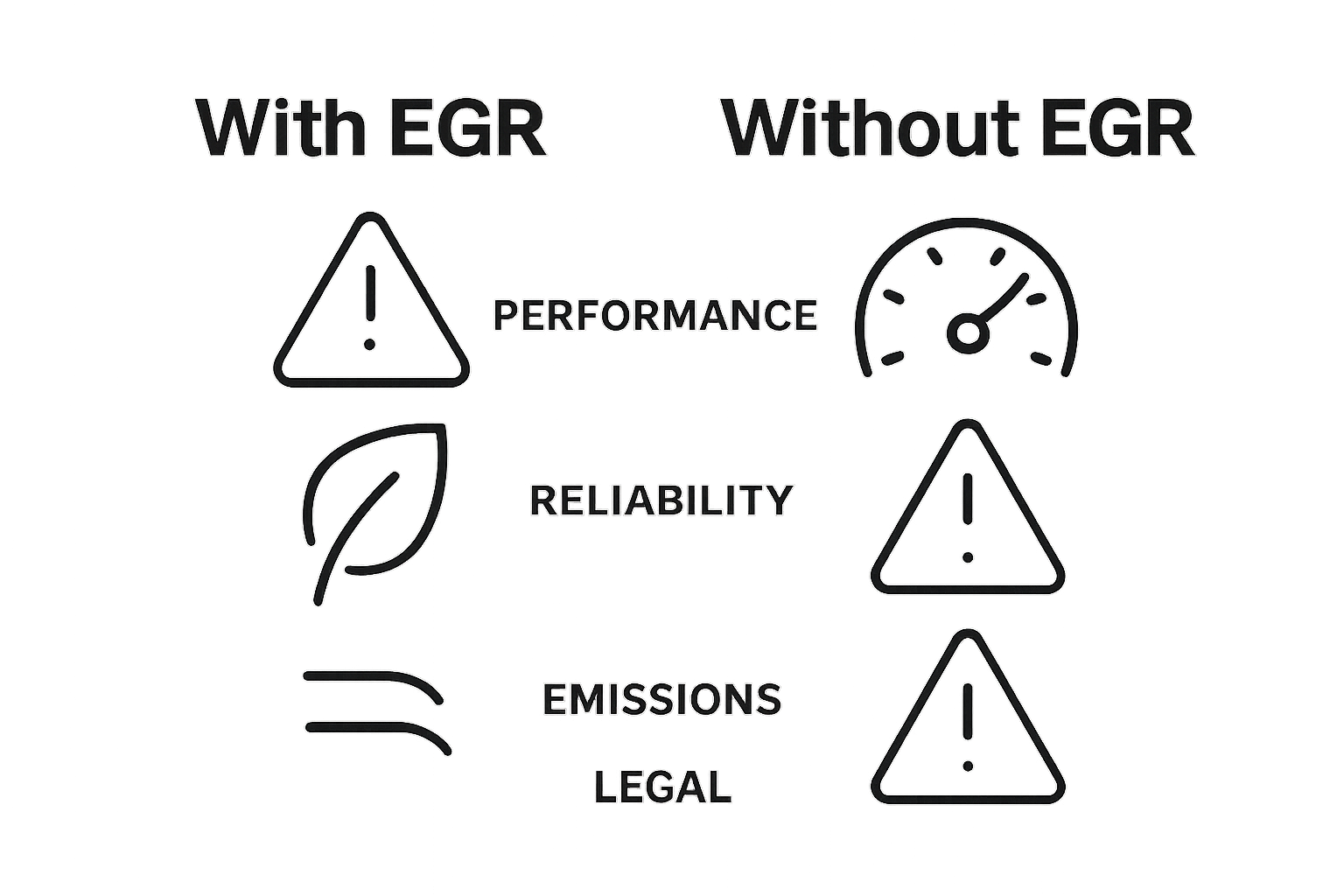
Here is a summary table distinguishing the key functions and outcomes of the EGR system versus EGR delete, giving a clear side-by-side look at what changes when you remove the system.
| Feature/Function | EGR System Present | EGR Delete (System Removed) |
|---|---|---|
| Nitrogen oxide emissions | Lowered through exhaust gas recirculation | Significantly increased |
| Engine performance | May be reduced by carbon buildup | Generally improved throttle response and power |
| Carbon deposit risk | Higher risk due to recirculated exhaust gases | Lower, as exhaust bypasses intake manifold |
| Engine operating temps | Lowered, reducing combustion temperatures | Can be slightly higher, with more stable performance |
| Legal compliance | Fully compliant with emissions regulations | Non-compliant; risk of legal penalties |
| Maintenance complexity | Requires periodic EGR servicing/repairs | Less EGR-related maintenance, but other risks remain |
Critical factors to consider include potential warranty implications, regional emissions regulations, and the necessity of professional installation to maintain vehicle reliability and performance integrity. The decision to pursue EGR deletion should involve comprehensive consultation with automotive performance specialists who can provide tailored guidance based on specific vehicle specifications and performance objectives.
Potential Risks and Drawbacks of EGR Delete
While EGR deletion offers performance advantages, automotive professionals recognize the complex landscape of potential risks and unintended consequences associated with this modification. Understanding these drawbacks is crucial for making informed decisions about vehicle performance and long-term reliability.
Emissions and Legal Compliance Challenges
EGR deletion introduces significant regulatory and legal complications. Removing or modifying the emissions control system directly violates federal environmental regulations, potentially resulting in substantial penalties. Vehicle owners may face challenges during emissions testing, registration renewals, and potential legal restrictions on vehicle operation.
Key legal and regulatory risks include:
- Potential failure of mandatory emissions inspections
- Substantial fines for non-compliance
- Potential voiding of vehicle warranties
- Restrictions on vehicle registration
- Potential legal consequences for environmental violations
Engine System Degradation Risks
According to research published in the journal Wear, removing the EGR system can introduce unexpected mechanical complications. The study highlighted significant concerns regarding lubricant degradation and increased engine component wear when emissions control mechanisms are compromised.
Potential mechanical degradation risks encompass:
- Accelerated engine component wear
- Increased particulate matter generation
- Potential reduction in long-term engine reliability
- Higher risk of lubricant contamination
- Compromised thermal management
Environmental and Performance Trade-offs
EGR deletion represents a nuanced modification with broader environmental implications. While performance enthusiasts may prioritize immediate horsepower gains, the long-term ecological impact cannot be overlooked. The removal of exhaust gas recirculation systems directly increases nitrogen oxide emissions, contributing to air quality deterioration and potential environmental harm.
Vehicle owners must carefully evaluate the comprehensive implications of EGR deletion. Professional automotive technicians recommend thorough consultation, comprehensive system analysis, and a holistic understanding of potential performance, legal, and environmental consequences before proceeding with this modification.

Legal and Environmental Implications of EGR Deletes
EGR deletion represents a complex modification that extends far beyond individual vehicle performance, intersecting with critical legal frameworks and environmental protection regulations. Understanding these multifaceted implications requires a comprehensive examination of the broader consequences associated with emissions system modifications.
Federal Regulatory Landscape
The United States Environmental Protection Agency (EPA) maintains stringent regulations governing vehicle emissions systems. Modifying or removing factory-installed emissions control components like the EGR system constitutes a direct violation of federal clean air regulations. Vehicle owners and automotive professionals must recognize that such modifications can trigger significant legal and financial repercussions.
Key federal regulatory considerations include:
- Potential violations of the Clean Air Act
- Substantial monetary penalties
- Risk of vehicle registration restrictions
- Potential criminal charges for repeated violations
- Mandatory vehicle emissions system restoration
Environmental Health Consequences
According to research published in the International Journal of Environmental Research and Public Health, EGR system modifications can dramatically increase nitrogen oxide (NOx) emissions. These emissions represent significant public health risks, directly contributing to respiratory and cardiovascular complications in urban environments.
Primary environmental health implications encompass:
- Increased atmospheric pollution levels
- Higher risk of respiratory disease transmission
- Potential acceleration of urban air quality degradation
- Enhanced greenhouse gas contributions
- Negative impacts on vulnerable population health
Jurisdictional Compliance and Enforcement
The legal landscape surrounding EGR deletion varies significantly across different jurisdictions. While federal regulations provide a baseline, state and local authorities may impose additional restrictions or enforcement mechanisms. Professional automotive enthusiasts must navigate this complex regulatory environment with meticulous attention to regional variations in emissions control requirements.
Vehicle owners contemplating EGR deletion should consult professional legal and automotive experts to fully understand the potential consequences. Comprehensive evaluation of performance objectives must be balanced against legal risks, environmental responsibilities, and potential long-term financial implications.
Professional ECU File Solutions for Responsible EGR Delete Tuning
Are you worried about the risks and challenges of deleting your EGR system, like legal compliance, engine reliability, or maintaining the best performance after modifications? If you want to upgrade your engine safely and maximize the benefits of EGR deletion, having the right ECU files is essential. The article highlights critical risks, from failed emissions tests to engine wear without proper ECU management. Let your next move be smarter and safer.

Get immediate access to expertly tested ECU files at ECUFlashFiles.com, trusted by tuners worldwide for over 20 years. Our secure search system helps you find original, tuned, or DAMOS calibration files for your specific make and model. Every file on our platform is verified for quality, so you can confidently remap, restore, or repair your ECU after an EGR delete. Take charge of your vehicle project today and avoid the pain points described above. Visit ECUFlashFiles.com to find the proven solutions you need now.
Frequently Asked Questions
What is an EGR delete?
An EGR delete is the process of removing or disabling the Exhaust Gas Recirculation (EGR) system from a vehicle’s engine to improve performance and enhance fuel efficiency.
What are the benefits of an EGR delete for my vehicle?
Benefits of an EGR delete include improved engine performance, reduced carbon deposit accumulation, enhanced fuel efficiency, and potentially lower maintenance costs, as it eliminates potential system failure points.
Are there any legal implications associated with EGR deletion?
Yes, modifying or removing the EGR system can violate federal regulations, potentially resulting in fines, failed emissions tests, and the voiding of vehicle warranties.
How does EGR deletion impact engine performance?
EGR deletion can improve combustion efficiency, increase horsepower, and reduce mechanical stress on engine components, but it may also lead to higher nitrogen oxide emissions.
Recommended
- ECU Tuned File | stage 1 | VW Transporter Bosch EDC17CP20 EDC17 CB.03.15.00 C34.00 1.0 03L906022JD
- ECU Tuned File | stage 1 | VW Transporter Temic DQ500 20101019SES_0BT300045J_1408_ 0BT300045J
- ECU Tuned File | stage 1 | VW Transporter Bosch EDC17CP20 EDC17 CB.03.15.00 C34.00 1.0 03L906022CD
- ECU Tuned File | stage 1 | VW Transporter Siemens/Continental EDC17CP20 03L907309M 03L906019GG